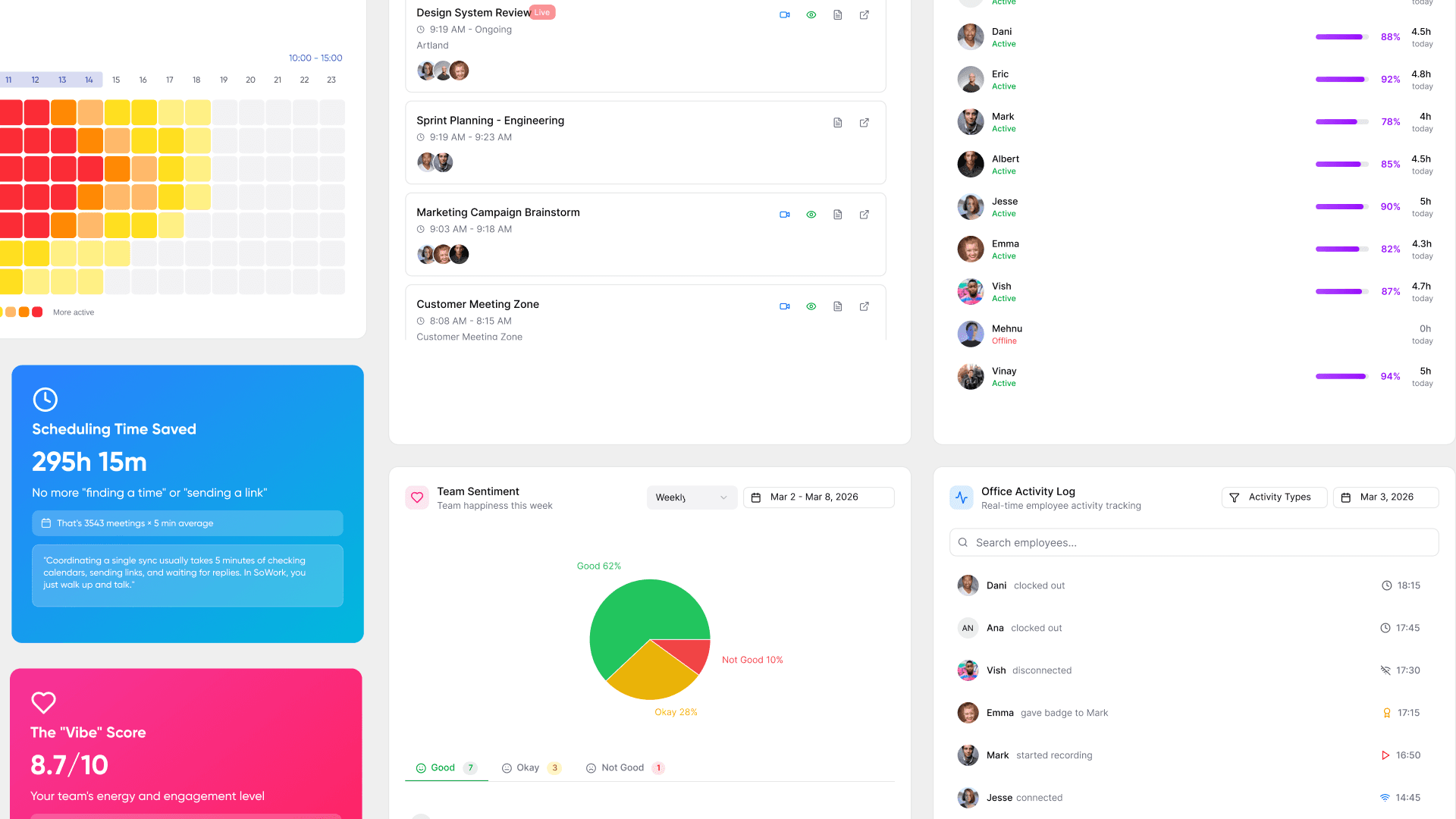
Plataforma de Escritório Virtual: Vale a pena para 10 a 20 pessoas?
Vishal Punwani

Publicado em:
Atualizado em:
Sim, uma plataforma de escritório virtual vale o custo para a maioria das equipes remotas de 10 a 20 pessoas. Custando de US$ 6 a 15 por usuário por mês no SoWork, a plataforma se paga ao cortar o tempo de reuniões improdutivas, reduzir o acúmulo de ferramentas e reconstruir a presença ambiental que mantém pequenas equipes alinhadas e conectadas sem sobrecarregar o calendário.
O que é uma plataforma de escritório virtual e como ela se diferencia do Zoom ou do Google Meet?
Uma plataforma de escritório virtual é um espaço de trabalho digital persistente onde sua equipe existe o dia todo, não apenas durante chamadas agendadas. Ao contrário do Zoom ou Google Meet, você não precisa de um link, de um convite ou de um bloco no calendário para falar com um colega de equipe.
As ferramentas de videoconferência são salas de reunião onde você entra e sai. Um escritório virtual se parece mais com um escritório real: você aparece, vê quem está por perto e inicia uma conversa com um clique. Indicadores de presença, áudio espacial e consciência ambiental substituem completamente a sobrecarga de agendamento. O SoWork adiciona memória de reunião por IA, modos de foco e chat baseado em tópicos sobre essa camada persistente, substituindo o Zoom, o Slack e uma ferramenta de calendário simultaneamente, em vez de funcionar ao lado deles.
Quais problemas específicos uma plataforma de escritório virtual resolve para uma equipe de 10 a 20 pessoas?
Com 10 a 20 pessoas, três problemas batem mais forte: você não consegue ver quem está livre, qualquer pergunta rápida se transforma em uma reunião agendada e a equipe lentamente deixa de se sentir como uma equipe.
Trabalhadores remotos participam de 80% mais reuniões por semana do que os trabalhadores de escritório [1], em grande parte porque não há outra maneira de obter uma resposta rápida. Um escritório virtual corrige essa lacuna de visibilidade com presença em tempo real, para que uma pergunta de dois minutos continue durando dois minutos em vez de se tornar um bloco de 30 minutos no calendário. Também combate o isolamento: 25% dos funcionários remotos sentem solidão diária, em comparação com 16% dos funcionários totalmente presenciais [2]. Para uma equipe de 10 a 20 pessoas, essa erosão da cultura é existencial; você não pode se dar ao luxo de ter pessoas desengajadas com esse tamanho de equipe.
Quanto custa realmente o SoWork para uma equipe de 10 a 20 pessoas?
O plano Basic do SoWork custa US$ 6 por usuário por mês (ou US$ 5,40 faturado anualmente), e o plano Premium custa US$ 15 por usuário por mês (ou US$ 12 anualmente). Para uma equipe de 15 pessoas, isso representa de US$ 90 a US$ 225 por mês.
O SoWork também oferece um plano gratuito para até 10 usuários, de modo que uma equipe no limite inferior dessa faixa pode começar com custo zero [3]. Os convidados participam de reuniões por link sem custo, e não é necessário baixar nenhum software, o que reduz a barreira de adoção. Compare isso com o Gather a US$ 15/usuário/mês [4], o Teamflow a US$ 20-30/usuário/mês [5], e o Sococo a US$ 14,99/assento/mês com um mínimo de 10 assentos e um limite de mídia de 500 minutos [6]. O SoWork é a opção com recursos completos mais acessível nesta categoria para equipes com menos de 50 pessoas.
Como o custo da plataforma se compara ao que o isolamento remoto e o excesso de reuniões realmente custam para você?
A conta não é nem de perto parecida. O tempo gasto em reuniões custa, sozinho, uma média de US$ 29.000 por funcionário por ano para as organizações [7], e o absenteísmo relacionado ao estresse causado pela solidão custa aos empregadores dos EUA um valor estimado em US$ 154 bilhões anuais [8].
O funcionário médio passa agora 11,3 horas por semana em reuniões, cerca de 28% da semana de trabalho [9]. Reuniões improdutivas custam às empresas mais de US$ 375 bilhões anualmente [10]. Para uma equipe de 15 pessoas no plano Basic do SoWork a US$ 90/mês, você gasta US$ 1.080 por ano para recuperar até mesmo uma fração disso. Se a plataforma eliminar duas reuniões desnecessárias de 30 minutos por pessoa por semana, ela se paga no primeiro mês. O caso de ROI é direto, antes mesmo de você considerar a redução na rotatividade de pessoal vinda de uma cultura melhor.
Quais benefícios mensuráveis as equipes remotas realmente relatam após adotar uma plataforma de escritório virtual?
Equipes que usam ambientes de escritório virtual com ferramentas de IA relatam reduções significativas na carga de reuniões e ganhos de eficiência que se refletem na velocidade da sprint, na conclusão de acompanhamentos e em horas recuperadas por semana.
Equipes distribuídas relataram melhorias de eficiência de até 83% e uma redução de 41% nas reuniões após a adoção de ambientes de escritório virtual que permitem a resolução espontânea de problemas [11]. Reuniões assistidas por IA produzem notas acionáveis imediatamente em 69% das vezes, transformando discussões em entregas em vez de conversas esquecidas [12]. As pontuações de colaboração entre equipes caem 17% em ambientes totalmente remotos sem ferramentas de presença, e os funcionários demoram 28% a mais para atingir a produtividade total [13]. Um escritório virtual aborda diretamente ambas as lacunas, tornando os colegas visíveis e acessíveis sem um calendário.
Como o SoWork se compara ao Gather, Teamflow e Sococo para uma equipe de 10 a 20 pessoas?
O SoWork oferece a melhor relação custo-benefício para equipes nessa faixa de tamanho, com memória de reuniões por IA, percepção de presença e chat integrado a US$ 6/usuário, um preço que nenhum concorrente iguala com ferramentas equivalentes.
Plataforma | Preço (mensal) | Notas de Reunião com IA | Plano Gratuito | Melhor Para |
|---|---|---|---|---|
SoWork | US$ 6-15/usuário | Sim | Sim (até 10) | Espaço de trabalho diário tudo-em-um |
Gather | US$ 15/usuário [4] | Limitado (2.0) | Não [4] | Equipes focadas em social/cultura |
Teamflow | US$ 20-30/usuário [5] | Não | Limitado | Aplicativos integrados de vendas/design |
Sococo | US$ 14,99/assento [6] | Não | Não | Presença em planta baixa corporativa |
O Gather atende a equipes cujo objetivo principal é uma camada de cultura baseada em jogos. O Teamflow vale o valor premium se a colaboração integrada com o Salesforce ou Figma for central. O Sococo se adapta a empresas que já usam Zoom ou Webex e desejam uma sobreposição de presença.
Quais critérios você deve usar para decidir se uma plataforma de escritório virtual é adequada para sua equipe?
Comece com três perguntas: Sua equipe reclama de excesso de reuniões? As pessoas se sentem desconectadas? Você está pagando por três ou mais ferramentas separadas que ainda assim não resolvem esses problemas?
Se a resposta para qualquer uma delas for sim, um escritório virtual provavelmente se pagará. Avalie as plataformas quanto ao: potencial de adoção diária (as pessoas realmente vão abri-lo todas as manhãs?), qualidade da presença (você consegue ver em um relance quem está focado vs. disponível vs. em reunião?), ferramentas de IA (ela captura decisões automaticamente?) e velocidade de implementação (você consegue estar ativo em menos de uma hora?). Para uma equipe de 10 a 20 pessoas, a adoção da ferramenta é o maior risco individual; escolha a plataforma que sua equipe usará diariamente, não aquela com mais recursos em uma folha de especificações.
Como um escritório virtual replica a colaboração espontânea que acontece naturalmente em um escritório físico?
Tornando os colegas de equipe visíveis o dia todo. Você consegue ver quem está livre, quem está focado e quem está em uma reunião; a mesma percepção ambiental que você teria ao passar pela mesa de alguém.
Em um escritório físico, a maior parte da colaboração acontece entre reuniões: uma pergunta no corredor, uma olhada na expressão de alguém, uma parada de dois minutos na mesa do colega. O trabalho remoto elimina tudo isso por padrão. Um escritório virtual reconstrói isso digitalmente. Os indicadores de presença do SoWork mostram o status em tempo real, e as Reuniões Instantâneas permitem iniciar uma conversa com um clique, sem link, sem convite, sem agendamento. O espaço de escritório personalizável e os avatares adicionam uma camada social que faz com que o ambiente pareça um lugar onde as pessoas realmente desejam estar, não apenas uma ferramenta de produtividade que são forçadas a usar.
Como a percepção de presença realmente reduz a sobrecarga de reuniões?
Quando você consegue ver que um colega está livre agora, você não agenda uma reunião para quinta-feira; você simplesmente fala com ele. Essa única mudança de comportamento elimina grande parte dos blocos desnecessários no calendário.
43% dos profissionais gastam 3 ou mais horas por semana apenas agendando reuniões [14]. A percepção de presença reduz essa sobrecarga de coordenação ao tornar a disponibilidade visível em tempo real. A sincronização de calendário do SoWork atualiza automaticamente seu status quando uma reunião começa, garantindo que a equipe sempre tenha informações precisas sem que ninguém precise atualizar nada manualmente. O resultado é menos reuniões de verificação de status, menos mensagens de "você está livre?" no Slack e mais trabalho real sendo feito. Equipes que reduzem a carga de reuniões em 40% relatam ganhos de produtividade de até 71% [15].
Quais são os riscos reais de adotar uma plataforma de escritório virtual para uma pequena equipe remota?
O maior risco é a baixa adoção. Se a equipe não abrir a plataforma diariamente, você estará pagando por uma cidade fantasma e os problemas que estava tentando resolver continuarão sem solução.
Plataformas que exigem o download de software ou têm uma curva de aprendizado íngreme apresentam as maiores taxas de abandono. Há também uma preocupação com vigilância: alguns membros da equipe temem que os indicadores de presença signifiquem que estão sendo monitorados. Aborde isso logo no início, apresentando a ferramenta como uma ajuda de coordenação, não um sistema de rastreamento, e escolhendo plataformas com modos de foco que permitam que as pessoas sinalizem trabalho profundo sem se sentirem vigiadas. Um piloto paralelo de duas semanas antes do lançamento completo, rodando o escritório virtual junto com as ferramentas existentes, evita que as equipes voltem ao padrão do Slack e Zoom no momento em que surgir qualquer dificuldade [16].
Quais são as alternativas a uma plataforma de escritório virtual se você não estiver pronto para se comprometer?
As principais alternativas são ferramentas assíncronas estruturadas (Slack, Notion, Loom), reuniões diárias focadas em vídeo no Zoom ou programações híbridas que reúnem a equipe presencialmente de forma periódica.
Cada alternativa resolve parte do problema. Ferramentas assíncronas reduzem a carga de reuniões, mas não restauram a presença ou a conexão espontânea. Reuniões de alinhamento por vídeo estruturadas trazem ordem, mas também adicionam sobrecarga ao calendário. Encontros presenciais periódicos constroem cultura, mas custam significativamente mais do que qualquer assinatura de software. A lacuna que nenhuma dessas alternativas preenche é a percepção ambiental em tempo real, saber quem está por perto e poder contatá-los instantaneamente. Esse é o problema específico que uma plataforma de escritório virtual resolve e que nenhuma combinação de Slack, Zoom e Notion consegue replicar.
Como um escritório virtual constrói a cultura de forma diferente do Slack ou Notion?
O Slack e o Notion são ótimos para informações estruturadas. Eles são ruins para replicar os momentos informais e não planejados que realmente constroem a cultura da equipe, como a conversa de corredor, a risada compartilhada, a conversa rápida que não tem nada a ver com um chamado de suporte.
62% dos trabalhadores remotos dizem que sentem falta das interações casuais de um escritório físico [17]. Ferramentas assíncronas não resolvem isso porque são transacionais por design: você publica, alguém responde, o tópico é encerrado. Um escritório virtual cria um espaço compartilhado onde esses momentos não planejados podem acontecer novamente. O escritório personalizável do SoWork, a personalização de avatares e a camada de presença ambiental dão às equipes um lugar que parece delas, não apenas mais um aplicativo no fluxo de trabalho. Esse senso de lugar é o que converte um grupo de indivíduos remotos em uma equipe de verdade.
Como fazer uma equipe de 10 a 20 pessoas adotar de fato uma plataforma de escritório virtual?
A adoção vive ou morre na primeira semana. Coloque toda a equipe no primeiro dia, torne-o o local padrão para todas as conversas e não deixe o Slack ou o Zoom funcionarem em paralelo como uma rota de fuga.
Configure o escritório e convide todos antes de anunciar a mudança, chegue pronto, não no meio da construção.
Realize a primeira reunião da equipe dentro do escritório virtual, não no Zoom.
Defina um defensor interno que responda a dúvidas e sirva de exemplo para o comportamento desejado.
Use os modos de foco desde o primeiro dia para que as pessoas entendam que não se trata de vigilância.
Dê um prazo de 10 dias úteis antes de avaliar; a formação de hábitos leva tempo.
O acesso do SoWork baseado no navegador (sem necessidade de download) remove a barreira inicial mais comum. Uma experiência positiva de integração pode aumentar a retenção de novas contratações em 82% e a produtividade em mais de 70% [18], e o mesmo princípio se aplica à adoção de ferramentas.
Quais tipos de equipe mais se beneficiam de uma plataforma de escritório virtual e quem provavelmente não precisa de uma?
Equipes que realizam a maior parte do trabalho de forma síncrona (produto, engenharia, design, vendas) obtêm o maior valor. Equipes totalmente assíncronas, com necessidades mínimas de colaboração em tempo real, obtêm o menor.
Melhor ajuste: Equipes de produto e engenharia que fazem entregas juntas diariamente, equipes de vendas que precisam de respostas internas rápidas, equipes criativas onde o feedback espontâneo melhora o resultado, e qualquer equipe onde a cultura e a retenção sejam preocupações ativas.
Ajuste mais fraco: Colaboradores individuais ou equipes muito pequenas (menos de 5 pessoas) com dependências mínimas entre si, equipes distribuídas em mais de 6 fusos horários onde a sobreposição síncrona é rara, e organizações onde o trabalho assíncrono profundo já funciona bem.
Para uma equipe de 10 a 20 pessoas, as chances são altas de você estar na primeira categoria. Com esse tamanho, os gargalos de coordenação e a perda de cultura são os dois bloqueadores de crescimento mais comuns.
Existem custos ocultos ao manter uma plataforma de escritório virtual para uma pequena equipe remota?
O custo direto da assinatura é transparente, mas existem custos indiretos que vale a pena conhecer: tempo de configuração, a curva de aprendizado durante as duas primeiras semanas e a potencial sobreposição com ferramentas pelas quais você já paga.
Uma diferença de US$ 10/usuário/mês entre 15 funcionários soma US$ 1.800 por ano, um dinheiro real para uma equipe em estágio inicial [19]. Mas o custo oculto mais comum é pagar por um escritório virtual E manter o Slack, Zoom e uma ferramenta de agendamento funcionando ao mesmo tempo. O SoWork foi projetado para substituir os três, o que significa que o custo líquido após o cancelamento de assinaturas redundantes é frequentemente menor do que o preço de tabela sugere. O outro custo indireto é a falha na adoção: se a equipe não usar a ferramenta, você gastou tempo e dinheiro à toa. Isso é um problema de pessoas, não de software, e é evitável com o lançamento correto.
O que as equipes remotas reais dizem sobre o ROI após vários meses em uma plataforma de escritório virtual?
Os usuários citam consistentemente duas coisas: menos reuniões agendadas e um senso mais forte de conexão na equipe. Ambos aparecem rapidamente, geralmente no primeiro mês.
No G2, os usuários do SoWork elogiam a capacidade da plataforma de possibilitar interações espontâneas que fazem o trabalho remoto parecer mais conectado e agradável [20]. As mudanças de fluxo de trabalho mais citadas são os resumos de reuniões por IA e a percepção de presença, recursos que reduzem diretamente a sobrecarga de coordenação [21]. O ROI se acumula com o tempo: à medida que a equipe cria hábitos em relação ao escritório virtual, o número de chamadas desnecessárias no Zoom cai, mensagens assíncronas substituem reuniões de baixo valor e novos funcionários são integrados a uma equipe que já tem uma cultura visível, em vez de apenas um canal do Slack com alguns documentos fixados.
Em qual tamanho de equipe ou estágio de crescimento uma plataforma de escritório virtual faz mais sentido financeiramente?
O ponto ideal é de 10 a 50 pessoas. Abaixo de 10, os problemas de coordenação são gerenciáveis sem ferramentas dedicadas. Acima de 50, o ROI é ainda mais forte, mas o processo de aquisição se torna mais complexo.
Com 10 pessoas, você está exatamente no ponto de inflexão onde a coordenação informal começa a falhar e a sobrecarga de reuniões começa a se acumular. O plano gratuito do SoWork cobre equipes de até 10 usuários, para que você possa validar o valor antes de gastar qualquer valor [3]. No momento em que você atinge 15 a 20 pessoas, o custo de não ter percepção de presença (em reuniões desperdiçadas, perda de contexto e erosão da cultura) geralmente excede o custo da plataforma logo no primeiro trimestre. Essa é a fase em que investir em um escritório virtual muda de um item "bom de se ter" para uma decisão operacional real.
Principais Conclusões
Uma plataforma de escritório virtual custa de US$ 6 a 15/usuário/mês no SoWork, menos do que o custo salarial de uma reunião desnecessária de 30 minutos por pessoa por semana.
Trabalhadores remotos participam de 80% mais reuniões por semana do que os trabalhadores de escritório; a percepção de presença corta diretamente essa sobrecarga ao tornar a disponibilidade visível em tempo real.
25% dos funcionários remotos experimentam solidão diária (Gallup), e funcionários solitários faltam mais de cinco dias adicionais de trabalho por ano, um custo que supera qualquer assinatura de software.
O SoWork é a opção com recursos completos mais acessível para equipes de 10 a 20 pessoas, com um plano gratuito para até 10 usuários e planos pagos a partir de US$ 6/usuário/mês.
Gather (US$ 15/usuário), Teamflow (US$ 20-30/usuário) e Sococo (US$ 14,99/assento) custam todos mais do que o plano Basic do SoWork e oferecem menos recursos de produtividade com IA nessa faixa de preço.
O maior risco de adoção é manter o escritório virtual funcionando em paralelo com o Slack e Zoom; torne-o a camada de comunicação padrão desde o primeiro dia.
Equipes que utilizam ambientes de escritório virtual com ferramentas de IA relatam até 41% de redução em reuniões e até 83% de melhoria na eficiência.
O caso financeiro de ROI é mais forte para equipes de 10 a 50 pessoas que realizam trabalho colaborativo síncrono; equipes totalmente assíncronas com sobreposição mínima em tempo real obtêm o menor valor.
Fontes
O Gather removeu seu plano gratuito permanente no final de 2025 e agora cobra US$ 15/usuário/mês
69% das reuniões assistidas por IA geram notas acionáveis imediatamente
43% dos profissionais gastam 3 ou mais horas por semana simplesmente agendando reuniões
Equipes que reduzem a carga de reuniões em 40% percebem ganhos de produtividade de até 71%
Perguntas Frequentes
Uma plataforma de escritório virtual vale o custo para uma equipe remota de 10 a 20 pessoas?
Como uma plataforma de escritório virtual se diferencia de usar apenas o Zoom e o Slack?
O que acontece se a minha equipe simplesmente não usar?
A percepção de presença parece vigilância para os funcionários?
Como o SoWork se compara ao Gather.town para uma equipe remota pequena?
Uma plataforma de escritório virtual pode substituir completamente o Slack e o Zoom?
Quais tipos de equipe se beneficiam mais de uma plataforma de escritório virtual?
Existe um plano gratuito para plataformas de escritório virtual?
Blogs
Leia artigos semelhantes
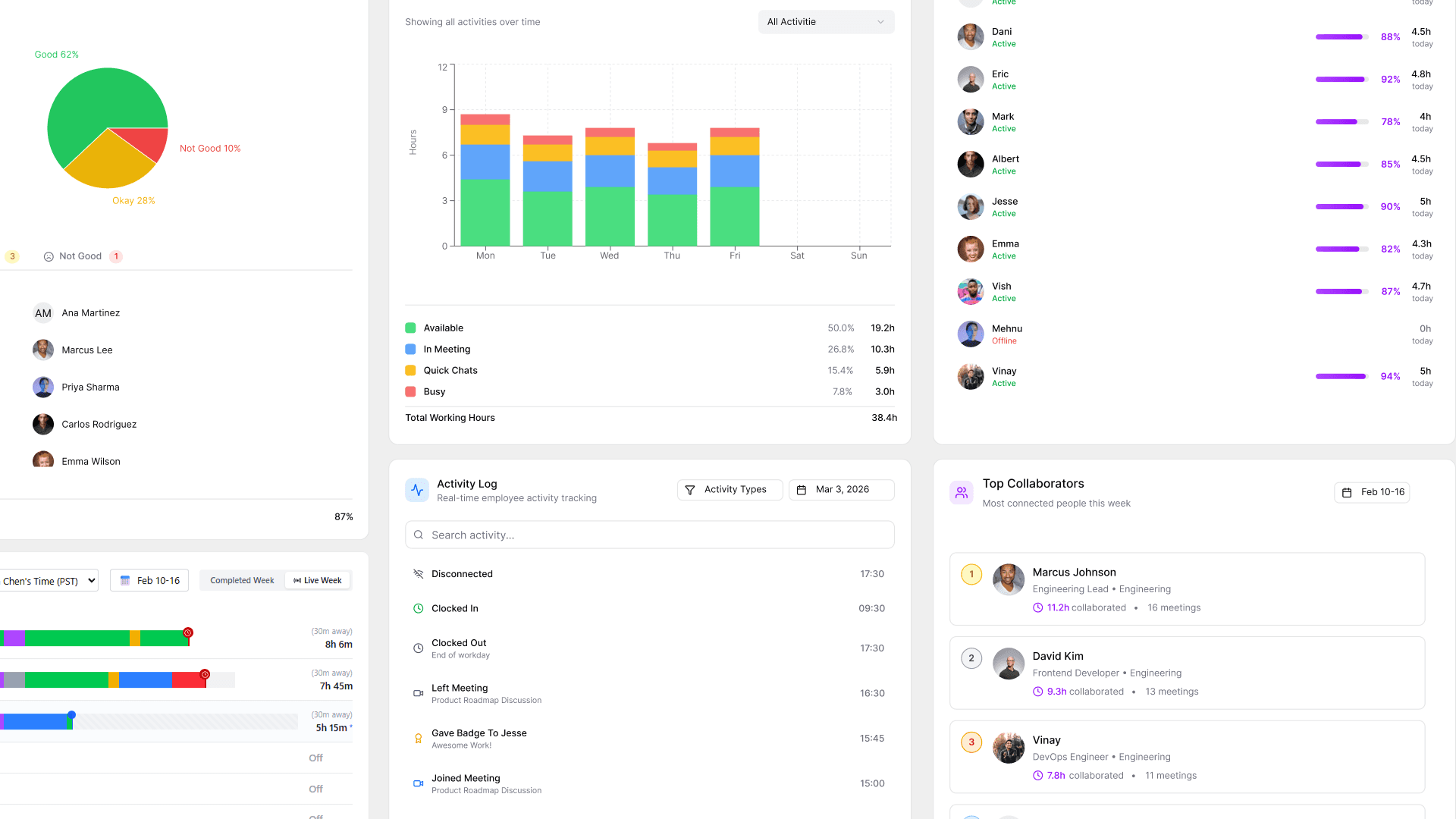
Análise de Equipes Remotas: O Guia Completo para Gestão do Trabalho Remoto Baseada em Dados em 2026
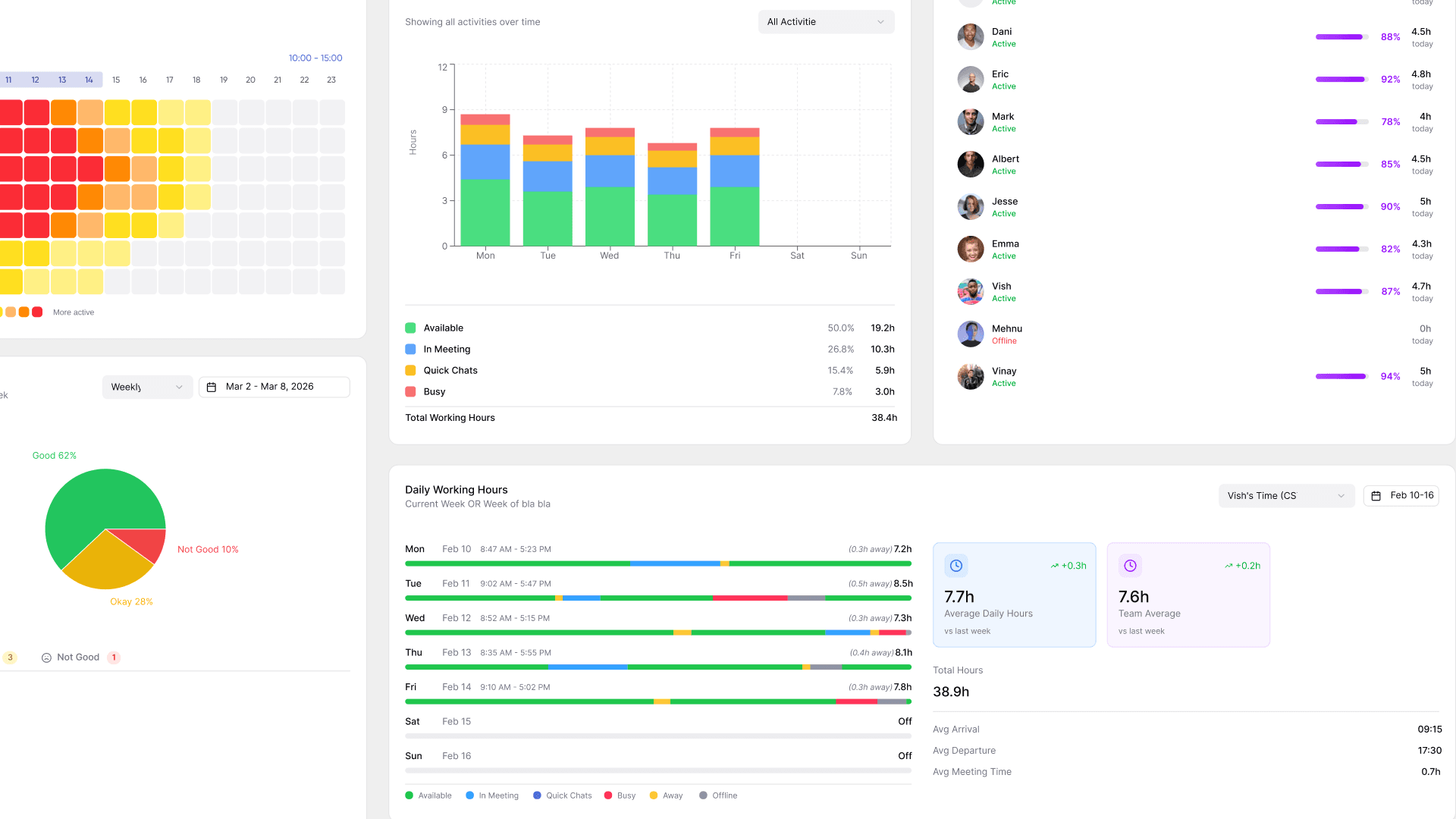
Guia Completo para Obter Visibilidade sobre o Desempenho e a Colaboração de Equipes Remotas