
AI-Powered Virtual Offices: What to Know in 2026
SoWork Editorial Team
Published:
Updated on:
AI-powered virtual offices are reshaping remote work by mimicking the dynamics of in-person collaboration. These platforms use avatars, spatial audio, and AI tools to create engaging digital workspaces for teams. Key benefits include:
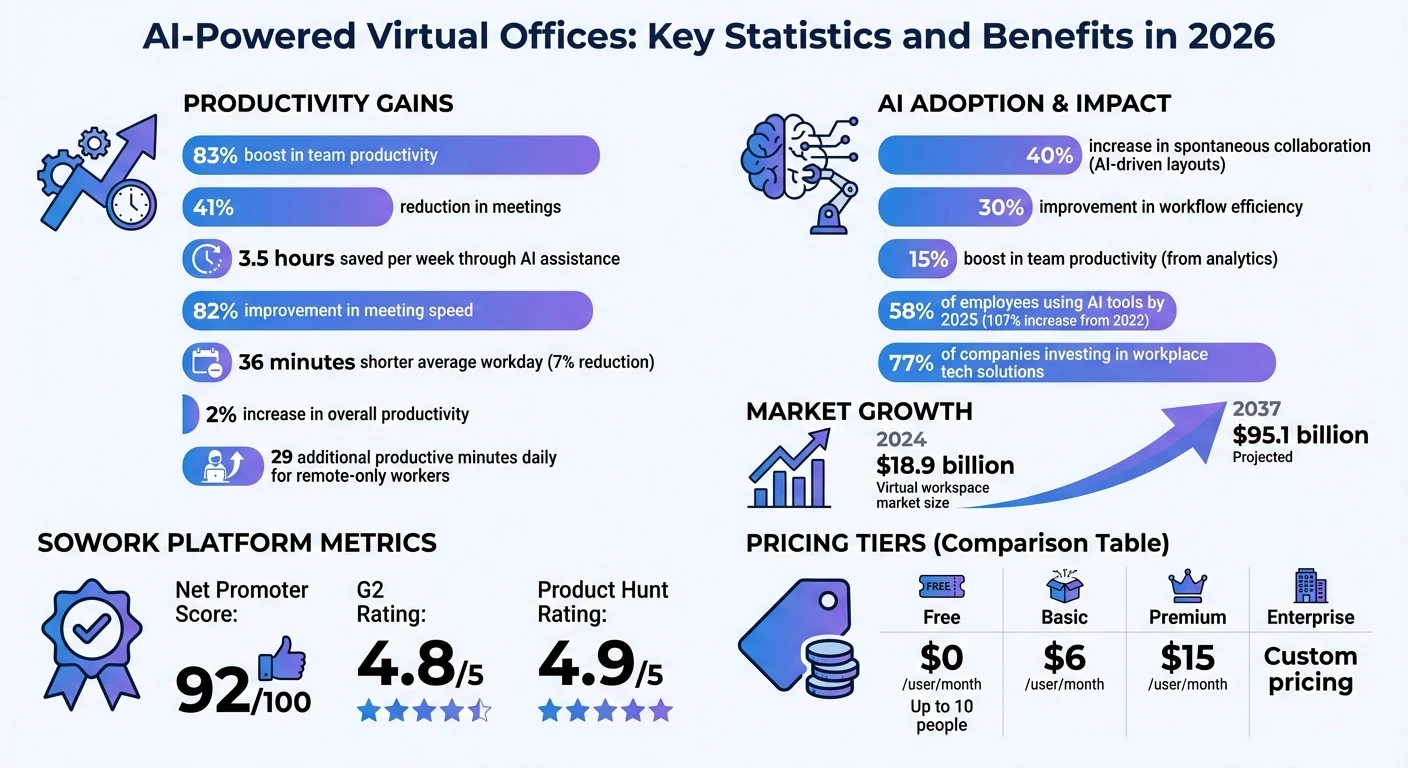
Improved Efficiency: Teams report an 83% boost in productivity and a 41% reduction in meetings.
AI Assistance: Features like meeting summaries, action items, and team analytics save an average of 3.5 hours per week.
Customizable Workspaces: Tools like MapMaker allow teams to design virtual offices with focus zones, project rooms, and social spaces.
Enhanced Communication: Spatial video calls and integrated chat systems make interactions feel natural and reduce isolation.
With the virtual workspace market projected to grow from $18.9 billion in 2024 to $95.1 billion by 2037, platforms like SoWork are leading the charge. SoWork offers features like AI-driven insights, flexible layouts, and integrations with tools like Slack and Zapier. Plans start at $0 for small teams, scaling to $15/user/month for advanced features.
For remote teams, AI-powered virtual offices are solving isolation challenges, reducing meeting fatigue, and improving collaboration, making them an essential tool for 2026 and beyond.
AI-Powered Virtual Offices: Key Statistics and Benefits for Remote Teams in 2026
How AI Will Transform Collaboration at Work
Key Features of AI-Powered Virtual Offices
AI-powered virtual offices offer dynamic digital workspaces designed to make collaboration feel natural and engaging. They stand out for their flexible layouts, immersive communication options, and smart automation tools.
Customizable Office Layouts and Immersive Modes
With tools like MapMaker, teams can craft their ideal digital headquarters. These spaces can include focus zones for deep work, project rooms for collaboration, and social corners that mirror the company’s personality and culture. Such layouts not only help teams stay connected but also make it easier to monitor activities in real-time, reducing feelings of isolation.
Users can choose between two viewing experiences. The Immersive mode offers a gamified environment with lifelike avatars and detailed 3D graphics, while the Simplified mode provides a more straightforward interface. AI-driven layout enhancements are shown to increase spontaneous collaboration by 40% and improve workflow efficiency by 30%. These thoughtfully designed spaces lay the groundwork for effective communication.
Spatial Video Calls and Text Chat
Beyond the layouts, these virtual offices prioritize seamless communication. Spatial video calls are triggered when avatars come close to each other, making spontaneous discussions feel more natural. This feature has been linked to an 82% improvement in meeting speed.
The built-in chat system further streamlines teamwork by offering channels, direct messages, threads, and voice notes. Tools like screen sharing, annotations, and whiteboards enhance collaborative efforts, ensuring teams can work together effectively, no matter where they are.
AI Meeting Assistants and Team Analytics
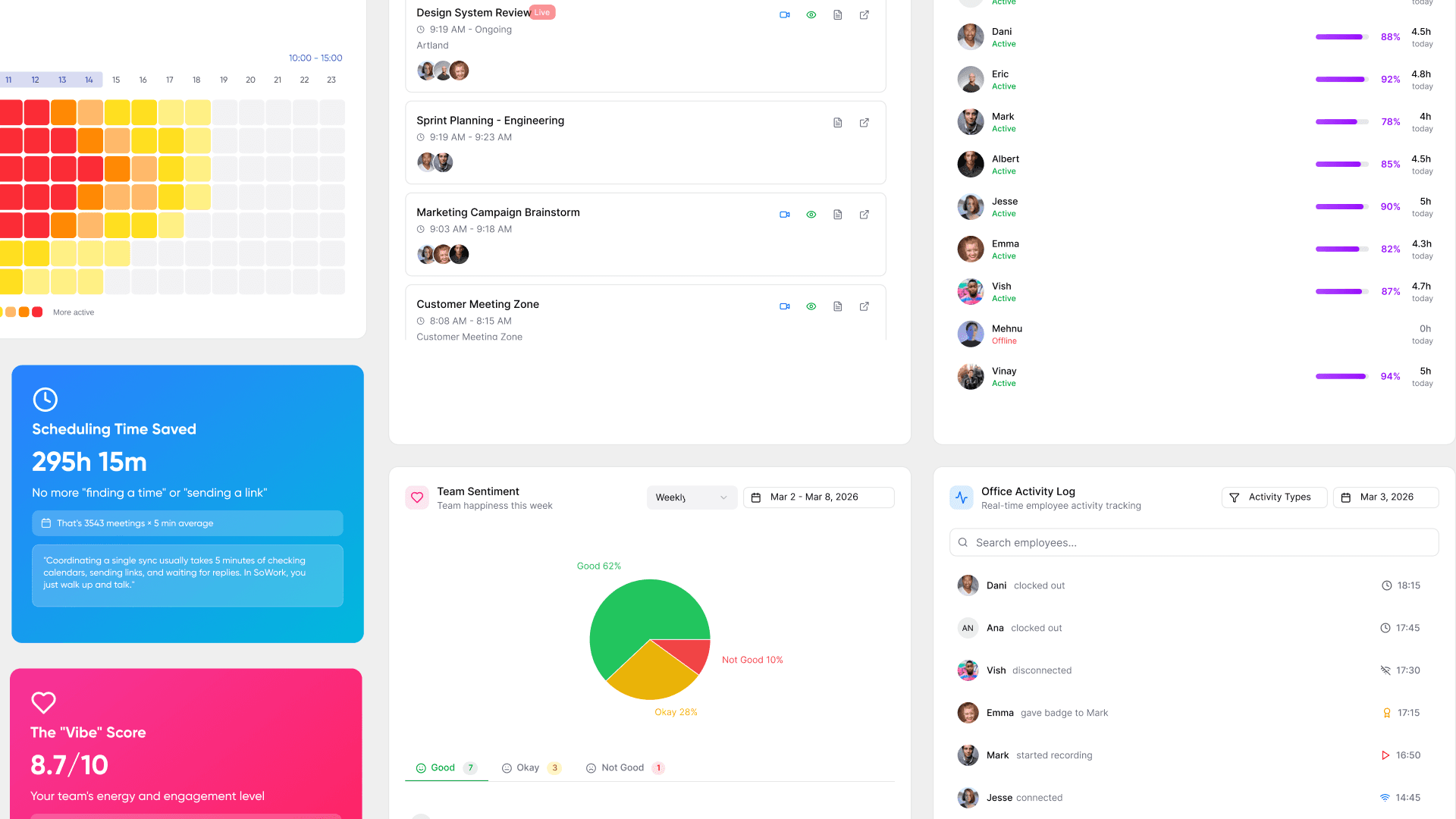
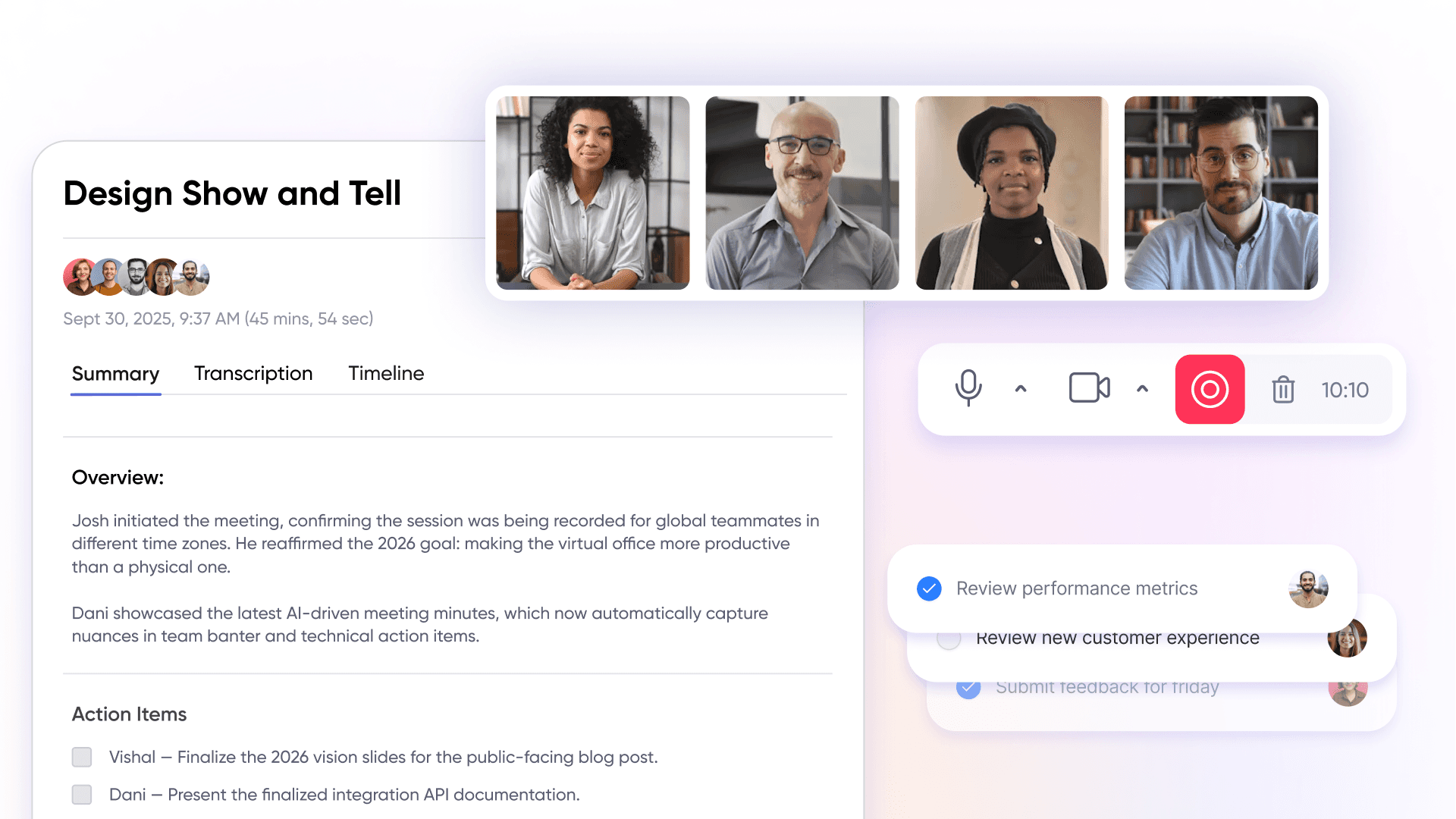
AI-powered assistants simplify meetings by recording sessions, creating summaries, and pulling out actionable tasks. This saves teams an average of 3.5 hours each week. Additionally, team analytics provide valuable insights into collaboration patterns by tracking metrics like engagement levels, meeting frequency, and login habits - all without being intrusive. These insights have been shown to boost team productivity by up to 15%.
The demand for virtual workspace solutions is also on the rise, with the market expected to grow from $18.9 billion in 2024 to $95.1 billion by 2037. With tools like these, AI-powered virtual offices are shaping the future of seamless, efficient remote collaboration.
How SoWork Improves Remote Team Collaboration
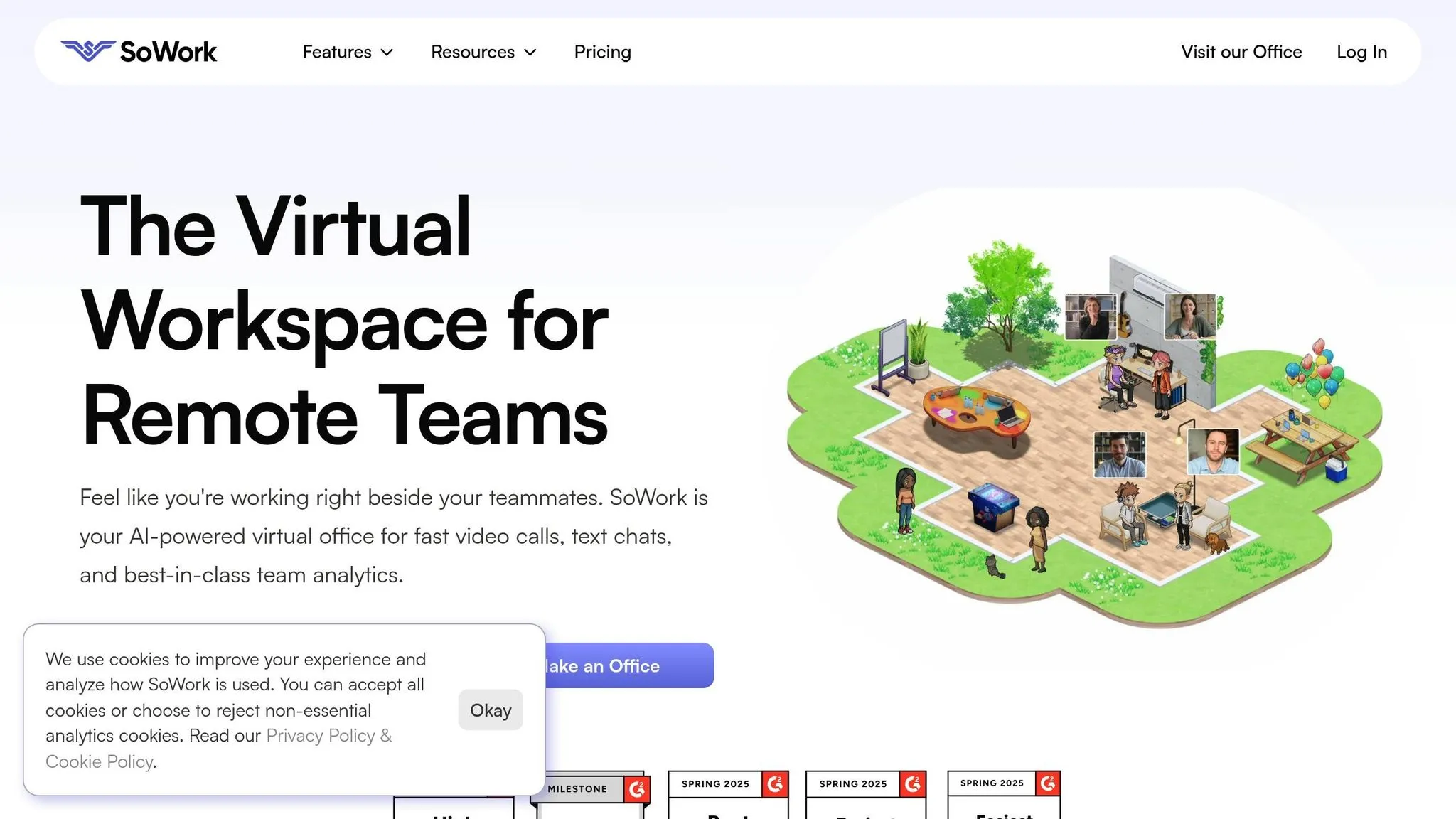
SoWork takes virtual office technology to the next level, showing how integrated tools can make remote teamwork more efficient and engaging. By combining video, chat, presence, and smart features into one seamless digital workspace, SoWork simplifies collaboration for remote teams.
Core Features of SoWork
SoWork stands out with features designed to make remote work feel natural and productive:
Spatial Video Technology: This feature enables spontaneous "walk up to talk" interactions, cutting down meeting times by 82% and reducing scheduled sessions by 41%.
Sophia Bot: An AI assistant that records meetings, summarizes key points, extracts action items, and organizes everything in a searchable library.
MapMaker Tool: Teams can design custom office layouts, complete with focus zones, project rooms, and social spaces. Users can switch between an immersive 3D mode with avatars or a simpler, streamlined mode.
Integrations: SoWork works with tools like Slack, Zapier, calendars, and digital whiteboards, bringing external workflows into one central hub.
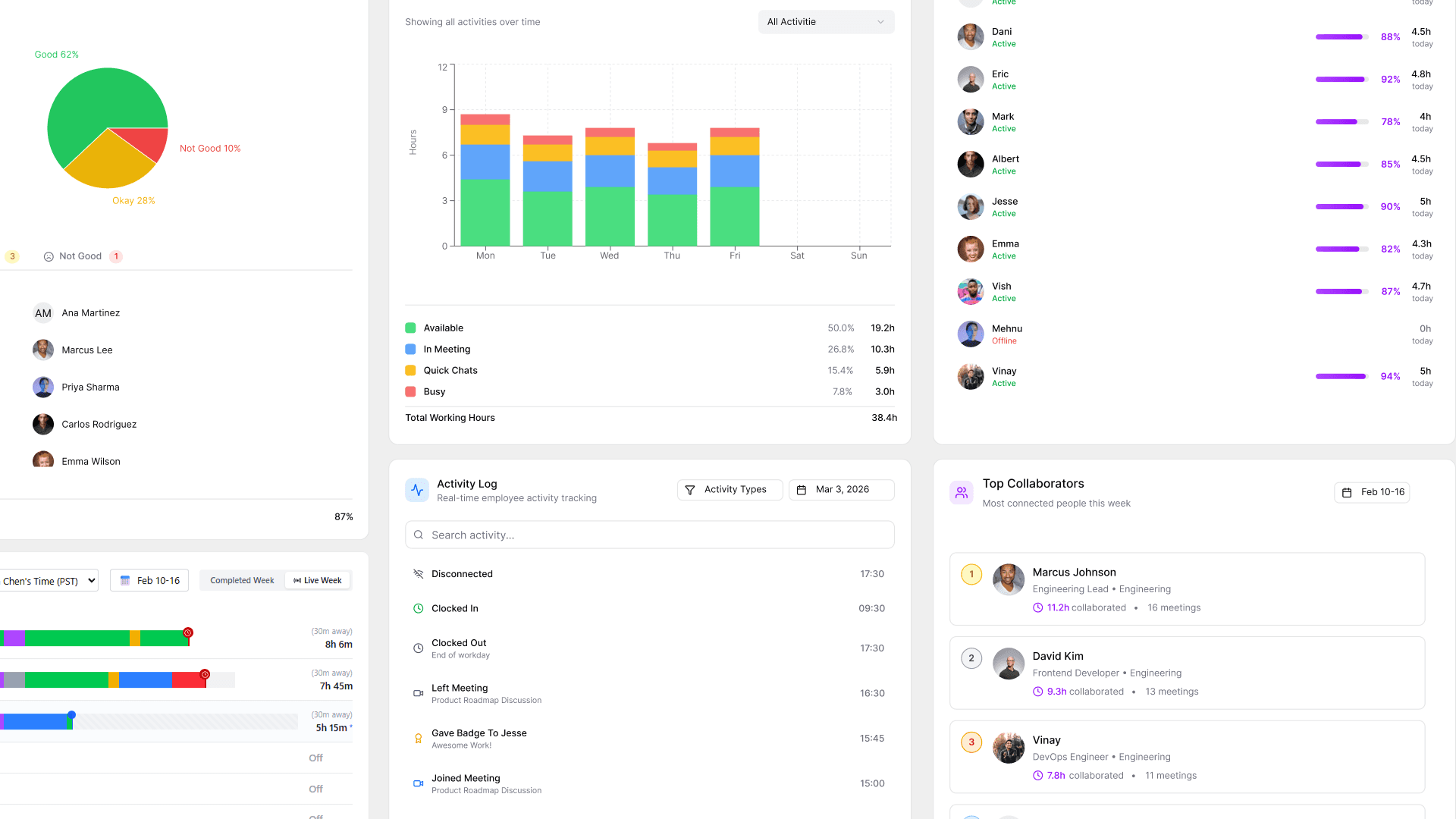
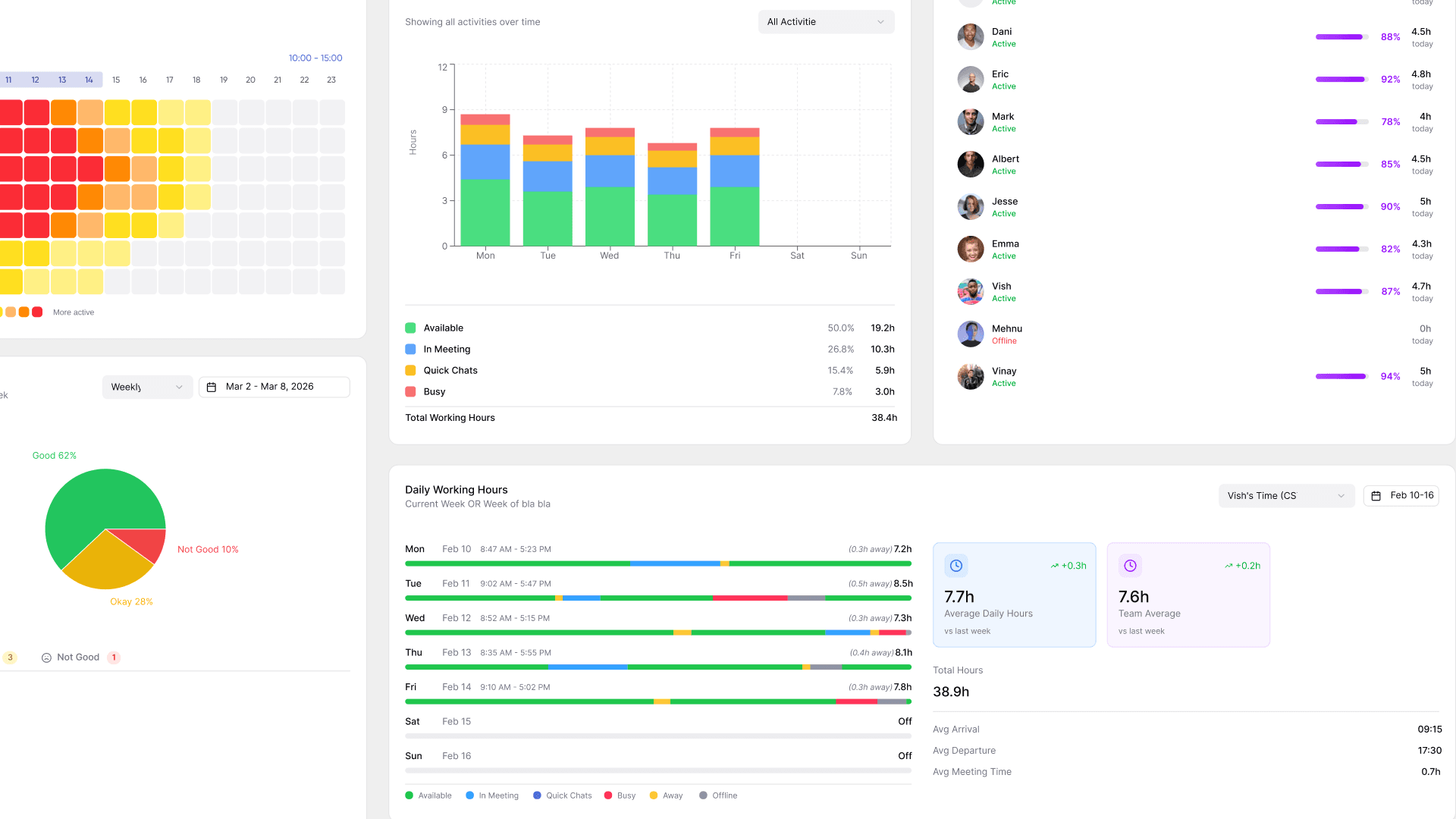
Team Analytics: Managers get insights into attendance, meeting habits, and collaboration trends. This data helps identify unnecessary meetings and improve team routines.
Alice Ferng, a Manager at Microsoft, shared her experience:
"Since using SoWork, my team feels more energized and happier. And as a Manager, I can finally SEE my remote team and what everyone is up to."
SoWork is available on desktop and mobile through the App Store and Google Play.
SoWork Pricing and Plans
SoWork offers flexible pricing to meet the needs of teams of all sizes, from small startups to large enterprises.
Plan | Price | Key Features | Best For |
|---|---|---|---|
Free | $0 per user/month | Up to 10 people, unlimited audio-only meetings, 30-minute meeting limit | Small teams testing the platform |
Basic | $6 per user/month | Unlimited video meetings, unlimited meeting length, unlimited chat history | Teams needing essential video and chat |
Premium | $15 per user/month | AI meeting summaries, action items, recordings, analytics, Zapier integration | Startups seeking productivity tools |
Enterprise | Custom pricing | SSO, SCIM provisioning, custom offices/avatars, 99.99% uptime, dedicated support | Large organizations with 100+ users |
The Premium plan unlocks advanced AI tools and analytics, while the Enterprise plan caters to larger teams with enhanced security and customization.
Use Cases for Remote Teams
SoWork's features are designed to streamline workflows and build a stronger sense of connection in remote work environments. For instance, Nate LaMartina, Technical Art Director at NetEase, highlighted how the platform improved team dynamics:
"As the team felt more connected, they naturally collaborated more. Work was getting unblocked, teams were ideating and solving problems together, and projects were getting shipped on time."
Startups often use SoWork to consolidate their communication and collaboration tools into one platform. The "walk up" model lets team members resolve issues quickly without needing formal meetings.
Meanwhile, remote-first companies use SoWork’s customizable layouts to maintain a sense of structure and culture. Dedicated areas for standups, focused work, and social interactions help teams stay informed and aligned. Russell Sng, a Manager at Unity, praised the platform:
"I love the all-in-one nature of it, the weekly updates, and the live support!"
With high ratings on platforms like G2 (4.8/5), Product Hunt (4.9/5), and a Net Promoter Score of 92/100, SoWork has become a favorite for making remote collaboration feel more natural and efficient. It’s clear that SoWork is setting a new standard for digital teamwork.
Benefits of AI Virtual Offices for Productivity and Culture
AI-powered virtual offices are changing the game for remote teams, making collaboration smoother and boosting both productivity and team morale. Research shows that teams using these platforms experience an 83% increase in efficiency. On top of that, the average workday has shortened by 36 minutes (a 7% reduction), while productivity has climbed by 2%, thanks to more focused work sessions. Interestingly, remote-only workers gain an additional 29 minutes of productive time daily compared to their office-based or hybrid counterparts. By 2025, 70% of employees were able to maintain healthy work patterns. These improvements are laying a solid foundation for enhanced teamwork and more insightful data, which we’ll explore further.
Better Collaboration and Less Meeting Fatigue
One of the biggest pain points of traditional remote work is the reliance on endless video calls and constant calendar juggling. AI virtual offices offer a refreshing solution by enabling spontaneous "walk-up" conversations through spatial video. Instead of scheduling yet another meeting, team members can simply approach a colleague’s avatar for an instant chat. Tools like SoWork’s Sophia Bot take it a step further, handling meeting notes, summaries, and action items automatically. This saves workers an estimated 3.5 hours per week on admin tasks alone.
Data-Driven Insights with Analytics
AI virtual offices aren’t just about smoother meetings - they also provide powerful analytics that help leaders fine-tune workflows. These tools offer clear insights into team dynamics, tracking attendance, meeting frequency, and engagement levels. This helps managers pinpoint bottlenecks and streamline collaboration. By 2025, 58% of employees were using AI tools - a massive 107% increase from 2022. Meanwhile, 77% of companies are actively investing in tech solutions to enhance the workplace experience.
But these analytics go beyond just tracking activity. They help uncover optimal collaboration times and show when teams naturally align, recreating the organic energy of in-person offices while preserving the flexibility of remote work. It’s a win-win for both employees and organizations.
Future Trends in AI-Powered Virtual Offices
The world of virtual offices is undergoing a rapid transformation. By 2026, AI agents are expected to take on roles as digital collaborators, actively participating in meetings and providing expert advice. This marks a shift from using AI as a mere tool to treating it as a collaborative partner, enhancing both interaction and productivity in hybrid work settings.
"By 2026, the workplace won't evolve through more apps or digital assistants, but through Connected Intelligence - where people, data, and digital workers [AI agents] work together side by side."
– Aruna Ravichandran, SVP & CMO for AI, Networking, and Collaboration, Cisco
Gartner has highlighted a critical challenge: by 2026, 75% of organizations may experience measurable productivity losses if they fail to address the complexities of hybrid work. On the other hand, businesses that scale AI are already seeing three times higher total shareholder returns. The divide between early adopters of AI and those lagging behind is becoming increasingly pronounced.
Advances in Spatial Audio and Hybrid Integration
Virtual interactions are set to become more lifelike, thanks to improvements in spatial audio. This technology positions voices based on virtual proximity, so when you "approach" a colleague's avatar in a virtual office, their voice naturally becomes louder and clearer. These advancements aim to reduce meeting fatigue and foster more natural conversations.
The gap between physical and digital workspaces is also narrowing. AI-powered cameras with speaker recognition can now identify individual voices in crowded conference rooms, labeling them for remote participants. Additionally, when employees connect to office Wi-Fi or plug into a docking station, their status is automatically updated, showing their location to colleagues. This addresses a common issue: 49% of knowledge workers struggle to connect with the right people when working in the office. AI will also simplify hybrid work by optimizing in-office schedules and improving team coordination.
Predictive Analytics and AI-Driven Recommendations
AI is moving beyond reactive assistance to proactive problem-solving. Predictive analytics will soon analyze collaboration networks, traffic patterns, and task requirements to adjust virtual office layouts dynamically. It will also recommend the best times for teams to meet, helping organizations cut wasted office space by 35% and boost productivity by 25–30%.
"In 2026, arguments about AI's economic impact will finally give way to careful measurement. We'll see the emergence of high-frequency 'AI economic dashboards' that track... where AI is boosting productivity."
– Erik Brynjolfsson, Digital Economy Lab Director, Stanford HAI
This evolution - from questioning AI's capabilities to measuring its effectiveness and ROI - is a significant shift. Real-time AI dashboards will allow companies to monitor performance, costs, and benefits. Virtual office platforms will use these insights to offer tailored recommendations, such as configuring digital tools for specific tasks, suggesting optimal collaboration moments, and even predicting equipment issues weeks in advance.
These developments are setting the stage for virtual offices that continuously refine and improve team collaboration, making hybrid work more seamless and efficient.
Conclusion
AI-powered virtual offices are reshaping the way remote teams collaborate in 2026, cutting down administrative tasks, saving teams an average of 3.5 hours per week, and increasing efficiency by an impressive 83%. By leveraging Connected Intelligence - where humans, data, and AI work seamlessly together - teams are experiencing measurable boosts in both productivity and morale. This shift underscores a future where smart collaboration becomes a key advantage in the competitive landscape.
Data from 2025 highlights these changes: distributed teams reported up to 83% efficiency improvements and a 41% reduction in meetings, thanks to the ability to solve problems spontaneously in virtual environments. These numbers point to a dramatic reimagining of how remote teams function.
For business leaders refining their remote work strategies, tools like SoWork provide practical solutions. Their pricing is flexible - starting at $0 for teams of up to 10 members and scaling to $15 per user per month for advanced features like AI-generated summaries and in-depth analytics. With the Virtual Workspace Solutions market expected to grow from $18.9 billion in 2024 to $95.1 billion by 2037, it’s clear that this is not just a trend but the future of work.
The real question isn’t whether AI-powered virtual offices will become the norm - it’s which organizations will adapt quickly enough to seize the advantage. With a 92/100 Net Promoter Score and stellar ratings like 4.8/5 on G2 and 4.9/5 on Product Hunt, SoWork demonstrates that it’s possible to bring back the human connection and spontaneity of in-person work while unlocking unprecedented levels of productivity through AI. Platforms like SoWork are paving the way for remote teams to not only work smarter but also foster the human connections that are essential for long-term success.
FAQ
How do AI-powered virtual offices improve productivity for remote teams?
What makes SoWork a great choice for remote team collaboration?
How will AI reshape virtual offices by 2026?
Blogs
Read Similar Articles
Remote Team Analytics: Complete Guide to Data-Driven Remote Work Management in 2026
Complete Guide to Gaining Visibility Into Remote Team Performance and Collaboration