Gather to SoWork Migration Guide 2026
Vishal Punwani

Published:
Updated on:
To migrate from Gather to SoWork, export your Gather space settings and note your room layout, create a free SoWork workspace, recreate your office map (SoWork rebuilds it free for Premium teams over 30 users), invite teammates via link, connect Slack and Google Calendar, then run both platforms in parallel for two weeks before fully switching over.
What is SoWork and how does it differ from Gather?
SoWork is an AI-powered virtual office that combines presence awareness, instant meetings, and automatic meeting summaries in one platform. Gather is a pixel-art, proximity-based workspace built primarily for social interaction and events.
The core difference is purpose. Gather's avatar-navigation model is great for drop-in culture and virtual events, but it doesn't record meetings, doesn't surface AI summaries, and removed its free tier in late 2025. [1] SoWork sits above your existing stack as a coordination layer: presence indicators update automatically from your calendar, meetings start in one click, and the AI Meeting Memory feature transcribes and summarizes every conversation so nothing falls through the cracks. [2] Gather scores 4.8/5 on G2 for social engagement; SoWork is built for teams that need daily productivity, not just social presence. [3]
Feature | Gather | SoWork |
|---|---|---|
AI meeting summaries | No | Yes |
Auto calendar sync | Yes | Yes |
Free tier (2026) | No | Yes (up to 10 users) |
Proximity navigation | Yes (2D pixel art) | Yes (2.5D immersive) |
Focus / Mini Mode | No | Yes |
Why are remote teams migrating from Gather to SoWork in 2026?
The top drivers are Gather's 2026 pricing jump, the absence of AI productivity tools in Gather, and growing meeting fatigue that SoWork's presence-first model directly addresses.
Gather removed its permanent free tier in late 2025, and its new rate of $15/user/month (billed monthly) kicked in on first renewal after January 1, 2026. [1] That pricing change pushed smaller teams to re-evaluate. At the same time, remote workers now spend an average of 13.2 hours per week in video calls, up 34% from pre-pandemic levels, and 49% report significant video call fatigue weekly. [2] SoWork's presence awareness and one-click instant meetings reduce the need to schedule formal calls. Its AI Meeting Memory means teams stop losing decisions made in spontaneous conversations. For teams scaling past 20 people, the consolidation of meetings, chat, and AI tools into one platform also cuts tool-sprawl costs. [3]
What prerequisites do teams need before migrating to SoWork?
SoWork is browser-based and requires no software download, so the technical bar is low. The main prerequisites are an admin-level Gather account, a list of your current integrations, and a clear picture of your team's room structure.
Before you start, gather these:
Gather admin access, you'll need it to export space settings and revoke access cleanly at migration end.
Team roster, a spreadsheet of all member emails and roles.
Integration inventory, note which tools (Slack, Google Calendar, Zoom, Zapier) your team uses daily.
Browser check, SoWork runs in Chrome, Edge, or Firefox; no desktop app install required.
Calendar provider, Google Workspace or Outlook, for automatic status sync.
Plan decision, SoWork's Basic tier is $6/user/month ($5.40 annually); Premium is $15/user/month ($12 annually). [1] Teams over 30 users on Premium get a free custom map rebuild.
How do you back up your Gather data before migrating?
Gather doesn't offer a one-click full data export, so the backup process is manual. Capture your space layout, embedded objects, and any custom assets before you start.
Follow these steps:
Screenshot every room in your Gather space, top-down view with object positions visible.
Export the map file from Gather's Mapmaker (File > Download) to save the raw space JSON and any uploaded background images.
List all embedded objects, whiteboards, video embeds, games, and interactive tiles, with their room locations.
Save custom assets, logos, background images, and custom sprite sheets, to a shared drive folder.
Document integrations, note every Gather integration (Google Calendar, Zoom, Slack) so you can reconnect them in SoWork.
Export member list from Gather's admin panel as a CSV.
Gather's chat history and meeting recordings are not exportable, so download any critical recordings before canceling your plan.
How do you create and configure a SoWork workspace?
Creating a SoWork workspace takes under five minutes. Go to sowork.com, sign up, name your office, and you're in, no download needed.
Here's the setup sequence:
Sign up at sowork.com with your work email and create your organization.
Name your office and choose a base map template that matches your team size and culture.
Set up rooms, create named spaces (Engineering, Design, Leadership, Social) to mirror your Gather layout.
Connect your calendar, link Google Workspace or Outlook so SoWork updates everyone's presence status automatically when meetings start.
Connect Slack, SoWork integrates with Slack so teammates get notified without leaving their existing tools. [1]
Set your plan, the free tier supports up to 10 users; upgrade to Basic ($6/user/month) or Premium ($15/user/month) before inviting the full team. [2]
How do you recreate your Gather office layout in SoWork?
Use your Gather screenshots and map export as a reference to rebuild rooms in SoWork's office editor. Premium teams over 30 users get a free custom map rebuild done by SoWork's team.
If you're doing it yourself:
Open your Gather screenshot library and map export side by side with SoWork's office editor.
Create a room in SoWork for each named space in Gather (conference rooms, focus areas, social zones, leadership row).
Place desks and assign them to team members by name, this replicates the "who sits where" awareness from Gather.
Add social zones (a lounge, a games room) to preserve the culture touchpoints your team built in Gather.
Upload your company logo and brand colors to personalize avatars and space decor.
If you're on SoWork Premium with 30+ users, contact SoWork's team directly, they rebuild your map for free. [1] This is one of the most practical migration perks and saves 3 to 5 hours of setup work.
How do you invite your team and migrate user accounts?
SoWork uses invite links and email invitations, there are no accounts to port from Gather. Each team member creates a fresh SoWork profile, which takes under two minutes.
The migration is account-free on the Gather side, which keeps things simple:
In SoWork admin settings, go to Invite Members and generate a shareable invite link or send individual email invites from your CSV export.
Ask each member to sign in with their work Google or Microsoft account, this auto-populates their name and avatar.
Have members customize their avatar and set their desk location during the first session.
Assign roles (admin, member) to match your Gather permission structure.
Remind the team to connect their personal calendar during setup, this is what powers SoWork's automatic presence status and is the single biggest daily-use habit to establish early.
Guests (clients, contractors) can join SoWork meetings via link at no additional cost. [1]
How do you connect SoWork to Slack, Google Workspace, and Zoom?
SoWork integrates natively with Slack, Google Workspace, Outlook, and Zapier. Zoom accounts can be brought in at no extra charge under SoWork's BYO media policy.
Integration setup order matters, do calendar first, then chat:
Google Calendar or Outlook, connect in SoWork settings; presence status updates automatically when a calendar event starts. This is the highest-value integration.
Slack, connect SoWork to Slack so teammates get nudges about who's available without leaving Slack. SoWork and Slack sit alongside each other rather than replacing it. [1]
Zoom, SoWork supports bringing your existing Zoom account; there's no charge for integrating it. [2]
Zapier, use Zapier to connect SoWork events to tools like Notion, Asana, or HubSpot for workflow automation.
Avoid connecting everything on day one. Roll out calendar sync first, let the team feel the presence-awareness benefit, then add Slack and Zapier in week two.
How do you replicate Gather's interactive elements in SoWork?
SoWork doesn't replicate Gather's pixel-art game objects like go-karts or interactive gongs directly, but it does include built-in team games and social spaces that serve the same culture function.
Here's how to map Gather features to SoWork equivalents:
Gather Element | SoWork Equivalent |
|---|---|
Interactive games (go-karts, gongs) | Built-in team games in social zones |
Embedded whiteboards | Screen sharing + external whiteboard link |
Video embeds (YouTube, Loom) | Share via screen share or topic-based chat |
Campfire / lounge areas | Customizable social rooms with open audio |
Poster boards | Avatar apparel + room signage customization |
For teams that heavily used Gather's game layer for culture events, the honest advice is this: SoWork's social spaces are less game-focused but more persistent. The daily presence and ambient audio make culture feel continuous rather than event-driven. Run a dedicated culture session in SoWork's social zone in week one to help the team discover these spaces.
How does SoWork pricing compare to Gather?
SoWork is meaningfully cheaper than Gather at most team sizes. SoWork's Basic tier is $6/user/month versus Gather's $12/user/month annual rate in 2026.
Plan | SoWork | Gather |
|---|---|---|
Free tier | Yes, up to 10 users | No (removed late 2025) |
Entry paid (monthly) | $6/user/month (Basic) | $15/user/month |
Entry paid (annual) | $5.40/user/month | $12/user/month |
Premium / top tier | $15/user/month ($12 annually) | Custom |
Free map rebuild | Yes (Premium, 30+ users) | No |
For a 25-person team, SoWork Basic costs $150/month versus Gather's $375/month billed monthly. [1] That's a $2,700 annual difference before factoring in the AI meeting summaries and presence tools that Gather doesn't include. Evaluate pricing by calculating your current Gather bill, then adding the value of tools SoWork consolidates (meeting notes, presence layer) that you may currently pay for separately.
What are the biggest risks when migrating from Gather to SoWork?
The biggest risk isn't technical, it's adoption failure. Teams that don't establish a daily habit of opening SoWork within the first two weeks tend to drift back to Slack and Zoom.
The main pitfalls and how to avoid them:
Skipping the parallel period, running both platforms for two to three weeks lets SoWork prove its daily value before you retire Gather. [1]
Not connecting calendars on day one, without calendar sync, presence indicators are wrong and the platform feels broken. Make this step mandatory in your invite email.
Migrating all 200 people at once, start with a 5 to 10 person pilot group, gather feedback, then roll out to the full team.
Losing Gather chat history, Gather doesn't export chat. Archive important threads manually before you cancel.
No designated SoWork champion, assign one person per team to answer questions and model daily use. Adoption follows behavior, not announcements.
Migration risk is highest during the transition window. [2]
How do you train your team to adopt SoWork quickly?
Keep training short and hands-on. A 20-minute live walkthrough on day one, followed by a short async video, is enough for most teams to get productive immediately.
A practical onboarding sequence:
Day 1, Live walkthrough (20 min): Show how to move through the office, start an instant meeting, and set focus mode. Record it for async viewing.
Day 1, Calendar connection: Make connecting Google or Outlook calendar a required first step. This is the feature that makes SoWork feel alive.
Day 2, Slack integration: Show the team how SoWork and Slack work together so nobody feels they're abandoning a tool they depend on.
Week 1, AI Meeting Memory demo: Run one real meeting in SoWork and share the auto-generated summary. This is the moment most teams become converts.
Week 2, Feedback check-in: Run a short survey or async thread asking what's working and what's confusing. Iterate fast.
Teams that assign a buddy to help new members navigate a virtual office onboard significantly faster. [1]
How do you run a parallel-operation period with both platforms active?
Run both Gather and SoWork simultaneously for two weeks. Use SoWork for all internal daily work and keep Gather open only for teams or events that specifically request it.
A clean parallel-run structure:
Week 1: SoWork is the primary workspace for the pilot group. Gather stays open but is not the default. All internal meetings happen in SoWork. Track how often people voluntarily open each platform.
Week 2: Expand SoWork to the full team. Gather is available but not promoted. Announce a specific sunset date so the team has a clear deadline.
End of Week 2: Cancel or downgrade your Gather plan. Export any remaining assets you haven't moved.
The key rule: never make Gather and SoWork equally official at the same time. That creates confusion and splits presence data. SoWork should be the declared primary from day one of the parallel period, with Gather as the fallback only. Keep the parallel window to two to three weeks maximum, longer and teams stall. [1]
How do you measure whether the SoWork migration succeeded?
Track three metrics: daily active users in SoWork, change in scheduled meeting volume, and team-reported satisfaction scores compared to your Gather baseline.
Set your baseline before migration starts, then measure at 30 and 60 days post-switch:
Metric | What to measure | Target signal |
|---|---|---|
Daily active users | % of team opening SoWork each day | 70%+ by day 30 |
Scheduled meetings | Weekly calendar invites per person | Declining trend |
Instant meetings | SoWork one-click conversations per week | Increasing trend |
AI summary usage | Meeting summaries opened / generated | High ratio = adoption |
Tool satisfaction | 1-5 team survey score | Improvement vs Gather baseline |
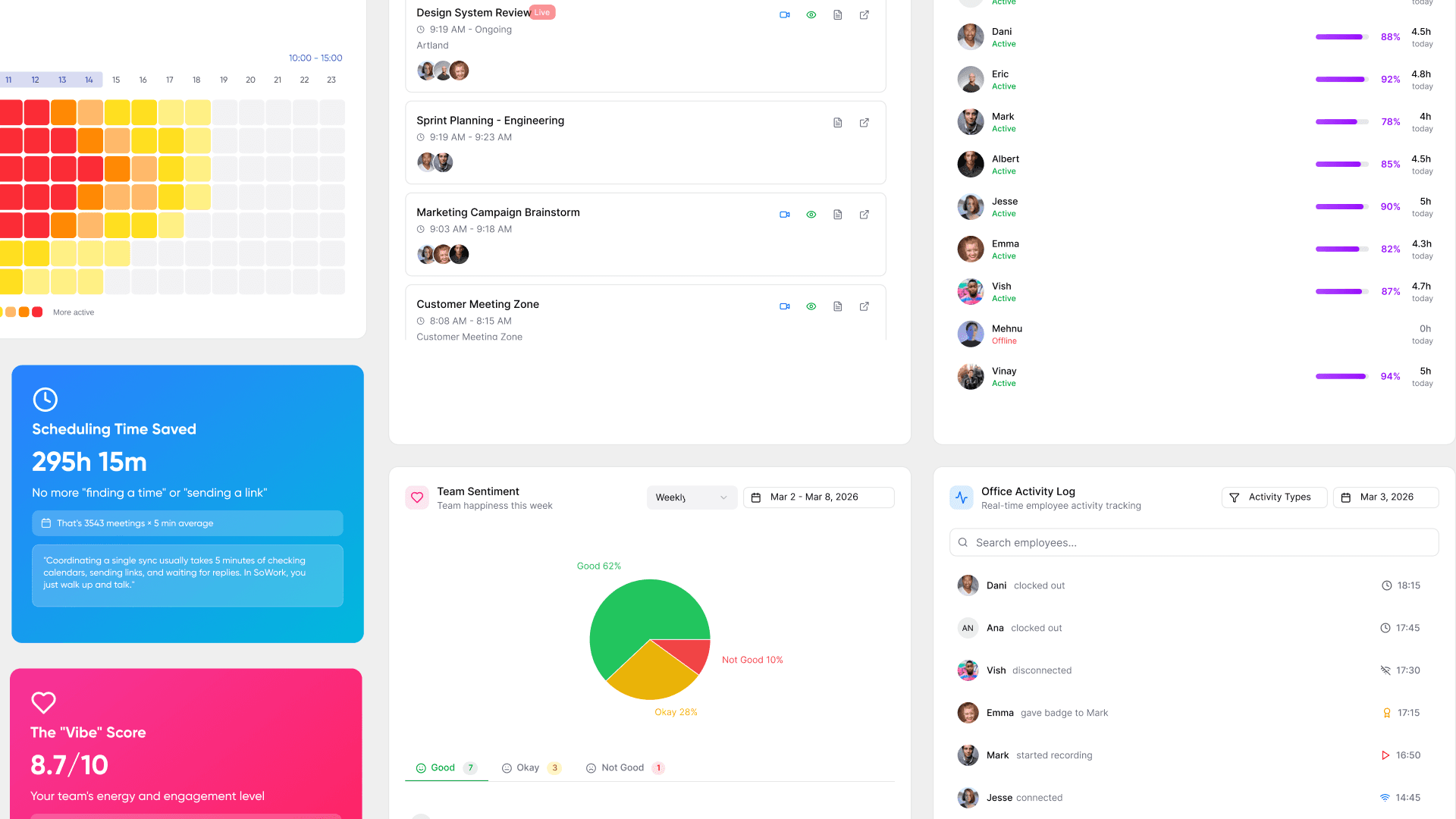
SoWork's built-in analytics surface team activity and engagement data, so you don't need a separate tool to pull these numbers. [1] A successful migration looks like more spontaneous conversations, fewer scheduled calls, and a team that opens SoWork first thing in the morning without being prompted.
What evidence exists of teams successfully switching from Gather to SoWork?
Published case study data specific to Gather-to-SoWork migrations is limited, but G2 reviews and user testimonials point to consistent patterns: faster unblocking of junior team members, fewer scheduled meetings, and AI summaries as the standout feature.
One G2 reviewer described the before-state clearly: a fully remote team where "a two-minute question became a calendar invite or a long Slack thread, and small blockers sat unresolved for hours." After switching to SoWork, junior developers stopped staying stuck rather than asking for help. [1] Another reviewer noted that AI meeting summaries let anyone who missed a call "catch up in two minutes instead of sitting through a 40-minute recording." [2] A NetEase Technical Art Director cited on SoWork's blog noted that as the team felt more connected, they naturally collaborated more. [3] These patterns align with broader data: teams using virtual office platforms with spontaneous-conversation features reported up to 83% efficiency improvements and a 41% reduction in meetings. [4]
Which SoWork features should teams activate right after migrating?
Activate calendar sync, AI Meeting Memory, and Focus Modes in the first week. These three features deliver the clearest day-one value and drive daily habit formation.
Post-migration activation priority:
Calendar Sync (Day 1), connects Google or Outlook so presence status updates automatically. No manual status-setting needed.
AI Meeting Memory (Day 1), turns on automatic transcription and summarization for every SoWork meeting. Share the first summary in Slack to show the team what they're getting.
Focus Modes, Simple Mode and Mini Mode (Day 2), let individuals signal deep work time while staying loosely visible to the team. This replaces the Gather "do not disturb" convention.
Topic-Based Chat (Week 1), set up channels that mirror your existing Slack structure so context stays organized inside SoWork.
Avatar Customization and Social Zones (Week 1), let the team personalize their space. This is the culture-building equivalent of decorating a physical desk and directly replaces Gather's social environment.
Team Analytics (Week 2), review engagement data to identify who hasn't adopted yet and follow up directly. [1]
Are there other virtual office platforms worth considering besides SoWork?
Yes, Teamflow, Kumospace, and Sococo are the main alternatives. Each serves a different use case, but SoWork offers the widest feature set per dollar for most small-to-mid-sized remote teams.
Platform | Best for | Price (monthly) |
|---|---|---|
SoWork | Daily work, AI productivity, presence | $6/user (Basic) |
Teamflow | Sales/design teams needing embedded apps | $20/user (Seed) |
Kumospace | Events, networking, lightweight presence | Varies |
Sococo | Enterprise floor-plan presence layer | $14.99/seat |
Gather | Social-first, game-like environments | $15/user |
Teamflow is worth the premium only if embedded app collaboration (Salesforce, Figma) is central to your workflow. [1] Sococo makes sense for enterprises already running Zoom or Webex who want a presence layer without replacing their video stack. [2] Kumospace is trusted by companies including Spotify and Shopify for events and networking. [3] If your team's primary goal is daily productivity with presence awareness and AI tooling, SoWork is the strongest fit at the price point.
Key Takeaways
Gather removed its free tier in late 2025; its 2026 monthly rate is $15/user/month, making SoWork's $6/user/month Basic tier significantly cheaper for most teams.
SoWork offers a free custom map rebuild for Premium teams over 30 users, use it to avoid hours of manual office recreation.
Connect Google or Outlook calendar on day one; without it, presence indicators won't update automatically and the platform will feel broken.
Run a two-to-three week parallel period with SoWork as the declared primary platform and Gather as the fallback, don't treat them as equals or adoption stalls.
AI Meeting Memory is SoWork's highest-impact differentiator; demo it in a real meeting during week one to convert skeptical team members.
The biggest migration risk is behavioral, not technical, assign a SoWork champion per team and track daily active users at 30 days to catch adoption gaps early.
Gather's chat history and meeting recordings are not exportable, download critical recordings before canceling your plan.
Measure success at 30 and 60 days using three signals: daily active users, scheduled meeting volume (should drop), and instant conversation frequency (should rise).
Related reading
How to Migrate from Teamflow to SoWork: A Step-by-Step Guide for Remote Teams in 2026
How to Migrate from Roam to SoWork: A Step-by-Step Guide for Remote Teams in 2026
SoWork vs Gather: Which Virtual Office Platform Is Better for Remote Teams in 2026?
Sources
49% of remote professionals report significant video call fatigue on a weekly basis.
SoWork's Basic tier is $6/user/month ($5.40 annually) and Premium is $15/user/month ($12 annually).
Gather's Essential Plan is $12/user/month billed annually as of 2026.
SoWork rebuilds your map for free for Premium teams over 30 users.
SoWork does not charge for integrating existing Zoom accounts (BYO media policy).
Guests can join SoWork meetings via link at no additional cost.
SoWork features built-in analytics that provide insights about team activities and engagement.
Kumospace is trusted by companies including Spotify and Shopify for remote collaboration.
Sococo's standard plan is $14.99/seat/month ($13.49 annually) with a 10-seat minimum.
FAQ
How do you migrate from Gather to SoWork as a remote team?
Does SoWork have a free plan?
Is SoWork cheaper than Gather in 2026?
Can you export your data from Gather before migrating?
How long does it take to migrate a team from Gather to SoWork?
Does SoWork integrate with Slack and Google Workspace?
What happens to Gather's interactive games and objects when you switch to SoWork?
What are the biggest risks when switching from Gather to SoWork?
Blogs
Read Similar Articles
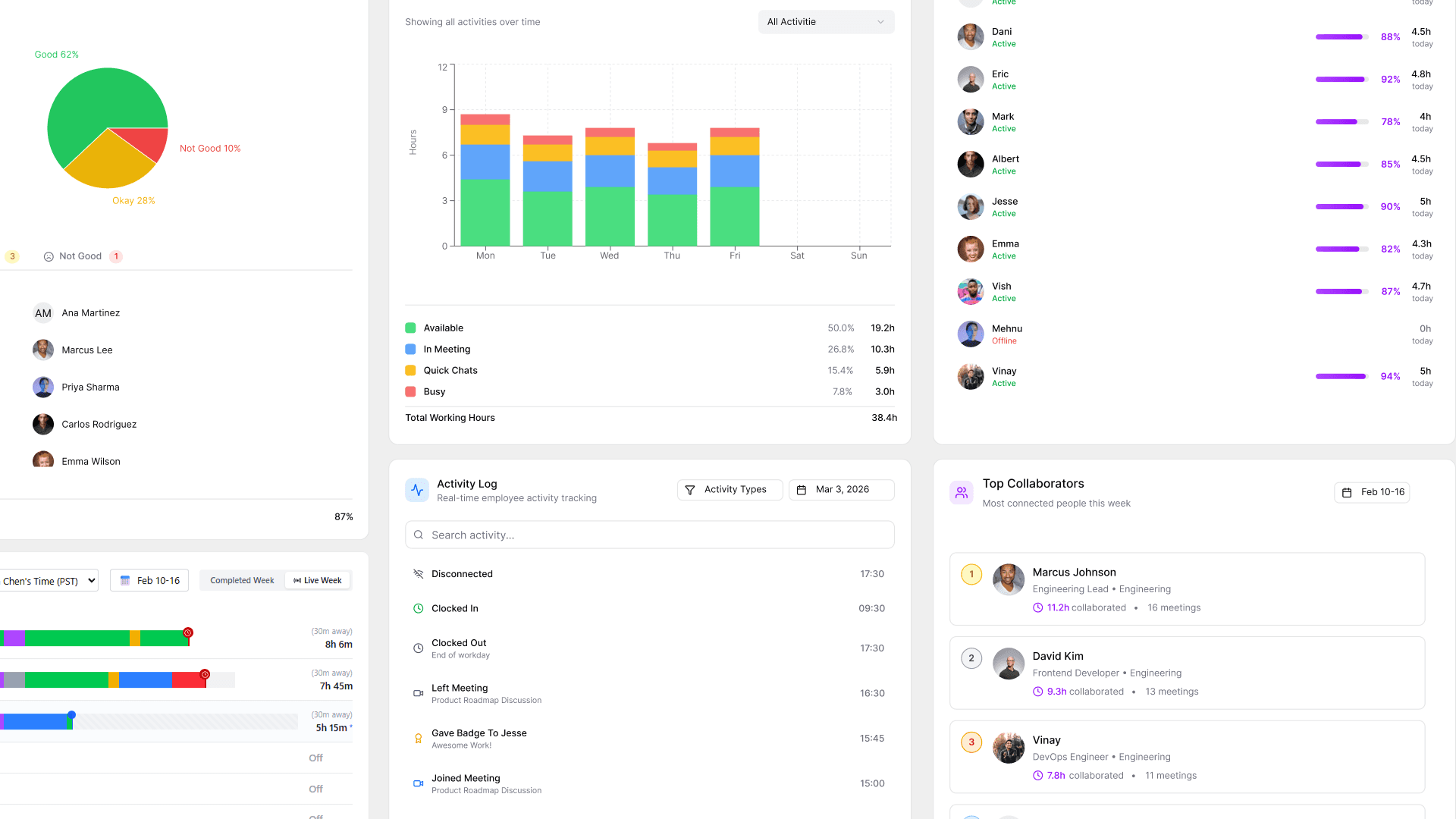
Remote Team Analytics: Complete Guide to Data-Driven Remote Work Management in 2026
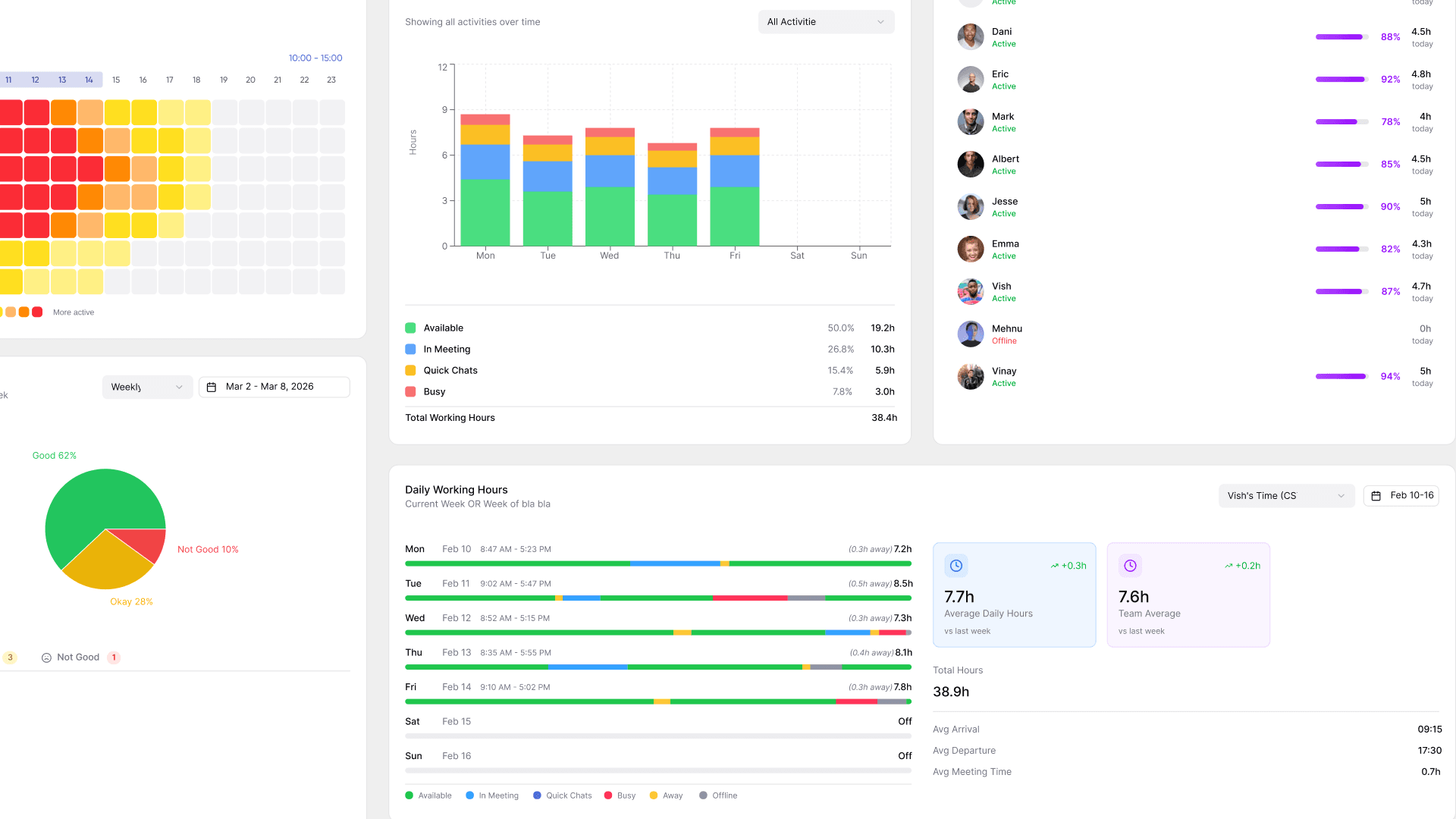
Complete Guide to Gaining Visibility Into Remote Team Performance and Collaboration