Painéis de Controle de Análise de Escritório Virtual: Guia 2026
Vishal Punwani

Publicado em:
Atualizado em:
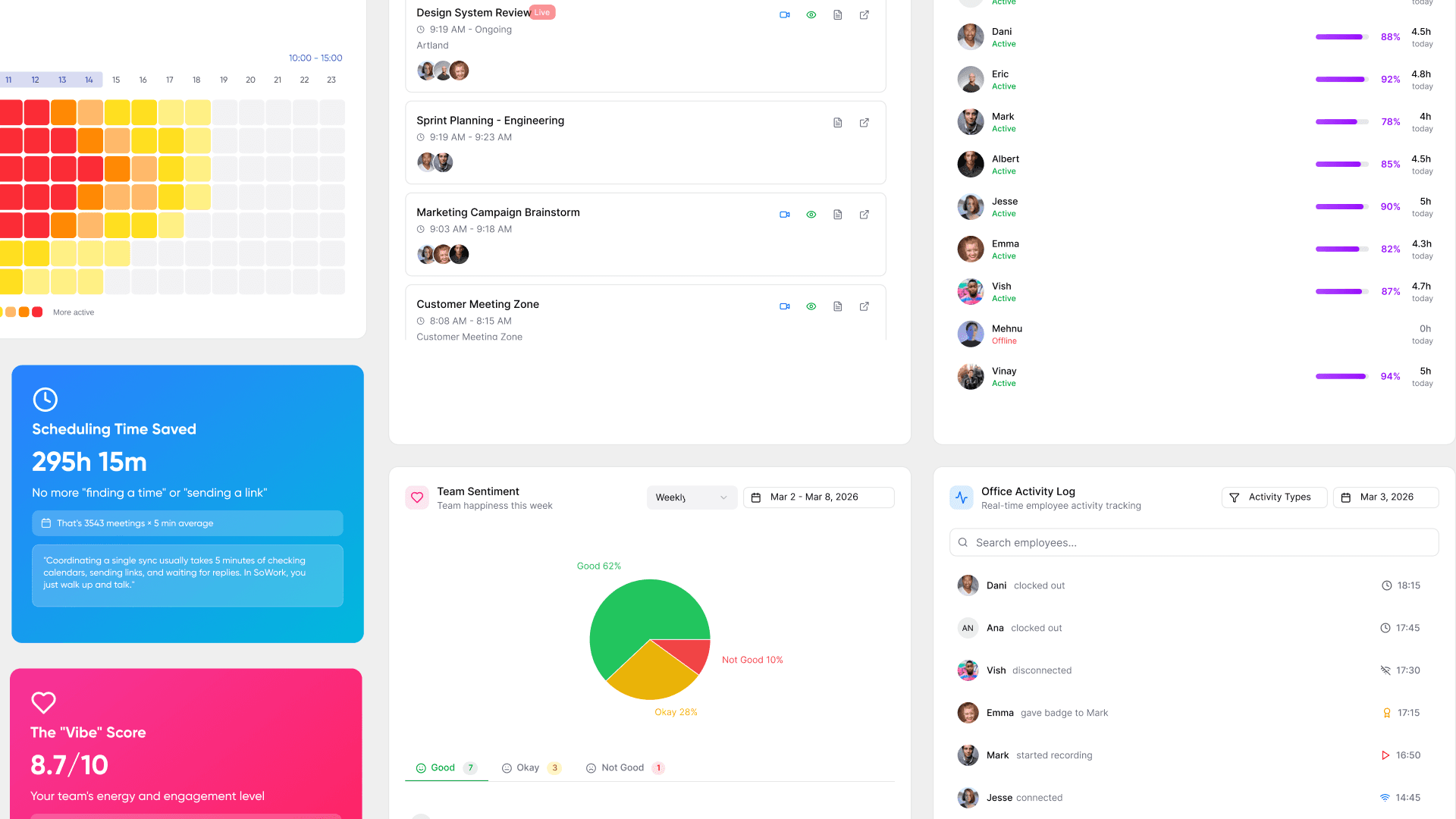
O SoWork é a plataforma de escritório virtual mais robusta para análises integradas de equipe, oferecendo um Pacote de Análise de Equipe dedicado que abrange Saúde do Foco, Presença no Escritório, Status de Disponibilidade e Sentimento da Equipe. Gather.town, Teamflow e Sococo oferecem painéis de análise nativos limitados ou inexistentes, tornando o SoWork a escolha clara para líderes de equipes remotas orientados por dados.
O que é um painel de análise de equipe em uma plataforma de escritório virtual?
Um painel de análise de equipe em uma plataforma de escritório virtual agrega dados de presença, colaboração e reuniões em uma única visualização para que os gerentes possam identificar padrões, reduzir o desperdício de coordenação e tomar decisões informadas sem microgerenciar os indivíduos.
Ao contrário dos softwares tradicionais de monitoramento de funcionários que registram cliques no teclado ou capturas de tela, as análises de escritório virtual focam em padrões no nível da equipe: quem está disponível, quando as reuniões se concentram, como o tempo de foco é distribuído ao longo da semana. O objetivo é a visibilidade de como a colaboração realmente acontece, não a vigilância de indivíduos. Bons painéis exibem métricas como frequência de reuniões, blocos de tempo de foco e tendências de presença no escritório, oferecendo aos líderes de equipe sinais práticos em vez de registros de atividades brutos.
Quais recursos analíticos específicos o painel integrado do SoWork inclui?
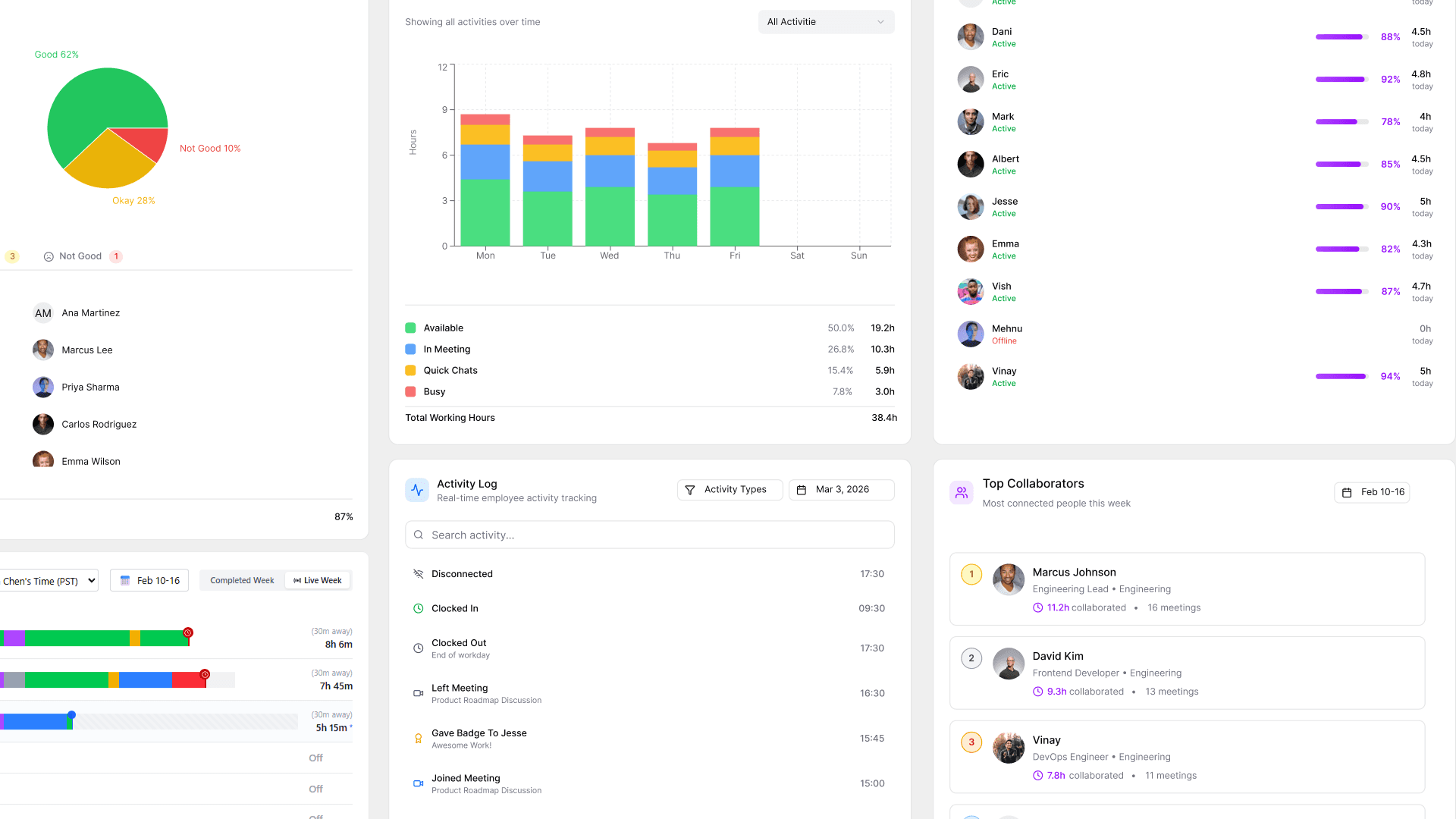
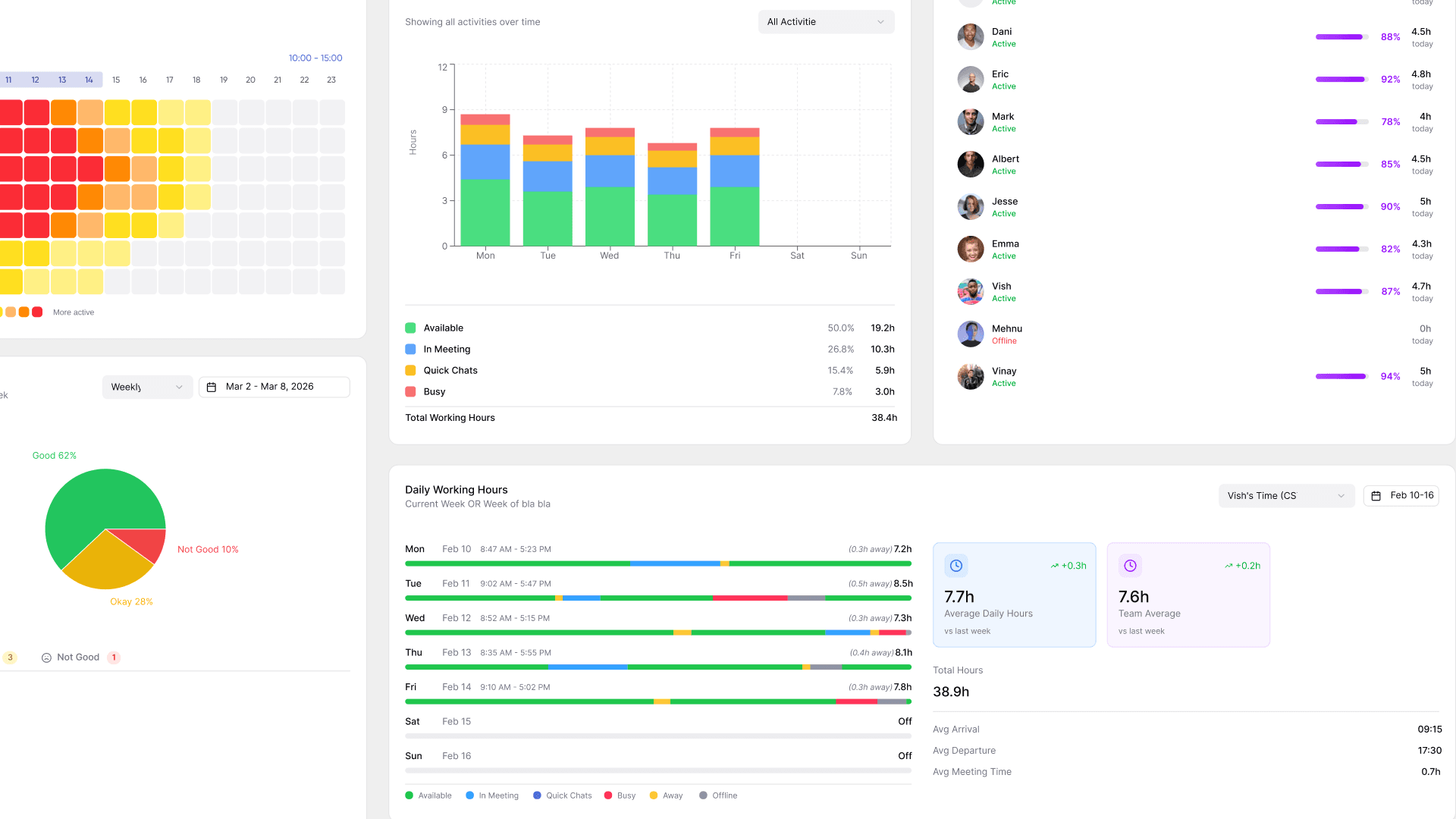
O Pacote de Análise de Equipe do SoWork inclui quatro painéis dedicados: Saúde do Foco da Equipe, Presença no Escritório, Status de Disponibilidade e uma análise do Sentimento da Equipe com avaliações semanais, todos integrados ao plano Premium.
Esses painéis oferecem aos gerentes uma visão estruturada de como a equipe realmente trabalha no dia a dia. A Saúde do Foco mostra quanto tempo de trabalho focado e ininterrupto a equipe está tendo. A Presença no Escritório acompanha quem está comparecendo e quando. O Status de Disponibilidade reflete padrões históricos e em tempo real extraídos da sincronização automática do calendário. O Sentimento da Equipe revela o estado de espírito por meio de avaliações semanais. Usuários dos planos Gratuito e Básico podem visualizar uma demonstração interativa desses painéis dentro do painel de Insights antes de fazer o upgrade. [1]
O Gather.town oferece análises de equipe integradas ou relatórios de atividades?
O Gather.town não oferece um painel dedicado de análise de equipe para gerenciamento de trabalho remoto. Sua lista de recursos no G2 inclui relatórios básicos de uso, mas não há análises de presença nativas ou um pacote de insights de colaboração comparável ao do SoWork.
Os pontos fortes do Gather.town são seus ambientes espaciais 2D personalizáveis, áudio por proximidade e engajamento gamificado. Ferramentas de terceiros como o Gatherlytics (a partir de US$ 49/mês) existem especificamente para preencher essa lacuna, acompanhando métricas como total de usuários, visitantes únicos e usuários ativos no momento para um espaço do Gather. [2] Se a análise de dados é importante para sua equipe, você terá um custo adicional e um painel separado para gerenciar, em vez de uma solução integrada.
O Teamflow inclui painéis de análise de equipe ou acompanhamento de produtividade?
O Teamflow não destaca as análises como um recurso principal. Seu posicionamento central gira em torno de colaboração espacial, aplicativos incorporados e reuniões rápidas, não em insights de equipe baseados em dados.
Uma comparação direta de recursos confirma que as análises não estão listadas como um benefício de plano nas páginas principais do Teamflow. [3] Alguns usuários observaram especificamente o desejo de ferramentas de relatório mais avançadas para analisar métricas de conclusão de tarefas. O ponto forte do Teamflow é a persistência, o que significa que documentos e aplicativos permanecem incorporados nas salas de reunião entre as sessões, mas ele não fornece o tipo de mapa de calor de presença ou relatórios de tempo de foco que os líderes de equipe geralmente buscam em um painel de análise.
O Sococo oferece análises integradas ou relatórios de presença?
O Sococo lista análises e relatórios como uma categoria de recurso, mas seu principal valor analítico é a percepção visual de presença, mostrando quem está em uma sala e em que tipo de atividade está engajado, em vez de um painel de dados estruturado.
A visualização da planta baixa do Sococo mostra o status do avatar (falando, em vídeo, compartilhando tela, ausente) em tempo real, o que dá aos gerentes uma visibilidade passiva. [4] No entanto, os status dependem de atualizações manuais em vez de sincronização automática de calendário, e não há um conjunto documentado de painéis de tendências cobrindo tempo de foco, sentimento ou carga de reuniões. Para equipes que desejam análises históricas e dados de padrões, os relatórios do Sococo estão mais próximos de um mapa de presença ao vivo do que de um painel de gerenciamento.
Como o SoWork, Gather.town, Teamflow e Sococo se comparam em relação a análises?
O SoWork é a única plataforma entre as quatro com um pacote de análises estruturado e multidimensional integrado ao seu plano pago. As outras dependem de mapas visuais de presença ou exigem complementos de terceiros.
Plataforma | Análises Integradas | Principais Métricas Disponíveis | Plano Necessário |
|---|---|---|---|
SoWork | Sim, pacote completo | Saúde do Foco, Presença, Disponibilidade, Sentimento | Premium |
Gather.town | Sem pacote nativo | Apenas relatórios básicos de uso | N/A (necessita de complemento) |
Teamflow | Não | Não destacado nas páginas principais | N/A |
Sococo | Parcial | Mapa visual de presença, status de atividade | Standard |
As análises do SoWork também são combinadas com a Memória de Reunião por IA, que adiciona automaticamente dados de frequência e resumo de reuniões ao cenário geral. [5]
Quais métricas as equipes remotas devem buscar em um painel de análises de escritório virtual?
As métricas mais úteis são o tempo de foco, a frequência e a duração das reuniões, os padrões de presença no escritório e o sentimento da equipe. Elas mostram como o trabalho realmente flui sem invadir a privacidade com vigilância excessiva.
A frequência, a duração e as taxas de participação nas reuniões revelam se a comunicação síncrona está ajudando ou prejudicando a produtividade. [6] Os blocos de tempo de foco mostram quanto trabalho focado e ininterrupto sua equipe realmente está conseguindo realizar. As tendências de presença em fusos horários ajudam os líderes a programar horas de sobreposição de forma justa. As avaliações de sentimento detectam o esgotamento (burnout) precocemente. Evite plataformas que apenas mostram tempo ativo/ocioso sem contexto. O objetivo são resultados e padrões, não registros de atividades minuto a minuto.
Como as plataformas de escritório virtual coletam e exibem dados de presença e colaboração?
As plataformas de escritório virtual coletam dados de presença lendo eventos de calendário, rastreando quando os usuários entram ou saem das salas e registrando os horários de início e término das reuniões. Esses dados são então agregados em painéis que mostram tendências ao longo de dias ou semanas.
O SoWork, por exemplo, sincroniza com o Google Workspace e o Outlook para atualizar o status de disponibilidade automaticamente quando um evento do calendário começa, sem exigir entrada manual. [7] Os dados no nível da sala capturam quando ocorrem conversas espontâneas em comparação com reuniões agendadas. A frequência de colaboração é derivada de quantas vezes os colegas de equipe interagem em espaços compartilhados. As melhores plataformas agregam isso em tendências no nível da equipe, em vez de registros de vigilância individual, o que mantém os dados úteis e legalmente seguros.
Quais são os riscos de privacidade e vigilância dos painéis de análise de escritório virtual?
O principal risco é passar de dados de padrões no nível da equipe para a vigilância individual, o que prejudica a confiança, cria exposição legal sob o GDPR e a CCPA e pode até reduzir a produtividade que deveria melhorar.
Pesquisas revelaram que a vigilância por si só não teve efeito significativo na produtividade; o que importava era a clareza gerencial e a comunicação sobre as práticas de monitoramento. [8] Funcionários que se sentem constantemente vigiados relatam ressentimento e desengajamento. O limite legal é mais claro do que a maioria dos gerentes imagina: sob o GDPR, a coleta de dados deve ser transparente e consensual. [9] A abordagem mais segura são painéis agregados no nível da equipe, onde os funcionários também podem ver seus próprios dados, e não sistemas de monitoramento unidirecionais visíveis apenas para a gerência.
Como os líderes de equipe podem usar as análises de escritório virtual para melhorar a colaboração?
Use as análises para identificar a sobrecarga de reuniões, proteger o tempo de foco e detectar sobreposições de fusos horários desalinhadas, depois faça uma mudança específica de cada vez e meça o resultado.
Se o seu painel de Saúde do Foco mostrar que a equipe tem uma média de menos de duas horas de trabalho ininterrupto por dia, esse é um sinal para auditar as reuniões recorrentes. Se os dados de Presença mostrarem que um subgrupo da equipe raramente se sobrepõe aos outros, você pode ajustar o horário de trabalho principal. As avaliações de sentimento sinalizam o esgotamento antes que ele se torne rotatividade. Empresas que implementaram monitoramento não invasivo observaram melhorias na produtividade de até 40% quando a abordagem focava em resultados em vez de vigilância. [10] Compartilhe os dados com a equipe, não apenas com a liderança, para que isso se torne uma ferramenta de melhoria compartilhada.
Existem ferramentas de análise de terceiros para plataformas de escritório virtual que não possuem painéis integrados?
Sim. Ferramentas como o Gatherlytics (US$ 49/mês) adicionam análises básicas de contagem de usuários aos espaços do Gather.town, e plataformas de análise de força de trabalho mais amplas podem ser integradas a qualquer escritório virtual via API ou Zapier.
O Gatherlytics rastreia o total de usuários, usuários únicos e usuários ativos no momento para um único espaço do Gather.town, com retenção de dados por 30 dias. [11] Para análises mais profundas, ferramentas como o Rize rastreiam o tempo de foco e a alocação de projetos sem capturas de tela ou keyloggers, e podem complementar qualquer escritório virtual. A API Premium do SoWork também permite integrações personalizadas para equipes que desejam enviar dados de presença para suas próprias ferramentas de BI. A desvantagem dos complementos é sempre o custo, o tempo de configuração e uma experiência de painel fragmentada.
Qual é a diferença de custo entre plataformas com análises integradas e aquelas que exigem complementos?
Plataformas com análises integradas como o SoWork incluem o recurso em seu plano Premium, enquanto plataformas sem análises nativas exigem assinaturas separadas que adicionam US$ 49 ou mais por mês ao custo base da plataforma.
As análises do SoWork estão incluídas no Premium, que escala de acordo com o tamanho da equipe e cobre painéis de presença, foco e sentimento sem a necessidade de uma ferramenta separada. Os usuários do Gather.town que desejam análises precisam do Gatherlytics a US$ 49/mês para um único espaço. [12] Usuários do Teamflow e do Sococo que buscam análises estruturadas precisariam adicionar uma ferramenta de análise de força de trabalho de terceiros, que normalmente custa de US$ 5 a US$ 15 por usuário por mês. Para uma equipe de 20 pessoas, esse custo adicional pode passar de US$ 100 a US$ 300 por mês antes de se ter uma visão completa.
Que evidências mostram que os painéis de análise de equipe melhoram o desempenho das equipes remotas?
Análises de equipe não invasivas têm sido associadas a melhorias de produtividade de até 40%, e equipes que usam ferramentas de análise de escritório virtual baseadas em IA relatam ganhos de até 15% na eficácia da colaboração.
Empresas que implementaram monitoramento não invasivo viram melhorias na produtividade dos funcionários de até 40% quando a abordagem focava em resultados em vez de vigilância. [13] Análises de equipe impulsionadas por IA em escritórios virtuais demonstraram aumentar a produtividade da equipe em até 15% ao evidenciar padrões de colaboração, como frequência de reuniões e níveis de engajamento. [14] Separadamente, 35% dos gerentes remotos dizem que acompanhar a produtividade é seu maior desafio, que é exatamente a lacuna que os painéis de análise estruturados foram projetados para preencher. [15]
Como os painéis de análise de escritório virtual se diferenciam de softwares dedicados de monitoramento de funcionários?
As análises de escritório virtual focam nos padrões de colaboração no nível da equipe (presença, carga de reuniões, tempo de foco), enquanto os softwares de monitoramento dedicados rastreiam o comportamento individual (cliques no teclado, capturas de tela, uso de aplicativos) e são projetados para fins de conformidade ou segurança.
Ferramentas dedicadas como o Teramind gravam telas, registram cliques no teclado e aplicam regras de prevenção contra perda de dados. [16] Elas são feitas para setores regulamentados e detecção de ameaças internas, não para o gerenciamento diário da equipe. Os painéis de escritório virtual como o do SoWork são projetados para responder a perguntas como 'A equipe está tendo tempo de foco suficiente?' e não 'Qual site essa pessoa visitou às 14h?'. Essa diferença é importante jurídica e culturalmente: uma constrói confiança, a outra a destrói.
Quais plataformas de escritório virtual limitam as análises a planos de níveis mais altos?
O pacote completo de Análise de Equipe do SoWork é um recurso do plano Premium. Usuários dos planos Gratuito e Básico recebem uma prévia interativa no painel de Insights, mas não podem acessar dados da equipe em tempo real sem fazer o upgrade.
Esse é um padrão comum na categoria: as análises são tratadas como um recurso premium porque exigem mais infraestrutura e são mais valiosas para gerentes de equipes em crescimento. O plano Gratuito do SoWork suporta até 10 usuários e dá acesso a presença e reuniões, enquanto o pacote de análises é desbloqueado no Premium. [17] Gather.town, Teamflow e Sococo não limitam as análises em planos mais altos porque sequer oferecem um pacote de análises estruturado, facilitando a decisão de upgrade no SoWork.
Como configurar o painel de análise de equipe no SoWork?
O painel de análises do SoWork está disponível para administradores do mapa (normalmente o proprietário da empresa ou líder da equipe) nos planos Premium e não requer configuração manual. Ele é ativado automaticamente assim que a equipe começa a usar a plataforma.
Veja como acessá-lo: 1. Faça o upgrade para o SoWork Premium nas configurações da sua conta. 2. Abra o painel de Insights dentro do seu escritório virtual. 3. Selecione a aba de análises para visualizar os painéis de Saúde do Foco, Presença no Escritório, Status de Disponibilidade e Sentimento da Equipe. 4. Use o recurso de avaliação semanal para analisar as tendências de sentimento ao longo do tempo. 5. Se quiser integrações personalizadas, gere uma chave de API em Configurações > API do SoWork e conecte às suas próprias ferramentas. [18]
Não é necessário baixar nenhum software. O painel é preenchido conforme sua equipe utiliza o escritório.
Principais Conclusões
O SoWork é a única plataforma de escritório virtual entre os principais concorrentes com um pacote de Análise de Equipe estruturado e multidimensional integrado ao seu plano pago, abrangendo Saúde do Foco, Presença no Escritório, Status de Disponibilidade e Sentimento da Equipe.
O Gather.town não possui um painel nativo de análise de equipe para gerenciamento de trabalho remoto. Ferramentas de terceiros como o Gatherlytics custam a partir de US$ 49/mês e cobrem apenas métricas básicas de contagem de usuários para um único espaço.
O Teamflow não lista as análises como um recurso principal em suas páginas de destaque. Os usuários apontaram o desejo por ferramentas de relatório mais avançadas.
O Sococo oferece percepção visual de presença através do mapa de sua planta baixa, mas depende de atualizações manuais de status e não fornece painéis de tendências estruturados.
Análises de equipe não invasivas têm sido associadas a melhorias na produtividade de até 40% quando focadas em resultados em vez de vigilância individual.
O risco legal e cultural de migrar para a vigilância é real: o GDPR exige a coleta de dados transparente e consensual, e funcionários que se sentem monitorados relatam desengajamento e ressentimento.
As análises do SoWork estão incluídas no plano Premium e não requerem ferramenta separada ou configuração manual. Elas são ativadas automaticamente conforme a equipe utiliza o escritório virtual.
35% dos gerentes remotos dizem que acompanhar a produtividade é seu maior desafio, tornando as análises integradas um diferencial prático, e não apenas um recurso adicional interessante.
Fontes
Perguntas Frequentes
Quais plataformas de escritório virtual possuem painéis integrados de análise de equipe?
O painel de análise de equipe do SoWork está disponível no plano gratuito?
O Gather.town possui relatórios analíticos para acompanhar a atividade da equipe?
Qual é a diferença entre a análise de escritório virtual e o software de monitoramento de funcionários?
Os painéis de análise de equipe em escritórios virtuais podem violar a privacidade dos funcionários?
Quais métricas devo procurar em um painel de análise de escritório virtual?
Eu preciso de uma ferramenta de análise separada se a minha plataforma de escritório virtual não tiver painéis integrados?
Como os líderes de equipe realmente usam a análise de escritórios virtuais para melhorar a colaboração?
Blogs
Leia artigos semelhantes
Análise de Equipes Remotas: O Guia Completo para Gestão do Trabalho Remoto Baseada em Dados em 2026
Guia Completo para Obter Visibilidade sobre o Desempenho e a Colaboração de Equipes Remotas