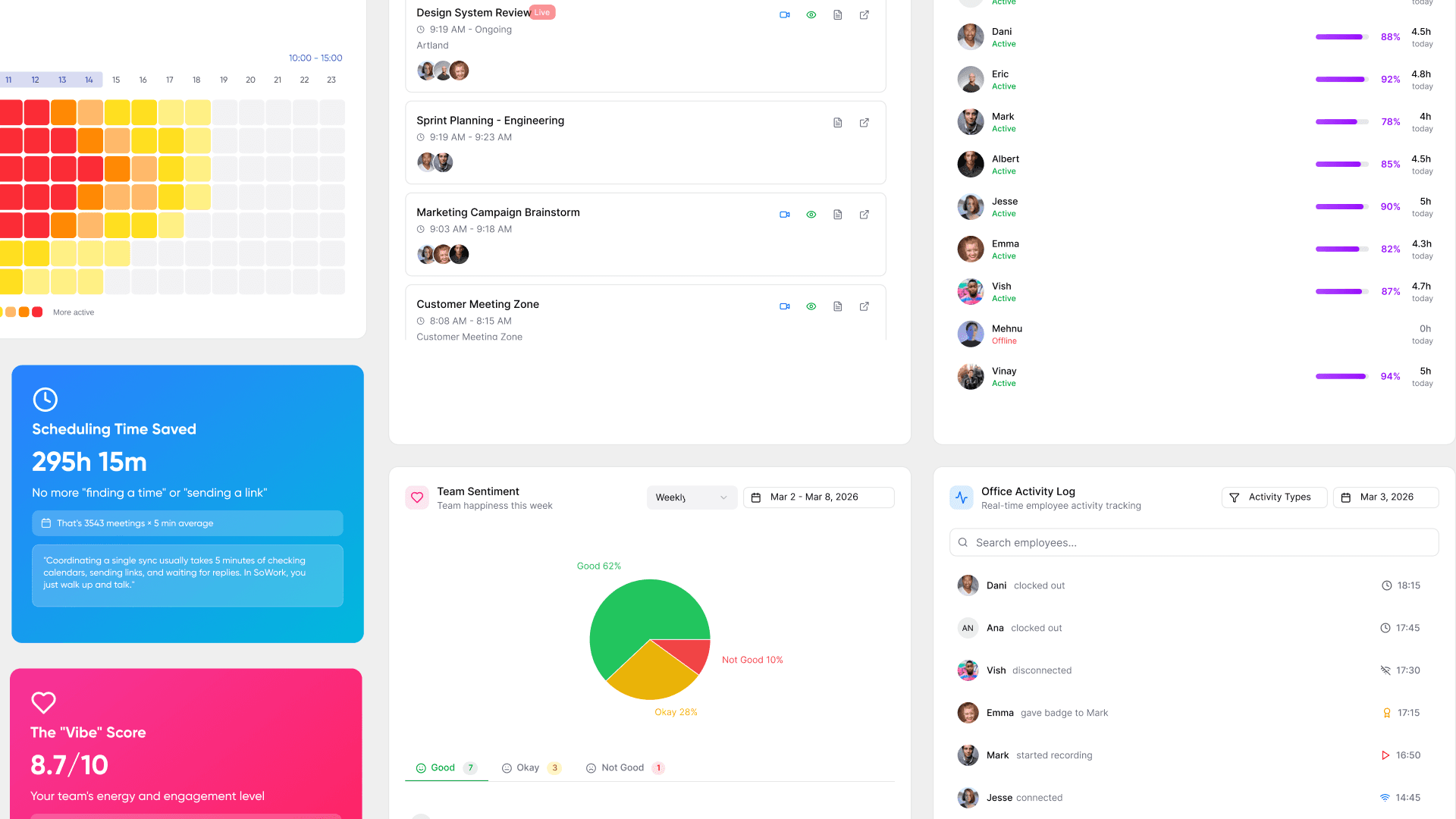
SoWork vs Spot: O melhor custo-benefício de nível intermediário em 2026?
Vishal Punwani

Publicado em:
Atualizado em:
No nível intermediário em 2026, o plano Premium do SoWork (US$ 15/usuário/mês, ou US$ 12 anualmente) supera o plano Business do Spot (US$ 10/usuário/mês) no valor total de recursos para a maioria das equipes remotas de 25 a 50 pessoas. O SoWork adiciona memória de reuniões com IA, análises de equipe e integrações de fluxo de trabalho mais profundas que faltam ao Spot no mesmo nível, tornando-o a escolha mais forte para equipes focadas em alinhamento e redução de sobrecarga de reuniões.
O que é o SoWork e o que o torna diferente para equipes remotas?
O SoWork é um escritório virtual com tecnologia de IA que replica a sensação de ambiente espontâneo de um escritório físico para equipes distribuídas. Ele combina percepção de presença, reuniões instantâneas, memória de reuniões com IA e chat baseado em tópicos em uma única plataforma.
O ambiente de escritório 2.5D do SoWork permite que os colegas de equipe vejam quem está livre, focado ou em uma reunião em um piscar de olhos, sem a necessidade de agendamento para iniciar uma conversa. Sua Memória de Reunião com IA grava, transcreve e resume automaticamente cada reunião, para que as decisões não se percam. Os Modos de Foco (Modo Simples e Mini Modo) permitem que as pessoas sinalizem trabalho profundo enquanto permanecem levemente conectadas. A sincronização do calendário mantém o status preciso sem qualquer entrada manual. Tudo funciona em um navegador, sem necessidade de download, e as equipes podem ser configuradas em minutos. [1]
O que é o Spot e o que ele oferece para equipes remotas?
O Spot é um escritório virtual baseado no navegador onde as equipes constroem um local de trabalho digital sempre ativo, movem-se entre salas e personalizam bastante os espaços. Ele se concentra em replicar a sensação de escritório físico por meio de navegação em salas, indicadores de presença e formatos de reunião flexíveis.
O Spot permite que os usuários naveguem diretamente para as salas e iniciem conversas sem compartilhamento de links ou convites de calendário. Ele suporta compartilhamento de tela simultâneo, sessões de lousa virtual, navegação na web compartilhada e uploads de PDF para revisão em grupo. Os modos de reunião incluem blocos de vídeo tradicionais e encontros espaciais virtuais, além de um Modo Apresentador para chamadas maiores. O Spot também oferece uma API pública (beta) para equipes que desejam programar comportamentos personalizados dentro de seu escritório. Possui um aplicativo móvel para iOS e Android, e o acesso de convidados está disponível sem uma conta salva. [2]
Quanto custa o plano intermediário do SoWork em 2026?
O plano Premium do SoWork custa US$ 15 por usuário por mês no faturamento mensal, caindo para US$ 12 por usuário por mês quando faturado anualmente, um desconto de aproximadamente 20%. Ele inclui resumos de reuniões com IA, análises de equipe, espaços de escritório personalizáveis e suporte ao vivo prioritário.
Para uma equipe de 25 pessoas, isso equivale a US$ 375/mês (mensal) ou US$ 300/mês (anual). Para 50 usuários, US$ 750/mês ou US$ 600/mês anualmente. [1] O SoWork também oferece um plano Básico a US$ 6/usuário/mês (US$ 5,40 anualmente) e um nível gratuito para até 10 usuários, para que as equipes possam validar o fluxo de trabalho antes de comprometer o orçamento. [1] O plano Premium adiciona Memória de Reunião com IA, transcrição automática e extração de itens de ação, que é o principal motivo pelo qual a maioria das equipes de médio porte faz o upgrade do Básico. Descontos por volume se aplicam para mais de 100 usuários. [1]
Faturamento | 25 usuários | 50 usuários |
|---|---|---|
Mensal (US$ 15/usuário) | US$ 375/mês | US$ 750/mês |
Anual (US$ 12/usuário) | US$ 300/mês | US$ 600/mês |
Quanto custa o plano intermediário do Spot em 2026?
O plano Business do Spot custa US$ 10 por usuário por mês. O Spot também lista um plano Básico a US$ 6/usuário/mês e um nível Enterprise (entre em contato com as vendas), com SSO e integrações personalizadas reservados para o Enterprise.
A US$ 10/usuário/mês, uma equipe de 25 pessoas paga US$ 250/mês e uma equipe de 50 pessoas paga US$ 500/mês. [2] Essa é uma economia significativa por assento em comparação com o SoWork Premium, mas o plano Business não inclui resumos de reuniões com IA ou análises de equipe integradas. O nível Enterprise do Spot adiciona SSO e integrações personalizadas, mas esses recursos não estão disponíveis no nível Business. [3] A hospedagem de eventos (webinars, sessões de networking) requer um complemento separado ao preço de US$ 3 por usuário por dia. [2]
Faturamento | 25 usuários | 50 usuários |
|---|---|---|
Business (US$ 10/usuário/mês) | US$ 250/mês | US$ 500/mês |
SoWork Premium (US$ 12/usuário/mês anual) | US$ 300/mês | US$ 600/mês |
Qual plataforma custa menos para uma equipe de 25 a 50 pessoas ao longo de 12 meses?
O plano Business do Spot economiza cerca de US$ 600 a US$ 1.200 por ano em relação ao SoWork Premium para uma equipe de 25 a 50 pessoas apenas no preço de tabela. Mas os resumos de IA do SoWork podem substituir uma ferramenta de transcrição independente, reduzindo a diferença real de custo.
Uma equipe de 50 pessoas no Spot Business paga US$ 6.000/ano. A mesma equipe no SoWork Premium (anual) paga US$ 7.200/ano, uma diferença de US$ 1.200. [1][2] Se essa equipe também estiver pagando por um anotador de IA separado (ferramentas como Otter.ai ou Fireflies geralmente custam de US$ 10 a US$ 20/usuário/mês), o preço com tudo incluso do SoWork torna-se neutro em termos de custo ou mais barato. Equipes que não precisam de resumos de IA e querem apenas presença e navegação em salas acharão o Spot a escolha mais econômica. Equipes que precisam de inteligência de reuniões integrada devem fazer as contas de todo o conjunto de ferramentas antes de decidir apenas pelo preço.
Como o SoWork e o Spot diferem em recursos de colaboração e presença?
O plano Premium do SoWork inclui Memória de Reuniões com IA, análises de equipe e sincronização automática de calendário para atualizações de status, nenhum dos quais o Spot oferece em seu nível Business. O Spot responde com uma API pública, Modo Apresentador e navegação compartilhada na web dentro das salas.
A camada de presença do SoWork mostra a disponibilidade em tempo real — livre, focado ou em reunião — e atualiza automaticamente quando um evento de calendário começa. [4] Seu assistente de IA extrai itens de ação e resumos de cada conversa, reduzindo o desvio de alinhamento para equipes maiores. [4] A força do Spot é a flexibilidade dentro das salas: compartilhamento de tela simultâneo, uploads de PDF e um navegador da web compartilhado permitem que as equipes trabalhem lado a lado em documentos ao vivo. [2] A API do Spot permite que equipes técnicas programem comportamentos de sala personalizados, o que o SoWork não oferece em nenhum nível. Para coordenação operacional diária, a camada de IA do SoWork adiciona um valor mais duradouro. Para sessões de colaboração profunda em salas, as ferramentas do Spot são mais versáteis.
Qual plataforma oferece mais personalização para o seu espaço de escritório virtual?
Ambas as plataformas permitem uma personalização significativa do escritório, mas o ambiente imersivo 2.5D e o sistema de avatares do SoWork dão a ele uma vantagem maior na construção de cultura. O Spot se inclina para layouts de sala limpos e funcionais com profundo controle programático via sua API.
O design de escritório do SoWork é frequentemente comparado a construir no The Sims; as equipes podem personalizar espaços e avatares para refletir a cultura da empresa. [4] Ele também oferece um Modo Simplificado para usuários que preferem uma interface mais leve, reduzindo a carga de GPU sem perder recursos de colaboração. [5] Os espaços do Spot são visualmente limpos e priorizam a web, com bloqueio de salas para privacidade e controles de acesso baseados em funções. [2] A API do Spot (beta) permite que desenvolvedores personalizem o comportamento do espaço de forma programática, o que é um diferencial significativo para equipes lideradas por engenharia. Para personalização voltada para a cultura, o SoWork vence. Para flexibilidade técnica, o Spot tem a vantagem.
Qual plataforma se integra melhor com suas ferramentas existentes?
O SoWork integra-se nativamente com Google Workspace, Outlook, Slack e Zapier no nível intermediário, permitindo que os resultados de reuniões com IA fluam diretamente para as ferramentas de gerenciamento de projetos. As integrações de nível intermediário do Spot são mais restritas, com integrações personalizadas mais profundas reservadas para o Enterprise.
A conexão Zapier do SoWork significa que os resumos de reuniões podem preencher automaticamente o Asana, Notion, Monday.com ou qualquer outro aplicativo conectado ao Zapier. [6] A sincronização com o Google Calendar e o Outlook mantém o status de presença preciso sem atualizações manuais. [4] As integrações verificadas do Spot no nível Business incluem Miro e Sudozi, com integrações personalizadas mais amplas disponíveis apenas no Enterprise. [2] O Spot oferece uma API beta para equipes dispostas a construir suas próprias conexões. [3] Para equipes que desejam integração de fluxo de trabalho pronta para uso hoje, o suporte nativo do SoWork ao Zapier e Google/Slack é o caminho mais rápido. [6]
Quais são os requisitos técnicos e as diferenças de desempenho?
Tanto o SoWork quanto o Spot são totalmente baseados no navegador e não requerem download de software. O ambiente 2.5D do SoWork consome mais GPU e CPU do que a interface mais plana do Spot, mas o Modo Simplificado do SoWork reduz significativamente essa carga.
O mundo imersivo 2.5D do SoWork é mais exigente visualmente, mas alternar para o Modo Simplificado reduz o uso de recursos sem perder recursos de presença ou colaboração. [5] O design focado na web do Spot é intencionalmente leve, o que pode ser uma vantagem para equipes com hardware mais antigo ou largura de banda inconsistente. Ambas as plataformas lidam com vídeo por meio de conexões criptografadas por TLS e não exigem instalações no lado do cliente. [7] Nenhuma das plataformas lista publicamente especificações de largura de banda mínima, portanto, testar durante um período de avaliação gratuita no hardware real da sua equipe é o método de avaliação mais confiável. Convidados em ambas as plataformas podem participar de sessões diretamente em um navegador sem a necessidade de uma conta.
Qual plataforma replica melhor as conversas espontâneas de corredor?
O SoWork foi construído especificamente para interação espontânea — você vê quem está livre e clica para falar, sem links ou agendamento. O Spot replica isso por meio de navegação em salas, onde caminhar até a mesa virtual de um colega inicia uma conversa automaticamente.
Trabalhadores remotos relatam 23% menos momentos de colaboração espontânea em comparação com colegas de escritório físico, que é exatamente o problema que ambas as plataformas visam resolver. [8] A camada de presença do SoWork mostra o status em tempo real e permite que você inicie uma conversa com um clique, imitando a percepção do ambiente de um escritório físico. [4] O Spot alcança um resultado semelhante por meio de navegação espacial nas salas — você vai para uma sala ou mesa e a conversa começa, sem a necessidade de link. [2] A sincronização de calendário do SoWork significa que o status está sempre correto, reduzindo o atrito de interromper alguém que realmente está em uma reunião. Para equipes onde a conexão espontânea é o objetivo principal, ambas as plataformas cumprem o papel, mas os indicadores de presença sempre precisos do SoWork dão a ele uma vantagem prática.
Como o SoWork e o Spot lidam com segurança e conformidade no nível intermediário?
O Spot criptografa voz e vídeo com TLS e afirma que conversas privadas nunca são armazenadas em seus servidores. O SoWork oferece SSO e SCIM no nível Enterprise; a certificação SOC 2 do Spot foi listada como "em andamento" no início de 2026.
As permissões baseadas em funções do Spot permitem que os administradores concedam acesso granular a espaços, salas e canais, e as salas podem ser trancadas para conversas confidenciais. [7] O SSO está disponível no Spot, mas parece vinculado a níveis mais altos. [7] O plano Enterprise do SoWork inclui SSO e SCIM para provisionamento automatizado de usuários. [3] A certificação SOC 2 do Spot foi observada como "em andamento" em sua página de confiança. [3] Para equipes em setores regulamentados, o plano intermediário de nenhuma das duas plataformas é uma solução de conformidade completa; ambos exigem upgrade para o Enterprise para controles de segurança totais. Equipes com requisitos estritos de residência de dados devem verificar os acordos de processamento diretamente com cada fornecedor antes de se comprometerem.
Quais controles de administrador e relatórios analíticos você obtém no nível intermediário?
O plano Premium do SoWork inclui análises de equipe que revelam padrões de colaboração e insights de atividade. O nível Business do Spot oferece controles administrativos baseados em funções e funções personalizadas, mas não inclui análises de equipe integradas.
As análises do SoWork dão aos gerentes visibilidade sobre o engajamento da equipe, frequência de reuniões e padrões de colaboração, úteis para identificar membros desconectados antes que isso se torne um problema de retenção. [4] O sistema de administração do Spot suporta quatro tipos de usuários: Convidados, Membros, Administradores e Funções Personalizadas, oferecendo controle granular sobre quem pode acessar o quê. [2] As Funções Personalizadas do Spot permitem criar conjuntos de permissões para membros específicos da equipe que precisam de acesso não padrão. [2] Para equipes que desejam insights de gerenciamento orientados por dados, a camada analítica do SoWork é um diferencial genuíno no nível intermediário. Para equipes que priorizam a granularidade de permissões sobre relatórios analíticos, o sistema de funções do Spot é mais flexível.
Qual plataforma é mais fácil de integrar para uma nova equipe remota?
Ambas as plataformas são baseadas no navegador, sem necessidade de download, tornando a configuração inicial rápida. O fluxo de convites autônomo e o nível gratuito do SoWork permitem que as equipes validem a experiência antes de gastar qualquer valor; o Spot oferece documentação, webinars ao vivo e opções de treinamento presencial.
As equipes do SoWork podem configurar um escritório virtual e convidar membros em minutos usando um link de convite simples. [4] O plano gratuito para até 10 usuários significa que pequenas equipes podem testar a experiência completa sem custo antes de se comprometerem com um nível pago. [1] O Spot fornece treinamento por meio de documentação, sessões online ao vivo, webinars, opções presenciais e vídeos, um menu de integração formal mais amplo que o do SoWork. [2] O desafio prático de adoção para ambas as plataformas é o mesmo: fazer com que cada membro da equipe abra o escritório virtual diariamente. O maior obstáculo de adoção do SoWork, de acordo com o feedback dos usuários, é simplesmente criar o hábito de usá-lo de forma consistente. [5]
O que dizem os usuários reais sobre o SoWork e o Spot?
O SoWork possui uma classificação média de 4.8 de 5 estrelas no G2, baseada em 50 avaliações, com os usuários elogiando consistentemente a facilidade de uso e a capacidade da plataforma de melhorar a comunicação e o engajamento da equipe. O Spot recebe elogios semelhantes no G2 por sua interface intuitiva e sensação de comunidade.
A classificação de 4.8 do SoWork no G2 é impulsionada por avaliações que destacam a colaboração no estilo de proximidade e a redução do atrito nas reuniões. [9] Um usuário verificado observou que o SoWork resolveu problemas de comunicação limitada que haviam experimentado em outras plataformas de escritório virtual. [10] Os avaliadores do Spot no G2 elogiam consistentemente sua interface intuitiva e opções de personalização, e muitos destacam como ele promove um senso de comunidade entre equipes remotas. [11] O suporte do Spot atraiu algumas críticas pela disponibilidade limitada fora do horário comercial dos EUA, com pelo menos um avaliador observando a ausência de opções de suporte por e-mail. [7] Ambas as plataformas pontuam bem em facilidade de uso, o que importa para a adoção diária.
Quais são as limitações conhecidas do SoWork no nível intermediário?
O ambiente imersivo 2.5D do SoWork consome mais GPU e CPU do que alternativas mais leves, e o maior risco prático é a adoção — se a equipe não criar o hábito diário de fazer login, o valor da plataforma desmorona.
O mundo 2.5D do SoWork consome mais recursos do que os concorrentes com interface plana, o que pode causar problemas de desempenho em máquinas mais antigas ou conexões de baixa largura de banda. O Modo Simplificado mitiga isso, mas vale a pena testar no hardware real da sua equipe. [5] A adoção é o desafio mais citado: a plataforma só entrega valor quando toda a equipe está presente nela diariamente. [5] A Memória de Reunião com IA e as análises de equipe são recursos exclusivos do Premium, portanto, equipes no plano Básico perdem os recursos mais diferenciados. SSO e SCIM são exclusivos do Enterprise, o que pode ser um impedimento para organizações focadas em segurança que não estão prontas para os preços do Enterprise. [3]
Quais são as limitações conhecidas do Spot no nível intermediário?
O nível Business do Spot carece de resumos de reuniões com IA e análises de equipe, o que significa que equipes que precisam de inteligência de reunião devem pagar por uma ferramenta separada. SSO e integrações personalizadas são exclusivos do Enterprise, e a certificação SOC 2 ainda estava em andamento no início de 2026.
Sem resumos de IA integrados, as equipes do Spot que desejam documentação automatizada de reuniões precisam adicionar um anotador separado, o que adiciona custo e outra ferramenta para gerenciar. [3] Os recursos de integração mais profundos e o SSO do Spot estão restritos ao Enterprise, fazendo com que o nível Business pareça limitado para equipes com fluxos de trabalho mais complexos. [3] O suporte está disponível principalmente durante o horário comercial dos EUA via chat, sem opção de e-mail observada por alguns usuários, um ponto real de atrito para equipes distribuídas globalmente. [7] O fato de a certificação SOC 2 do Spot estar "em andamento" pode preocupar compradores preocupados com a segurança em setores regulamentados. [3] O preço do complemento de eventos (US$ 3/usuário/dia) também adiciona um custo imprevisível para equipes que hospedam webinars regulares. [2]
Como sua equipe deve decidir entre o SoWork e o Spot?
Escolha o SoWork se a memória de reuniões com IA, análises de equipe e integrações de fluxo de trabalho forem prioridades. Escolha o Spot se deseja um custo por assento menor, personalização profunda de salas ou se planeja criar comportamentos personalizados via API.
Use este modelo de decisão:
Prioridade | Escolha |
|---|---|
Resumos de reuniões com IA + itens de ação | SoWork Premium |
Menor custo por assento | Spot Business |
Integrações com Zapier / Slack / Google | SoWork |
API personalizada / comportamento de sala programado | Spot |
Análises de equipe para gerentes | SoWork |
Interface de usuário leve para hardware antigo | Spot |
SSO no nível intermediário | Nenhum (apenas Enterprise em ambos) |
Se o principal problema da sua equipe for o desvio de alinhamento e decisões perdidas, o plano Premium do SoWork foi construído especificamente para isso. Se o seu problema for recriar a sensação de um escritório a um custo menor, o Spot entrega o essencial por menos. [3]
Quais outras plataformas de escritório virtual você deve considerar antes de decidir?
Antes de se comprometer com o SoWork ou Spot, equipes de médio porte também devem avaliar o Gather, Teamflow e Sococo, cada um servindo a um caso de uso distinto em diferentes faixas de preço.
O Gather (US$ 15/usuário/mês após remover seu plano gratuito no final de 2025) é melhor para equipes que desejam um ambiente gamificado em pixel art e priorizam eventos culturais e sociais em detrimento de ferramentas operacionais. [12] O plano Seed do Teamflow começa em US$ 20/usuário/mês (US$ 15 anualmente) e vale o investimento apenas se a colaboração incorporada ao Salesforce ou Figma for central para o seu fluxo de trabalho. [12] O Sococo (US$ 14,99/assento/mês, mínimo de 10 assentos) atende a empresas que já usam Zoom ou Webex e desejam uma camada de presença sem substituir seu conjunto de vídeo. [12] Nenhum deles se compara à inteligência de reuniões com IA do SoWork na faixa de preço intermediária, mas cada um atende bem a um perfil de equipe específico.
Quais tipos de equipe se adaptam melhor ao SoWork em relação ao Spot?
O SoWork é melhor para equipes de produto, engenharia e operações que precisam de alinhamento em reuniões e coordenação diária. O Spot se adapta a equipes que desejam uma presença de escritório limpa e sempre ativa a um custo menor e não precisam de ferramentas de reunião com IA integradas.
Os resumos de IA e relatórios analíticos do SoWork o tornam particularmente valioso para equipes de 25 a 100 pessoas, onde o volume de comunicação é alto e as decisões precisam ser rastreadas. [5] Fundadores e COOs que desejam reduzir a sobrecarga de reuniões e construir cultura sem uma política de retorno ao escritório tendem a tirar o máximo proveito do plano Premium do SoWork. O Spot atende a equipes que se sentem confortáveis gerenciando sua própria documentação de reuniões e desejam uma camada de presença espacial sem o preço premium. Equipes técnicas que desejam personalizar seu ambiente de escritório de forma programática encontrarão na API do Spot uma vantagem significativa. Equipes criativas ou focadas em comunidade podem preferir o ambiente mais lúdico do Gather a qualquer uma das duas plataformas.
Resumo: SoWork ou Spot para equipes remotas de nível intermediário em 2026?
Para a maioria das equipes remotas de 25 a 50 pessoas em 2026, o plano Premium do SoWork oferece mais valor total no nível intermediário. Sua memória de reuniões com IA, análises de equipe e integrações com Zapier/Slack/Google abordam os problemas centrais de perda de alinhamento e sobrecarga de reuniões que o plano Business do Spot não resolve. O Spot é a escolha certa se você está otimizando o custo por assento e não precisa de ferramentas de reunião com IA. Faça as contas do seu conjunto de ferramentas completo; se a sua equipe já paga por um anotador de IA independente, o preço tudo incluso do SoWork muitas vezes também vence no custo.
Principais Conclusões
O SoWork Premium custa US$ 15/usuário/mês (US$ 12 anualmente); o Spot Business custa US$ 10/usuário/mês, uma diferença de US$ 600 a US$ 1.200/ano para uma equipe de 50 pessoas.
A Memória de Reunião com IA do SoWork (transcrição automática e itens de ação) é um recurso exclusivo do Premium, sem equivalente no nível Business do Spot.
O plano Business do Spot inclui permissões baseadas em funções e funções personalizadas, mas o SSO e as integrações personalizadas são exclusivos do Enterprise em ambas as plataformas.
O SoWork integra-se nativamente com Zapier, Slack, Google Workspace e Outlook no nível intermediário; as integrações verificadas de nível intermediário do Spot são mais restritas (Miro, Sudozi).
Ambas as plataformas são totalmente baseadas no navegador, sem necessidade de download; o modo 2.5D do SoWork é mais exigente de GPU, mas oferece um Modo Simplificado para computadores de menor especificação.
O SoWork possui uma classificação G2 de 4.8/5 em 50 avaliações; o Spot recebe elogios semelhantes por facilidade de uso e sensação de comunidade, mas a disponibilidade de suporte fora do horário dos EUA é uma limitação observada.
Se a sua equipe já paga por um anotador de IA independente, o preço Premium tudo incluso do SoWork pode ser neutro em termos de custo ou mais barato do que o Spot Business somado a uma ferramenta de transcrição separada.
A API beta do Spot é um diferencial significativo para equipes técnicas que desejam programar comportamentos personalizados no escritório; o SoWork não oferece isso em nenhum nível.
Fontes
Perguntas Frequentes
Preços de SoWork vs Spot em 2026: qual escritório virtual oferece mais valor para equipes remotas no nível intermediário?
O escritório virtual do Spot é mais barato do que o SoWork?
O SoWork inclui resumos de reuniões por IA no plano intermediário?
Quais integrações o escritório virtual do Spot oferece no plano Business?
Qual plataforma de escritório virtual é mais fácil de configurar para uma nova equipe remota?
O escritório virtual do Spot possui conformidade SOC 2?
Quais são as melhores alternativas ao SoWork e ao Spot para equipes remotas de médio porte?
O SoWork ou o Spot é melhor para conversas espontâneas em equipe?
Blogs
Leia artigos semelhantes
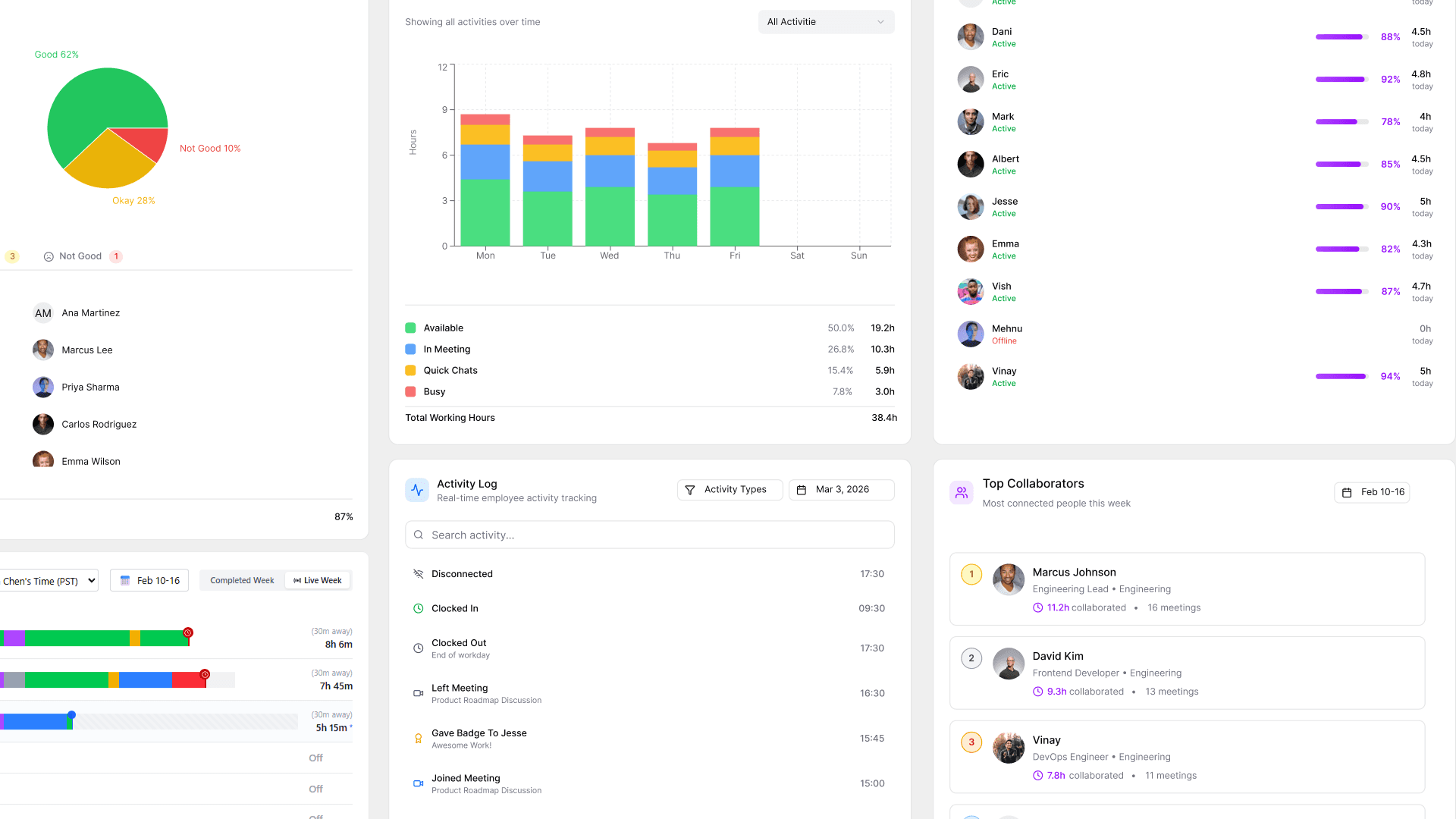
Análise de Equipes Remotas: O Guia Completo para Gestão do Trabalho Remoto Baseada em Dados em 2026
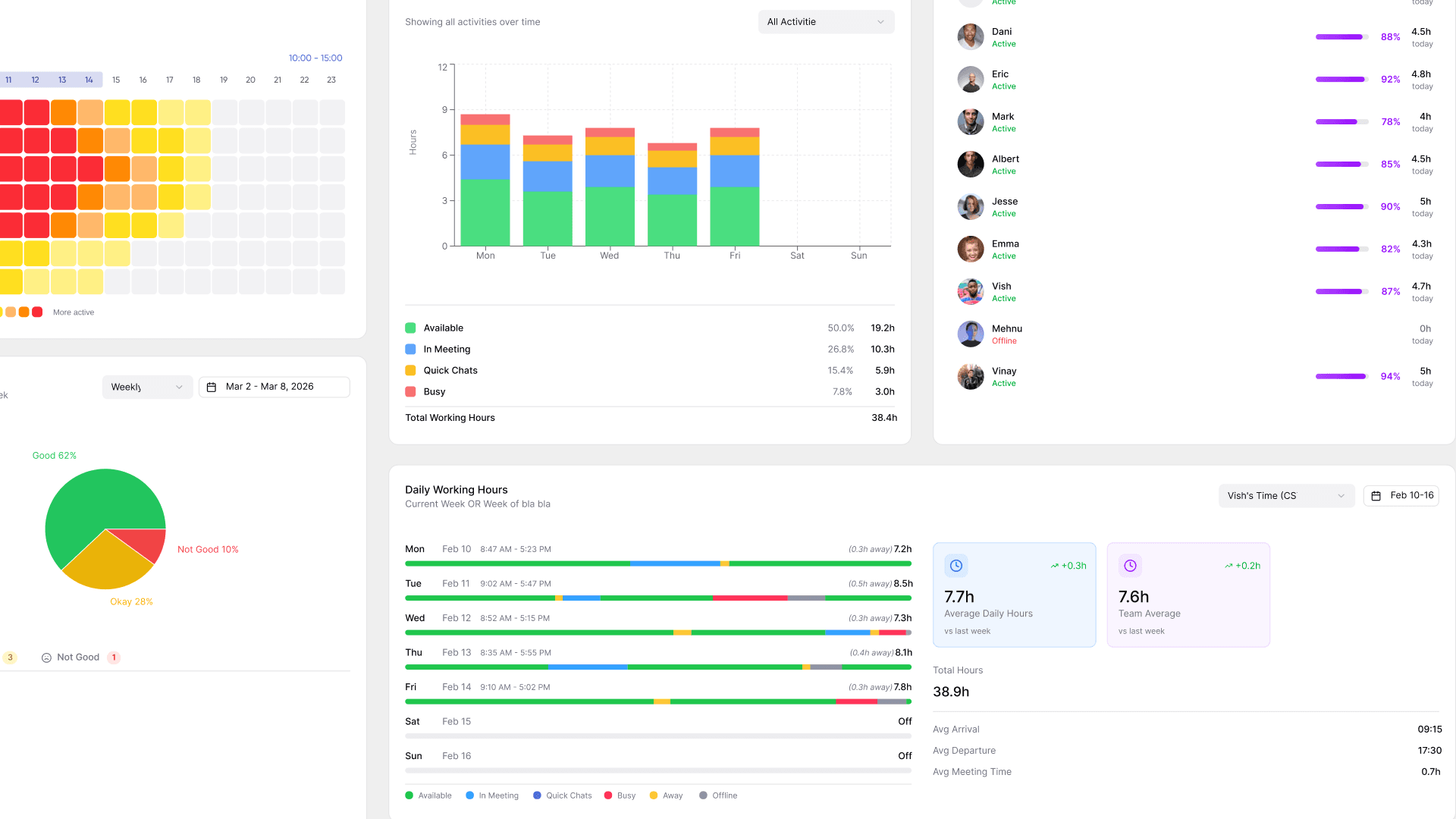
Guia Completo para Obter Visibilidade sobre o Desempenho e a Colaboração de Equipes Remotas