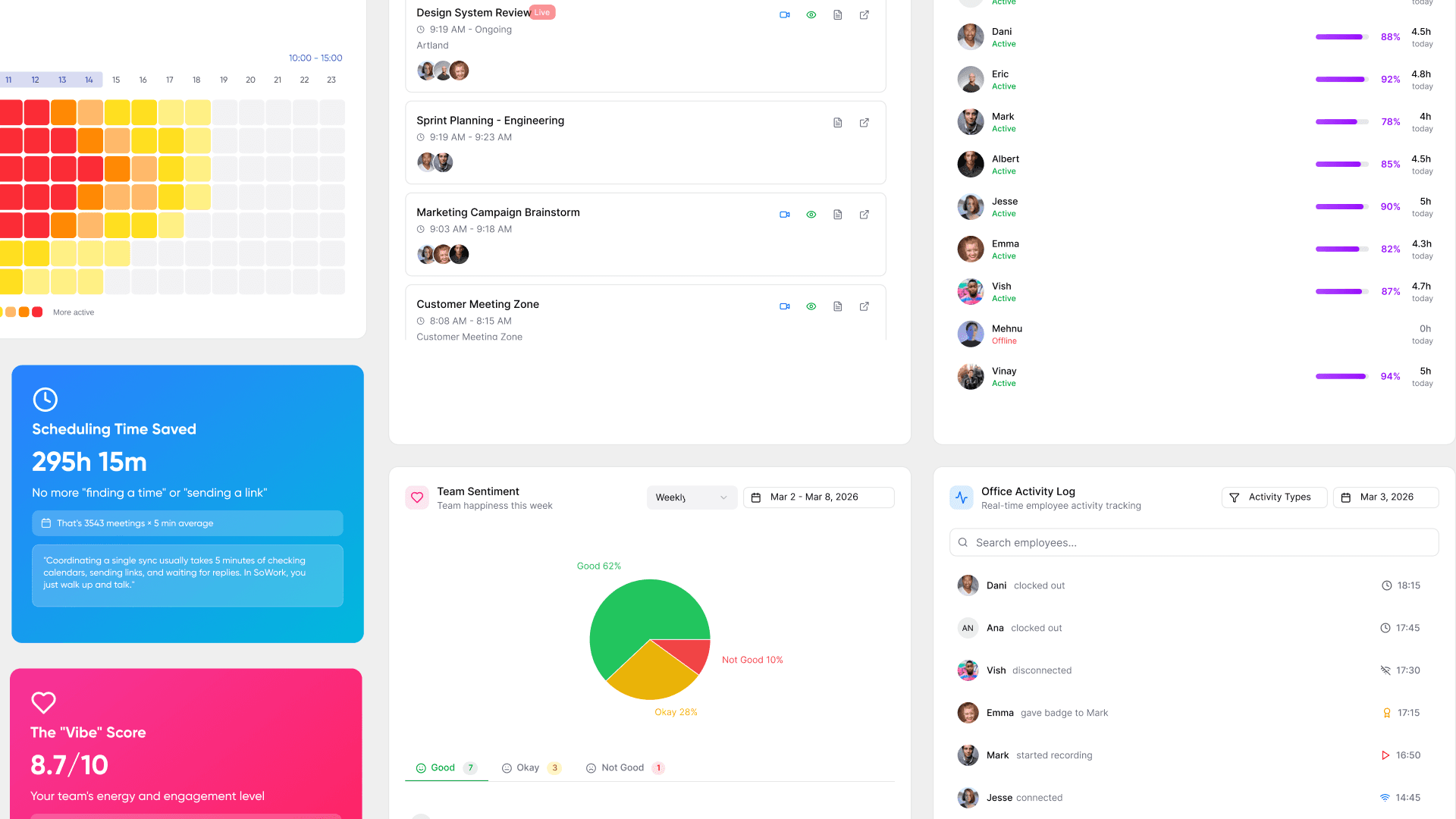
SoWork vs Sococo: Qual escritório virtual se lembra
Vishal Punwani

Publicado em:
Atualizado em:
O SoWork possui o recurso nativo AI Meeting Memory que grava, transcreve e resume automaticamente todas as reuniões, incluindo conversas espontâneas de um clique, e as armazena em uma biblioteca pesquisável dentro do seu escritório virtual. O Sococo não possui nenhum recurso nativo de transcrição por IA ou captura de decisões; ele depende de notas manuais ou integrações de terceiros como Zoom e Slack para documentação.
O que é o SoWork e que problema ele resolve para equipes remotas?
O SoWork é uma plataforma de escritório virtual que replica a colaboração espontânea e de ambiente de um escritório físico para equipes distribuídas. Seu principal problema: equipes remotas perdem decisões, contexto e cultura quando cada interação exige um convite de calendário.
Trabalhadores remotos agora fazem em média 25,6 reuniões por semana, 80% a mais do que os trabalhadores de escritório [1]. O SoWork ataca a causa raiz: muito atrito de agendamento, pouca conexão espontânea. Seu escritório virtual persistente mostra quem está livre em tempo real, permite iniciar uma conversa com um clique e captura o que foi dito automaticamente. Sem links, sem atrito, sem acompanhamentos perdidos. As equipes podem configurar e convidar membros em minutos, sem necessidade de download de software.
O que é o Sococo e como ele se posiciona?
O Sococo é uma plataforma de escritório virtual baseada em nuvem que posiciona os membros da equipe como avatares em uma planta interativa, proporcionando às equipes distribuídas uma sensação compartilhada de presença. Ele é voltado para empresas com alta exigência de conformidade e organizações de médio a grande porte.
O Sococo inclui mapas de escritório virtual, salas de reunião, atualizações de status baseadas em avatares, chat de voz e vídeo, compartilhamento de tela e mensagens de equipe [2]. Ele se integra com ferramentas de terceiros como Zoom, Webex, Google Meet e Slack em vez de desenvolver recursos de mídia nativos do zero [3]. Os avaliadores observam que sua sensação de ambiente de escritório ajuda os trabalhadores remotos a manter uma mentalidade de trabalho [4], mas seu preço, começando em $14,99 por assento por mês com um mínimo de 10 assentos, atraiu críticas por excluir equipes menores [5].
Quais recursos de IA o SoWork oferece para capturar e lembrar decisões?
O AI Meeting Memory do SoWork grava, transcreve e resume automaticamente todas as reuniões, incluindo conversas espontâneas de um clique, para que as decisões não se percam. Sua assistente de IA, Sophia Bot, também gera itens de ação e armazena tudo em uma biblioteca de reuniões pesquisável.
A Sophia Bot automatiza a gravação, transcrição, resumo e geração de itens de ação para cada conversa que acontece no escritório virtual [6]. Resumos e itens de ação podem fluir diretamente para ferramentas de gerenciamento de projetos via Zapier, sem cópia manual [7]. Isso está incorporado no próprio espaço de trabalho, de modo que o contexto vive onde sua equipe já colabora, e não em um aplicativo separado. Equipes que utilizam ferramentas de gerenciamento de reuniões com notas automatizadas reduziram o tempo total de reuniões em 18% e melhoraram a conclusão de acompanhamentos em 42% (Gartner, 2024) [8].
Quais recursos de IA o Sococo oferece para memória de reunião ou captura de decisões?
O Sococo não possui transcrição por IA nativa, resumo de reuniões ou recurso de captura de decisões. As equipes que desejam notas assistidas por IA devem conectar uma ferramenta de terceiros como o Zoom AI Companion ou Otter.ai por meio das integrações do Sococo.
O conjunto de recursos do Sococo abrange mapas de escritório virtuais, presença de avatar, chat de voz e vídeo, compartilhamento de tela e mensagens de texto [9]. Nenhum de seus recursos documentados inclui transcrição automática, resumo por IA ou um arquivo de decisões pesquisável. Suas integrações com Zoom, Webex e Google Meet significam que você pode adicionar as próprias ferramentas de IA dessas plataformas, mas isso cria um fluxo de trabalho fragmentado — as notas ficam em um aplicativo, as conversas em outro. Para equipes que precisam de memória de decisão integrada ao espaço de trabalho, o Sococo exige ferramentas adicionais e disciplina manual.
Como o assistente de reuniões por IA do SoWork realmente funciona?
Quando uma reunião começa no SoWork, seja agendada ou uma conversa espontânea de um clique, a Sophia Bot entra automaticamente, grava o áudio, gera uma transcrição e produz um resumo estruturado com decisões e itens de ação.
O resumo é armazenado na biblioteca de reuniões do SoWork, que é acessível dentro do escritório virtual onde a equipe já trabalha [10]. Isso significa que a memória institucional está co-localizada com a presença e a comunicação, ou seja, você não precisa sair da plataforma para descobrir o que foi decidido na última terça-feira. A conectividade com o Zapier envia os itens de ação para o ClickUp, Notion ou outras ferramentas de projeto sem que ninguém precise copiar e colar [11]. O principal diferencial: a captura também acontece em conversas espontâneas, não apenas em chamadas agendadas.
Como o Sococo lida com notas de reunião e documentação de decisões?
O Sococo lida com a documentação de reuniões manualmente. Não há IA integrada para gravar, resumir ou armazenar o que foi decidido — alguém da equipe precisa anotar ou depender de uma plataforma de terceiros conectada.
O plano padrão do Sococo limita o uso de mídia nativa a 500 minutos por assento por mês e cobra taxas adicionais por excesso, a menos que as equipes façam um upgrade ou tragam suas próprias contas do Zoom ou Webex [12]. Mesmo com uma configuração de mídia própria, as notas de IA dessas plataformas não aparecem no espaço de trabalho do Sococo — elas ficam no Zoom ou onde quer que a gravação esteja armazenada. Um avaliador do Capterra observou que a experiência de vídeo integrada do Sococo parecia limitada e que preferia usar ferramentas de vídeo externas [13]. Para a memória de decisões, essa fragmentação é a principal fraqueza.
Como o SoWork e o Sococo se comparam em transcrição e resumo por IA?
O SoWork vence esta comparação com folga. Ele possui transcrição e resumo por IA nativos integrados ao escritório virtual. O Sococo não possui nenhum dos dois.
Recurso | SoWork | Sococo |
|---|---|---|
Transcrição por IA nativa | Sim (Sophia Bot) | Não |
Resumos gerados automaticamente | Sim | Não |
Extração de itens de ação | Sim | Não |
Biblioteca de reuniões pesquisável | Sim | Não |
Integração com IA de terceiros | Sim (Zapier) | Sim (Zoom, Webex) |
Captura de conversas espontâneas | Sim | Não |
Para equipes onde as decisões acontecem em conversas rápidas de corredor, a capacidade do SoWork de capturar essas conversas espontâneas é uma vantagem significativa em relação a qualquer ferramenta que grava apenas chamadas agendadas.
As equipes podem realmente pesquisar e recuperar decisões passadas em cada plataforma?
O SoWork armazena todos os resumos e transcrições de reuniões em uma biblioteca pesquisável dentro do escritório virtual. O Sococo não possui um arquivo de conhecimento nativo — as decisões passadas existem apenas nas notas que alguém tirou manualmente ou em uma ferramenta externa conectada.
Os trabalhadores do conhecimento já passam cerca de 1,8 horas todos os dias procurando por informações às quais deveriam ter acesso (McKinsey) [14]. Um escritório virtual que não expõe decisões passadas agrava esse problema. A biblioteca de reuniões do SoWork torna a memória institucional acessível dentro do próprio espaço de trabalho [15]. Os recursos de armazenamento de documentos e filtro de busca do Sococo aplicam-se a arquivos, não a decisões de reuniões [16]. Se sua equipe precisa responder 'o que decidimos sobre o assunto X três semanas atrás?', o SoWork pode trazer essa resposta; o Sococo não consegue sem um sistema separado.
Cada plataforma captura conversas ambientais ou apenas reuniões agendadas?
O SoWork captura ambos — sua IA grava conversas espontâneas de um clique e reuniões agendadas de forma idêntica. O Sococo não tem capacidade de gravação nativa, de modo que nem conversas ambientais nem agendadas são capturadas sem uma ferramenta de terceiros.
Essa distinção é mais importante do que parece. Pesquisas estimam que 70% das decisões tomadas em reuniões são esquecidas em até 24 horas sem anotações [17]. Em um escritório virtual, muitas das decisões mais importantes acontecem em conversas rápidas e não agendadas, o equivalente remoto a uma conversa de corredor. As Reuniões Instantâneas do SoWork ativam a captura por IA de forma automática, para que essas decisões não se percam só porque ninguém as agendou. A arquitetura do Sococo depende de você entrar em uma sala de reunião e depois conectar uma ferramenta de gravação externa, o que significa que as decisões ambientais acabam sendo perdidas por padrão.
Quais critérios as equipes devem usar para avaliar recursos de memória de IA em um escritório virtual?
Os recursos úteis de memória de IA devem capturar decisões automaticamente, sem exigir ação manual, armazená-las onde a equipe já trabalha e torná-las pesquisáveis posteriormente. Se qualquer uma dessas três condições falhar, o recurso não será adotado.
Faça estas perguntas antes de se comprometer com uma plataforma: 1. A captura por IA é iniciada automaticamente ou alguém precisa ativá-la? 2. Os resumos são armazenados dentro do espaço de trabalho ou em um aplicativo separado? 3. É possível pesquisar decisões passadas por tópico, data ou participante? 4. Os itens de ação fluem para suas ferramentas de projeto sem necessidade de copiar e colar? 5. A captura abrange conversas espontâneas, não apenas chamadas agendadas? 6. O que acontece com as transcrições se você cancelar a assinatura?
O maior valor das ferramentas de anotação por IA está no resumo e na capacidade de pesquisa, não na transcrição bruta [18]. Uma ferramenta que transcreve mas esconde o resultado é apenas marginalmente melhor do que nenhuma ferramenta.
Quais são os riscos de confiar na IA para armazenar a memória institucional da sua equipe?
Os maiores riscos são a dependência de um único fornecedor (lock-in), erros de precisão da IA e a falsa confiança de que uma transcrição equivale à compreensão. Se a sua equipe tratar os resumos de IA como um substituto para o julgamento, em vez de um complemento, as decisões podem ser mal interpretadas ou descontextualizadas.
Os trabalhadores do conhecimento passam quase 25% de sua jornada de trabalho procurando por informações [19]. As ferramentas de memória por IA reduzem essa carga, mas introduzem novas formas de falha. A precisão da transcrição diminui com sotaques, jargões e pessoas falando ao mesmo tempo [20]. Os resumos podem perder nuances ou atribuir incorretamente uma decisão. E se as capturas viverem em ferramentas separadas em vez de um espaço de trabalho unificado, elas ainda não se consolidarão em memória institucional [21]. A solução: trate os resumos de IA como um ponto de partida, revise os itens de ação antes que eles sejam propagados e mantenha um humano no processo para decisões de alto risco.
Quais riscos de privacidade e retenção de dados vêm com a transcrição por IA em um escritório virtual?
A transcrição por IA em ambientes sempre ativos cria uma exposição jurídica real: requisitos de consentimento, conformidade com a LGPD/GDPR, dados armazenados em servidores de terceiros e transcrições que podem se tornar registros detectáveis em litígios.
67% das empresas que usam assistentes de reunião por IA não possuem uma política formal de retenção de dados para transcrições (Gartner) [22]. Sob o Artigo 6 do GDPR, a gravação sem uma base legal é considerada processamento ilegal [23]. No Brasil, as diretrizes da LGPD também exigem bases legais claras. Os registros de transcrição por IA também podem se tornar documentos de divulgação obrigatória em investigações regulatórias ou processos judiciais [24]. Antes de implantar qualquer ferramenta de transcrição por IA, verifique o local de armazenamento de dados do fornecedor, o período de retenção, se o áudio é excluído após a transcrição e se as transcrições podem ser usadas para treinamento de modelos [25]. Sempre notifique os participantes de que a gravação está ativa.
Quais equipes remotas mais se beneficiam da captura de decisões por IA em um escritório virtual?
As equipes com alto volume de reuniões, ciclos rápidos de iteração ou integração frequente de novos membros são as que mais se beneficiam. Especificamente: equipes de produto e engenharia que tomam decisões diárias, startups em rápido crescimento e qualquer equipe onde os detentores de conhecimento essenciais corram o risco de sair.
Substituir um trabalhador do conhecimento custa de 50 a 200% do seu salário anual (Gallup) [26], e novos contratados levam de 8 a 12 meses para atingir a produtividade total, em grande parte porque estão reconstruindo o contexto que já existia anteriormente (SHRM) [27]. A captura de decisões por IA encurta diretamente essa rampa de aprendizado. Equipes que realizam muitas sincronizações espontâneas, em vez de reuniões diárias formais, beneficiam-se ao máximo de uma plataforma como o SoWork, que captura essas conversas ambientais. Equipes com alta exigência de conformidade jurídica, de RH ou discussões confidenciais de clientes devem aplicar controles mais rígidos e podem preferir a documentação manual para essas reuniões específicas.
Existe evidência real de que os recursos de IA do SoWork reduzem a perda de decisões?
Sim. Os usuários do SoWork relatam uma queda de cerca de 60% nas reuniões formais após a substituição das chamadas agendadas do Zoom por interações espontâneas no escritório virtual, e as equipes que usam ferramentas de gerenciamento de reuniões com notas automatizadas reduziram o tempo de reunião em 18%, melhorando a conclusão de acompanhamentos em 42% (Gartner, 2024).
O avaliador independente Edin, apresentado no podcast iGrow, destacou a funcionalidade de resumo e gravação por IA do SoWork como um grande benefício, observando especificamente que ele não quer fazer anotações à mão e prefere resumos gerados por IA armazenados em um único lugar [28]. O SoWork possui uma avaliação de 4.8/5 no G2 e 4.7/5 no Product Hunt [29]. A combinação de percepção de presença, Reuniões Instantâneas e captura por IA aborda três modos de falha distintos — atrito de agendamento, perda de contexto e acompanhamentos esquecidos — em uma única plataforma.
As evidências reais mostram que o Sococo ajuda as equipes a reter o conhecimento institucional?
As evidências dos usuários do Sococo focam em presença e conexão, não em retenção de conhecimento. Os avaliadores elogiam sua sensação de escritório físico e a visibilidade de disponibilidade, mas nenhuma evidência documentada mostra que ele captura ou expõe decisões passadas.
As avaliações do Sococo no Capterra e G2 destacam consistentemente seu valor para ver a disponibilidade dos colegas de equipe e replicar o ambiente de um escritório [30]. Um analista sênior da JetBlue citou a flexibilidade de reuniões da plataforma como um benefício [31]. No entanto, nenhuma das avaliações de usuários disponíveis menciona captura de decisões assistida por IA, histórico de reuniões pesquisável ou redução de perda de conhecimento. O Sococo atende a empresas focadas em conformidade que priorizam uma planta virtual estruturada em detrimento de uma memória baseada em IA. Para equipes cuja dor principal é a perda de decisões, as evidências apontam para outro lugar.
Quanto custam o SoWork e o Sococo, e o preço afeta o acesso à memória de IA?
O SoWork é gratuito para até 10 usuários, com planos pagos de $6/usuário/mês (Basic) e $15/usuário/mês (Premium). O AI Meeting Memory está incluído. O Sococo começa em $14,99/assento/mês com um mínimo de 10 assentos e sem memória de IA em qualquer plano.
Plano | SoWork | Sococo |
|---|---|---|
Plano Gratuito | Até 10 usuários | Não |
Pago Inicial | $6/usuário/mês | $14,99/assento/mês (mínimo de 10 assentos) |
Premium | $15/usuário/mês | $24.99/assento/mês (mínimo de 100 assentos) |
Memória de IA inclusa | Sim (todos os planos pagos) | Não (não disponível) |
Limite de mídia | Nenhum declarado | 500 min/assento/mês no plano padrão |
O plano Ilimitado do Sococo a $24,99/assento/mês exige um mínimo de 100 assentos, tornando-o inacessível para a maioria das equipes pequenas [32]. O plano gratuito do SoWork permite testá-lo sem compromisso, e os recursos de IA não são restritos apenas ao plano mais caro.
Quais alternativas abordam a memória de decisões da equipe se nenhuma das duas plataformas servir?
Para memória de decisões por IA especificamente, nenhuma outra plataforma de escritório virtual se iguala à capacidade nativa do SoWork. Ferramentas independentes como Otter.ai, Fathom e Fellow adicionam notas de IA a qualquer chamada de vídeo, enquanto o Notion AI ajuda a organizar decisões em documentos, mas nenhuma combina a percepção de presença com a captura automática em um único espaço de trabalho.
O Gather.town removeu seu plano gratuito permanente no final de 2025, com tarifas a partir de $15/usuário/mês [33], e não possui transcrição de IA nativa. O Teamflow serve para escritórios persistentes e sempre ativos, mas carrega riscos no cronograma de desenvolvimento do produto [34]. Para equipes focadas em comunicação assíncrona, o Notion AI pode estruturar decisões em documentos, mas não as capturará a partir de conversas de voz. O Fathom detém a avaliação mais alta do G2 na categoria de anotadores de IA para reuniões (5.0/5 de mais de 6.000 avaliações) [35] e funciona bem como um complemento do Zoom, mas é uma ferramenta independente, não um escritório virtual. A lacuna que o SoWork preenche é combinar presença, reuniões espontâneas e captura por IA em um só lugar.
Qual plataforma você deve escolher se nunca mais quiser perder uma decisão?
O SoWork é a escolha clara para equipes que priorizam a memória de decisões. É a única plataforma entre as duas com transcrição por IA nativa, resumo automático, extração de itens de ação e uma biblioteca de reuniões pesquisável, tudo integrado ao próprio escritório virtual.
O Sococo é um escritório virtual sólido para empresas que desejam uma planta baixa estruturada e se sentem confortáveis gerenciando a documentação separadamente. Mas se a dor da sua equipe é perder decisões em conversas rápidas, esquecer o que foi acordado na sincronização da semana passada ou gastar tempo em 'reuniões de alinhamento para alinhar a última reunião', o Sococo não resolve isso. O SoWork resolve, e faz isso sem adicionar outra ferramenta ao seu conjunto de softwares. Para fundadores, diretores de operações (COOs) e líderes de equipe em empresas que priorizam o trabalho remoto com 5 a 200 pessoas, a combinação de Reuniões Instantâneas, percepção de presença e Memória de IA do SoWork é a resposta mais completa disponível em 2026 para o problema da perda de decisões.
Principais Conclusões
O SoWork possui o recurso nativo AI Meeting Memory (Sophia Bot) que grava, transcreve, resume e armazena todas as conversas, incluindo chats espontâneos, em uma biblioteca pesquisável.
O Sococo não possui transcrição por IA nativa ou captura de decisões em nenhum plano de preço; as equipes devem depender de notas manuais ou ferramentas externas conectadas como o Zoom AI.
70% das decisões de reuniões são esquecidas em 24 horas sem anotações, tornando a captura automática um requisito funcional, e não apenas um diferencial agradável.
O SoWork é gratuito para até 10 usuários; o Sococo começa em $14,99/assento/mês com um mínimo de 10 assentos e sem memória de IA inclusa.
Equipes que utilizam ferramentas de gerenciamento de reuniões com notas automatizadas reduziram o tempo total de reuniões em 18% e melhoraram a conclusão de acompanhamentos em 42% (Gartner, 2024).
Os usuários do SoWork relatam uma queda de cerca de 60% nas reuniões agendadas formais após a mudança para interações espontâneas no escritório virtual.
A transcrição por IA traz riscos jurídicos e de privacidade reais: 67% das empresas que usam assistentes de reunião por IA não possuem uma política formal de retenção de dados (Gartner). Sempre notifique os participantes e verifique as práticas de dados do fornecedor.
Para equipes cuja dor principal é perder decisões, o Sococo exige ferramentas adicionais e disciplina manual para resolver um problema que o SoWork trata nativamente.
Fontes
O Sococo se integra ao Google Meet, Google Chat, Slack, Webex Suite e Zoom Workplace.
O custo do Sococo não se justifica para empresas de pequeno porte, de acordo com avaliadores do G2.
O Sococo inclui armazenamento de documentos e recursos de busca/filtro.
70% das decisões tomadas em reuniões são esquecidas dentro de 24 horas sem notas (Laxis, 2026).
Sob o Artigo 6 do GDPR, a gravação sem uma base jurídica válida constitui processamento ilegal.
A substituição de um trabalhador do conhecimento custa de 50 a 200% do seu salário anual (Gallup).
O SoWork possui uma avaliação de 4.8/5 no G2 e 4.7/5 no Product Hunt.
O analista sênior da JetBlue citou a flexibilidade de reuniões do Sococo como um benefício.
O plano Ilimitado do Sococo a $24,99/assento/mês exige um mínimo de 100 assentos.
Perguntas Frequentes
SoWork vs Recursos de IA do Sococo: qual escritório virtual realmente lembra o que sua equipe remota decidiu?
O Sococo possui notas de reunião com IA ou transcrição integrada?
O AI Meeting Memory do SoWork está disponível no plano gratuito?
O que acontece com as transcrições das reuniões se eu cancelar o SoWork?
O Sococo consegue capturar conversas espontâneas de corredor ou apenas reuniões agendadas?
É legal gravar e transcrever automaticamente conversas em escritórios virtuais?
Como o SoWork se compara ao Gather.town para memória de reuniões com IA?
Quais equipes remotas devem escolher o Sococo em vez do SoWork?
Blogs
Leia artigos semelhantes
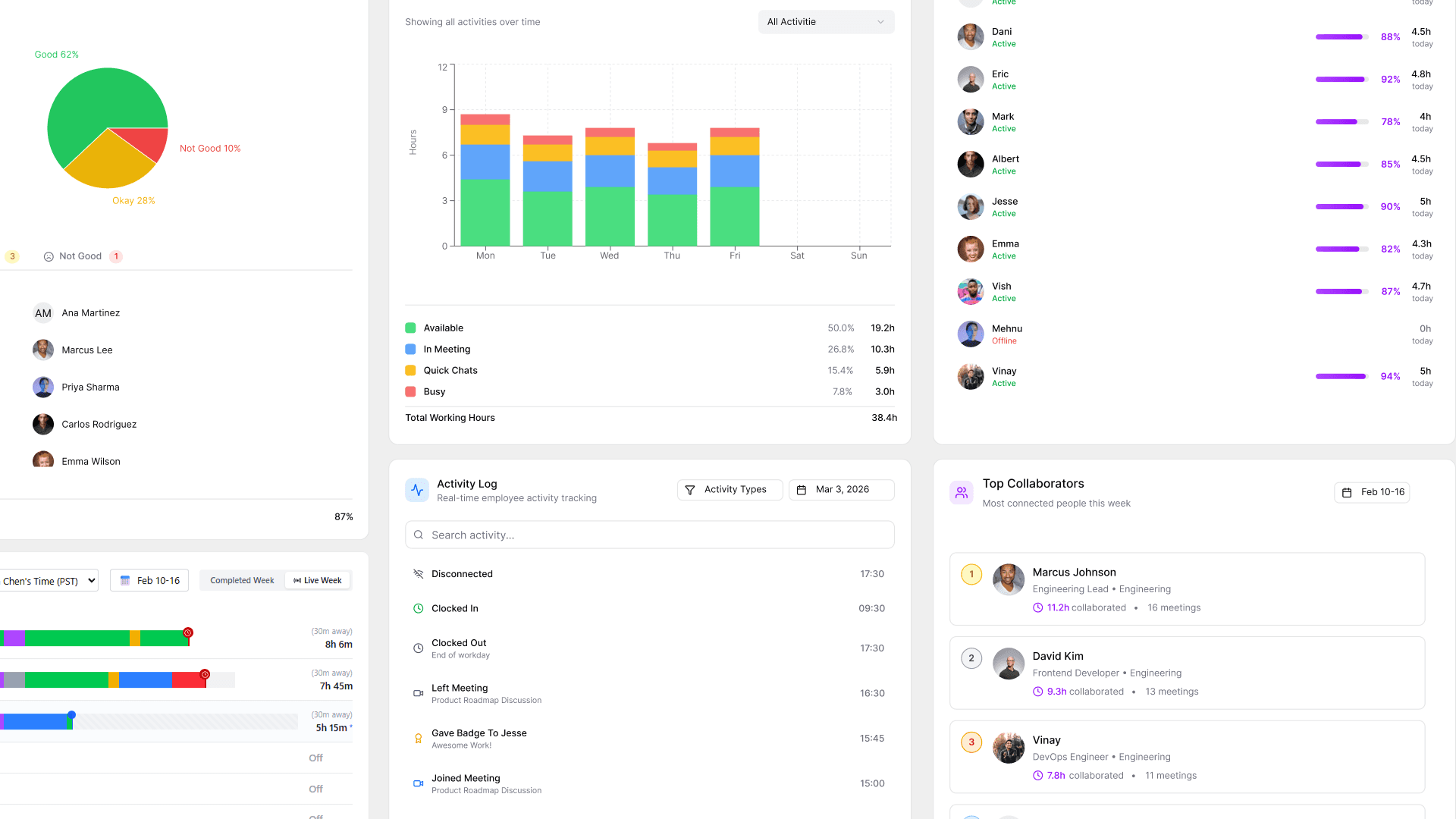
Análise de Equipes Remotas: O Guia Completo para Gestão do Trabalho Remoto Baseada em Dados em 2026
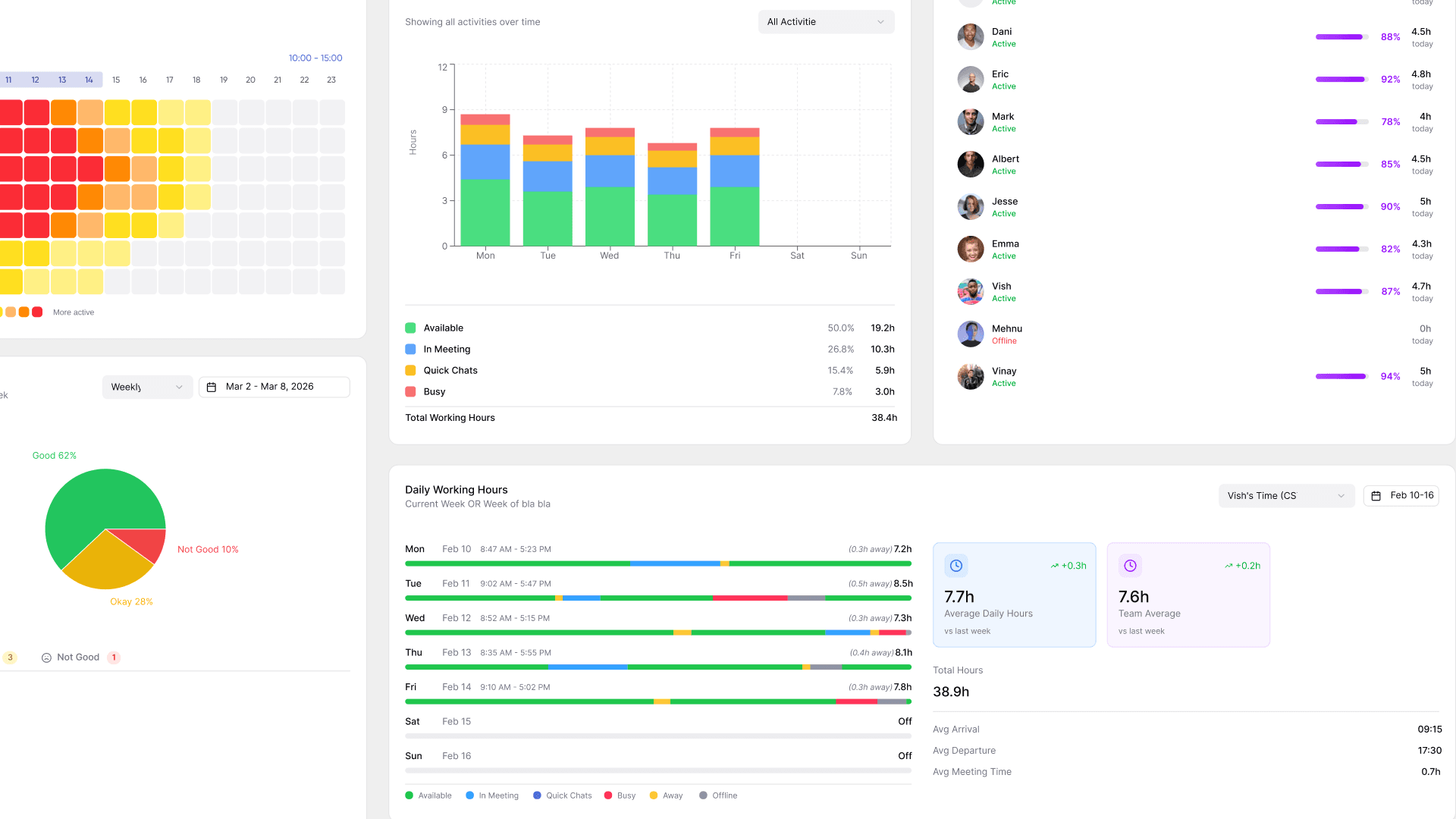
Guia Completo para Obter Visibilidade sobre o Desempenho e a Colaboração de Equipes Remotas