SoWork vs HyHyve: Melhor escritório virtual sempre ativo em 2026
Vishal Punwani

Publicado em:
Atualizado em:
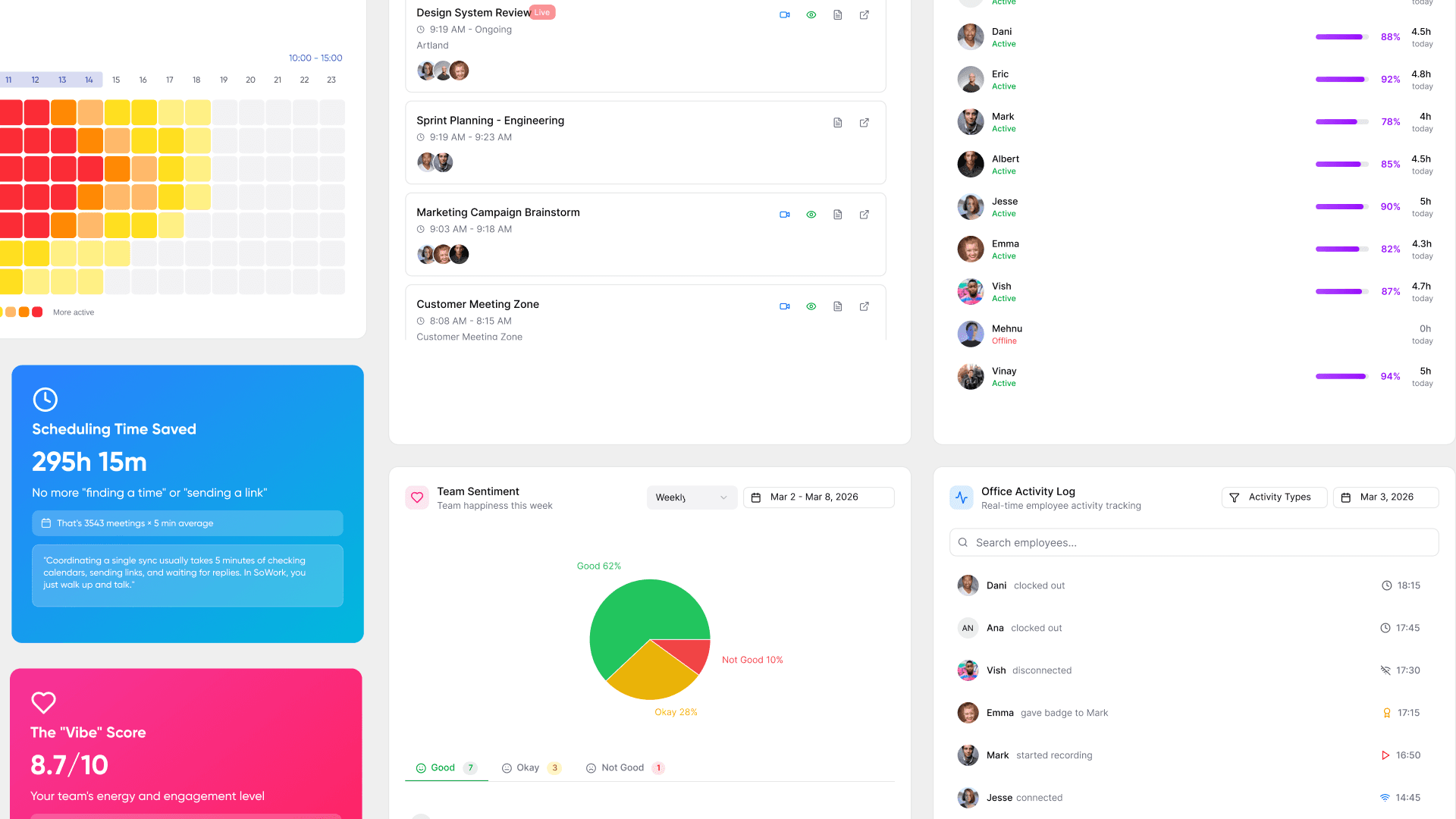
O SoWork foi criado para uso diário e contínuo como escritório virtual: ele oferece percepção de presença persistente, sincronização automática de calendário, memória de reuniões por IA e conversas instantâneas com um clique ao longo da jornada de trabalho. O HyHyve é primariamente uma plataforma de eventos e networking otimizada para sessões estruturadas, não para presença ambiental contínua da equipe. Para equipes distribuídas que buscam um substituto real para o escritório diário, o SoWork é a opção mais robusta.
O que realmente significa "Escritório Virtual Sempre Ativo"?
Um escritório virtual sempre ativo é um espaço de trabalho digital persistente onde os colegas de equipe estão visivelmente presentes ao longo da jornada de trabalho, permitindo conversas espontâneas sem a necessidade de agendamento. Ele replica a percepção ambiental de um escritório físico, e não apenas um local para realizar reuniões agendadas.
Pense da seguinte forma: em um escritório real, você olha para o lado e sabe quem está livre. Um escritório virtual sempre ativo faz a mesma coisa digitalmente. Você consegue ver quem está focado, quem está em uma chamada e quem está disponível para uma pergunta rápida. Equipes que utilizam esses ambientes relataram uma redução de 41% nas reuniões porque os problemas são resolvidos espontaneamente em vez de ficarem na fila para o próximo horário disponível na agenda [1]. A plataforma roda em segundo plano o dia todo, não apenas quando uma reunião está agendada.
O que é o SoWork e para quem ele foi feito?
O SoWork é uma plataforma de escritório virtual impulsionada por IA, projetada para equipes distribuídas que desejam replicar a colaboração espontânea e ambiental de um escritório físico sem depender de uma agenda. Seu principal caso de uso é a presença diária e persistente da equipe.
O SoWork oferece um ambiente de escritório imersivo em 2.5D onde os colegas de equipe aparecem como avatares, os status de presença são atualizados automaticamente por meio da sincronização de calendário e as conversas começam com um único clique. A plataforma unifica reuniões, chat, compartilhamento de tela e resumos de reuniões por IA em um só lugar. Foi desenvolvido para fundadores, líderes de equipe e operadores de empresas remotas com 5 a 200 funcionários que estão frustrados com a sobrecarga de ferramentas como Zoom e Slack. O SoWork possui uma avaliação de 4.8/5 no G2 baseada em 50 avaliações [2].
O que é o HyHyve e para quem ele foi feito?
O HyHyve é uma plataforma de eventos virtuais e networking baseada no navegador, fundada em Berlim em 2020, projetada principalmente para eventos online, workshops e sessões de networking estruturadas. Seu principal caso de uso são encontros episódicos, não a presença diária contínua da equipe.
O HyHyve permite que os usuários se movam livremente por espaços virtuais e tenham conversas por proximidade, o que o torna atraente para eventos e sessões de integração de equipe. Ele se integra diretamente ao Microsoft Teams e está em total conformidade com a LGPD (GDPR) sob as regulamentações alemãs e europeias [3]. Até 50 pessoas podem participar de um único espaço de conversa [4]. Seu modelo de cobrança é baseado nos minutos de reunião consumidos, em vez de cobrança por usuário, o que atende bem ao uso ocasional, mas gera imprevisibilidade para equipes que o utilizam o dia todo.
Como o SoWork gerencia a presença persistente o dia todo?
O SoWork mantém a presença persistente por meio de indicadores visuais de status em tempo real e sincronização automática de calendário que atualiza sua disponibilidade assim que uma reunião começa, sem a necessidade de inserção manual. Os colegas de equipe visualizam rapidamente quem está livre, focado ou em uma chamada.
Os Modos de Foco do SoWork (Modo Simples e Modo Mini) permitem que as pessoas sinalizem trabalho focado enquanto permanecem levemente conectadas à equipe. A plataforma cria um espaço de trabalho digital persistente que reflete quem está por perto e o que está acontecendo ao longo do dia [5]. A Memória de Reuniões por IA grava e resume conversas de forma automática, garantindo que até mesmo as interações espontâneas perdidas sejam registradas. Essa combinação de sinais de presença em tempo real e documentação assíncrona é o que o torna genuinamente utilizável como um substituto diário de escritório, e não apenas uma sala de reuniões.
Como o HyHyve gerencia a presença persistente o dia todo?
O HyHyve oferece uma sensação básica de presença quando os usuários estão ativos na plataforma, mas não foi projetado para rodar como uma camada persistente em segundo plano ao longo do dia de trabalho. Seu modelo de presença é baseado em sessões, não em ambiente contínuo.
O HyHyve de fato permite que você trabalhe em projetos sem distrações e seja notificado quando alguém quiser conversar [6]. No entanto, não há atualizações automáticas de status sincronizadas com o calendário, sinais de modo de foco ou memória de reuniões por IA para registrar conversas espontâneas. O modelo de preços baseado em minutos da plataforma também cria barreiras para o uso diário: o plano gratuito cobre apenas 200 minutos de vídeo por mês [7], que uma equipe de 10 pessoas poderia esgotar em uma única manhã. A percepção ambiental persistente não faz parte do design do produto HyHyve.
O que torna uma plataforma verdadeiramente criada para uso diário e contínuo?
Um escritório virtual sempre ativo de verdade precisa de indicadores de presença persistentes, sincronização automática de status, desempenho leve em segundo plano, recursos para conversas espontâneas e um modelo de cobrança que não penalize o uso contínuo. Sem esses cinco elementos, trata-se apenas de uma ferramenta de reuniões fantasiada de escritório.
Critério | Por que é importante |
|---|---|
Indicadores de presença persistentes | As equipes sabem quem está livre sem precisar perguntar |
Sincronização automática de calendário | O status permanece preciso com zero esforço manual |
Modo de segundo plano leve | Roda o dia todo sem sobrecarregar a CPU/RAM |
Conversas espontâneas com um clique | Elimina completamente a barreira do agendamento |
Preço por usuário | Custo previsível para uso diário de toda a equipe |
Plataformas desenvolvidas para eventos ou uso episódico costumam atender a um ou dois desses critérios, mas não aos cinco.
Qual plataforma facilita mais as conversas espontâneas?
O SoWork se destaca na comunicação espontânea para o dia a dia: ele é estruturado em torno de reuniões instantâneas com um clique e sinais de disponibilidade em tempo real que tornam as conversas rápidas a regra, não a exceção. O HyHyve suporta movimentação por proximidade e áudio, mas otimiza isso para contextos de eventos.
No SoWork, você vê o avatar de um colega, confirma que ele está livre e inicia uma conversa com um clique. Sem links, sem convites de calendário. Avaliadores no G2 apontam especificamente que as conversas espontâneas aumentaram significativamente após a mudança para o SoWork [8]. O HyHyve também permite movimentação livre e conversas por proximidade [9], o que funciona muito bem para um evento de networking de duas horas. A diferença está no propósito: o SoWork é projetado para que isso aconteça 20 vezes ao dia; o HyHyve é projetado para que ocorra durante uma sessão programada.
Qual plataforma tem melhor desempenho rodando em segundo plano o dia todo?
O modo 2.5D imersivo do SoWork consome mais GPU e CPU do que uma interface plana, mas seu Modo Simplificado e Modo Mini reduzem essa carga significativamente para o uso diário. O HyHyve roda no navegador sem necessidade de download, o que mantém seu consumo leve, mas não foi projetado para permanecer aberto continuamente.
O Modo Simplificado do SoWork foi projetado especificamente para equipes que desejam a camada de presença sem o consumo gráfico do mundo 2.5D completo [10]. O HyHyve roda nos principais navegadores e dispositivos móveis sem precisar de um aplicativo desktop [11], o que é uma vantagem real de acessibilidade. No entanto, uma aba de navegador otimizada para eventos não é o mesmo que um espaço de trabalho feito para rodar de forma leve em segundo plano. Para o uso diário, os modos dedicados do SoWork dão às equipes um controle mais deliberado sobre o consumo de recursos.
Qual plataforma oferece mais para a cultura de equipes remotas?
O SoWork é planejado de forma mais intencional para a construção de cultura no dia a dia: avatares personalizáveis, mapas de escritório, jogos em equipe e canais de chat por tópicos servem para fortalecer relacionamentos contínuos. O HyHyve foca em tornar eventos estruturados mais sociais e envolventes.
O SoWork permite que as equipes personalizem seu espaço de escritório e avatares para refletir a identidade da empresa, de forma semelhante ao jogo The Sims. Avaliadores no G2 destacam a personalização de avatares como um recurso que torna o trabalho remoto mais pessoal e divertido [12]. O HyHyve foca em oferecer um design excelente e identidade corporativa marcante para eventos [13], proporcionando experiências pontuais memoráveis. Essa diferença é crucial: a cultura construída por meio da interação diária se acumula ao longo do tempo de uma forma que eventos virtuais trimestrais não conseguem replicar.
Como as integrações se comparam para os fluxos de trabalho diários?
O SoWork se integra com Google Workspace, Outlook, Slack, Zapier, Miro e GitHub, cobrindo as principais ferramentas de uso diário da maioria das equipes remotas. O HyHyve se integra ao Microsoft Teams e Google Workspace, com um conjunto mais limitado de conexões de terceiros.
A integração com o Zapier no SoWork (disponível no plano Premium) permite conexões com centenas de ferramentas de gestão de projetos e fluxo de trabalho sem necessidade de programação [14]. A sincronização de calendário com Google e Outlook é automática e central para o modelo de presença. A integração do HyHyve com o Microsoft Teams é um ponto forte real, permitindo que empresas rodem espaços do HyHyve dentro de suas licenças existentes do Teams [15]. Mas para equipes que não utilizam o ecossistema da Microsoft, a profundidade de integração do HyHyve é menor. O ecossistema de integrações mais amplo do SoWork facilita a incorporação da ferramenta no fluxo de trabalho diário completo.
Quais são os riscos de usar o HyHyve como escritório virtual diário?
O maior risco ao usar o HyHyve no dia a dia é o fato de ele não ter sido projetado para isso: a cobrança por minuto se torna cara rapidamente, não há uma camada de presença persistente, não há memória de reuniões por IA e a proposta da plataforma é focada em eventos e networking, não na colaboração contínua de equipes.
O plano gratuito do HyHyve cobre apenas 200 minutos de vídeo por mês [16], o que uma equipe de cinco pessoas consome em menos de uma hora de uso diário. Os planos pagos cobram por minuto consumido, tornando os custos imprevisíveis em maior escala. Não há sinais de modo de foco, atualizações automáticas de status ou resumos de reuniões. Avaliações de terceiros apontam que o HyHyve pode carecer de recursos avançados necessários para organizações maiores [17]. Equipes que tentam adotá-lo como escritório diário geralmente voltam para o Slack e o Zoom em poucas semanas.
Quais são os riscos de usar o SoWork como escritório virtual diário?
Os principais desafios do SoWork no uso diário são o consumo de GPU e CPU do seu modo imersivo 2.5D em computadores mais antigos, além do fato de ser um modelo de cobrança por usuário que exige a adesão de toda a equipe para entregar valor real. A adesão parcial enfraquece a camada de presença.
O mundo em 2.5D consome mais recursos de GPU e CPU do que uma interface plana [18], o que pode ser um problema para notebooks mais antigos. Mudar para o Modo Simplificado ou Modo Mini mitiga isso, mas as equipes precisam saber que essas opções existem. O valor do SoWork também depende de uma adesão em massa: se metade da equipe entra no escritório e a outra metade fica no Slack, a camada de presença perde o sentido. O plano gratuito limita as reuniões a 30 minutos apenas com áudio [19], de modo que as equipes que estão avaliando a ferramenta precisam testar um plano pago para experimentar a experiência diária completa.
Para quais tipos de equipe o SoWork ou o HyHyve são mais indicados?
O SoWork é ideal para equipes totalmente remotas ou híbridas de 5 a 200 pessoas que buscam um substituto para o escritório físico com presença persistente e ferramentas de reunião com IA. O HyHyve é mais adequado para equipes ou organizações que realizam eventos virtuais frequentes, workshops ou grandes sessões de networking.
Tipo de Equipe | Melhor Opção |
|---|---|
Equipe remota diária (5 a 200 pessoas) | SoWork |
Empresa híbrida ou com foco em eventos | HyHyve |
Organização focada no Microsoft Teams | HyHyve |
Equipes que precisam de resumos de reunião por IA | SoWork |
Networking virtual / workshops ocasionais | HyHyve |
Equipes substituindo Zoom e Slack no dia a dia | SoWork |
O crescimento mais acelerado no mercado de ferramentas de colaboração virtual vem de empresas de médio porte, com 50 a 200 funcionários, que estão expandindo suas equipes remotas [20].
Como SoWork e HyHyve se comparam em termos de preço para uso diário?
O preço por usuário do SoWork é previsível e escala de forma clara para o uso diário: gratuito para até 10 usuários, $6 por usuário/mês no plano Basic e $15 por usuário/mês no Premium. O modelo por minuto do HyHyve é econômico para eventos pontuais, mas se torna caro e imprevisível para uso contínuo.
O plano Basic do SoWork custa $6 por usuário por mês ($5,40 no faturamento anual) e o Premium custa $15 por usuário por mês ($12 no anual) [21]. Uma equipe de 25 pessoas no SoWork Basic custa $150 por mês. Já os planos do HyHyve começam em €29,90 por mês para 2.000 minutos [22], o que parece barato até você calcular que 25 pessoas em uma única reunião geral de uma hora consomem sozinhas 1.500 minutos. Para o uso diário de toda a equipe, o modelo de taxa fixa por usuário do SoWork é a opção financeiramente mais previsível.
O que dizem os usuários reais sobre SoWork vs. HyHyve no uso diário?
O SoWork possui uma base sólida e crescente de avaliações no G2 e Capterra, com usuários destacando conversas espontâneas, resumos por IA e personalização de avatares como recursos excepcionais para o dia a dia. O HyHyve possui pouquíssimas avaliações públicas, e a maior parte dos elogios é voltada para experiências de eventos e não de escritório diário.
O SoWork mantém uma nota de 4.8/5 no G2 e 4.9/5 no Product Hunt, com um Net Promoter Score de 92/100 [23]. Um usuário do G2 que migrou do Gather comentou: "Viemos do Gather, e o SoWork nos surpreendeu em todos os sentidos" [24]. Outro destacou que as conversas espontâneas aumentaram de forma marcante após a migração [25]. A página de avaliações do OMR para o HyHyve indica que ainda não há avaliações suficientes para gerar um resumo [26]. Essa disparidade no volume de avaliações por si só indica qual plataforma as equipes estão de fato utilizando diariamente.
Como o SoWork se compara ao Gather, Teamflow e Sococo?
O SoWork lidera esse grupo em recursos baseados em IA e transparência de preços. O Gather se destaca pela cultura e áudio espacial espontâneo. O Teamflow oferece salas persistentes sempre ativas, mas apresenta riscos de evolução do produto após sua aquisição em 2023. O Sococo atende a empresas com fortes requisitos de conformidade que preferem plantas de escritório estruturadas.
Plataforma | Ponto Forte | Ponto Fraco |
|---|---|---|
SoWork | Resumos por IA, presença, preços | Modo 2.5D consome bastante GPU |
Gather | Áudio espacial, cultura, diversão | Sem ferramentas de IA, interface retrô |
Teamflow | Salas sempre ativas, apps integrados | Risco de descontinuação, caro |
Sococo | Estrutura de planta baixa, corporativo | Limite de minutos de mídia |
O Teamflow foi adquirido em 2023 e mostra poucos sinais de desenvolvimento ativo de novas funcionalidades [27]. O plano padrão do Sococo possui um limite nativo de 500 minutos de mídia por usuário por mês [28]. O SoWork é a única plataforma desse grupo a trazer memória de reuniões por IA integrada como um recurso central.
Conclusão: SoWork ou HyHyve para um Escritório Virtual Sempre Ativo?
O SoWork é a escolha óbvia para equipes remotas que buscam um escritório virtual diário verdadeiro. Ele foi planejado desde o início para oferecer presença diária persistente, colaboração espontânea e continuidade de reuniões apoiada por IA. O HyHyve é uma plataforma de eventos competente para sessões estruturadas, mas não foi projetada para substituir seu escritório físico por oito horas diárias.
Se a principal dor da sua equipe é o excesso de reuniões agendadas, a falta de colaboração espontânea e um sentimento crescente de distanciamento, o HyHyve não resolve esse problema. O SoWork resolve. Seu modelo de cobrança por usuário é previsível, seu sistema de presença é contínuo e a memória de reuniões por IA garante que nada importante se perca. Comece com o plano gratuito para até 10 pessoas, realize um teste de duas semanas acompanhando os acessos diários (e não apenas os cadastros), e você saberá em uma semana se a solução está funcionando.
Principais Pontos a Destacar
O SoWork é desenvolvido especificamente para uso como escritório virtual diário e contínuo; o HyHyve é otimizado para eventos e sessões de networking estruturadas.
A sincronização de calendário automática do SoWork e os indicadores de presença em tempo real replicam a percepção de ambiente do escritório físico ao longo do dia, sem necessidade de ações manuais.
A cobrança baseada em minutos do HyHyve (200 minutos gratuitos/mês) torna os custos imprevisíveis e inviabiliza o uso diário por toda a equipe.
A Memória de Reuniões por IA do SoWork grava, transcreve e resume conversas automaticamente, registrando conversas espontâneas que de outra forma se perderiam.
O SoWork tem uma avaliação de 4.8/5 no G2 e um Net Promoter Score de 92/100; o HyHyve possui poucas avaliações públicas para permitir uma comparação de satisfação no uso diário.
O Modo Simplificado e o Modo Mini do SoWork reduzem o consumo de GPU/CPU para uso em segundo plano durante todo o dia em computadores mais simples.
O SoWork se integra ao Google Workspace, Outlook, Slack, Zapier, Miro e GitHub; a integração mais forte do HyHyve é com o Microsoft Teams.
Para equipes de 5 a 200 pessoas substituindo Zoom e Slack como sua camada de colaboração diária, o SoWork é a escolha mais robusta e completa em 2026.
Fontes
O SoWork possui uma avaliação de 4.8/5 no G2 baseada em 50 avaliações.
Até 50 pessoas podem se reunir e participar de uma conversa no HyHyve.
O plano gratuito do HyHyve inclui 200 minutos gratuitos de vídeo por mês.
O plano gratuito do HyHyve cobre apenas 200 minutos de vídeo por mês.
O plano gratuito do SoWork limita reuniões a 30 minutos com áudio apenas.
O plano de 2.000 minutos do HyHyve começa em €29,90 por mês.
O SoWork possui notas de 4.8/5 no G2, 4.9/5 no Product Hunt e um Net Promoter Score de 92/100.
O plano padrão do Sococo possui um limite nativo de 500 minutos de mídia por usuário por mês.
Perguntas Frequentes
SoWork vs HyHyve para uso diário de equipes remotas: qual foi realmente criado para um escritório virtual sempre ativo?
O HyHyve é bom para o trabalho remoto diário ou apenas para eventos?
Quanto custa o SoWork para uma equipe de 25 pessoas?
O SoWork funciona sem precisar baixar software?
Qual é a diferença entre o SoWork e o Gather.town para o uso diário da equipe?
O HyHyve pode substituir o Zoom ou o Slack para uma equipe distribuída?
Qual plataforma de escritório virtual é a melhor para uma equipe remota de 10 a 50 pessoas em 2026?
O SoWork tem um plano gratuito e o que ele inclui?
Blogs
Leia artigos semelhantes
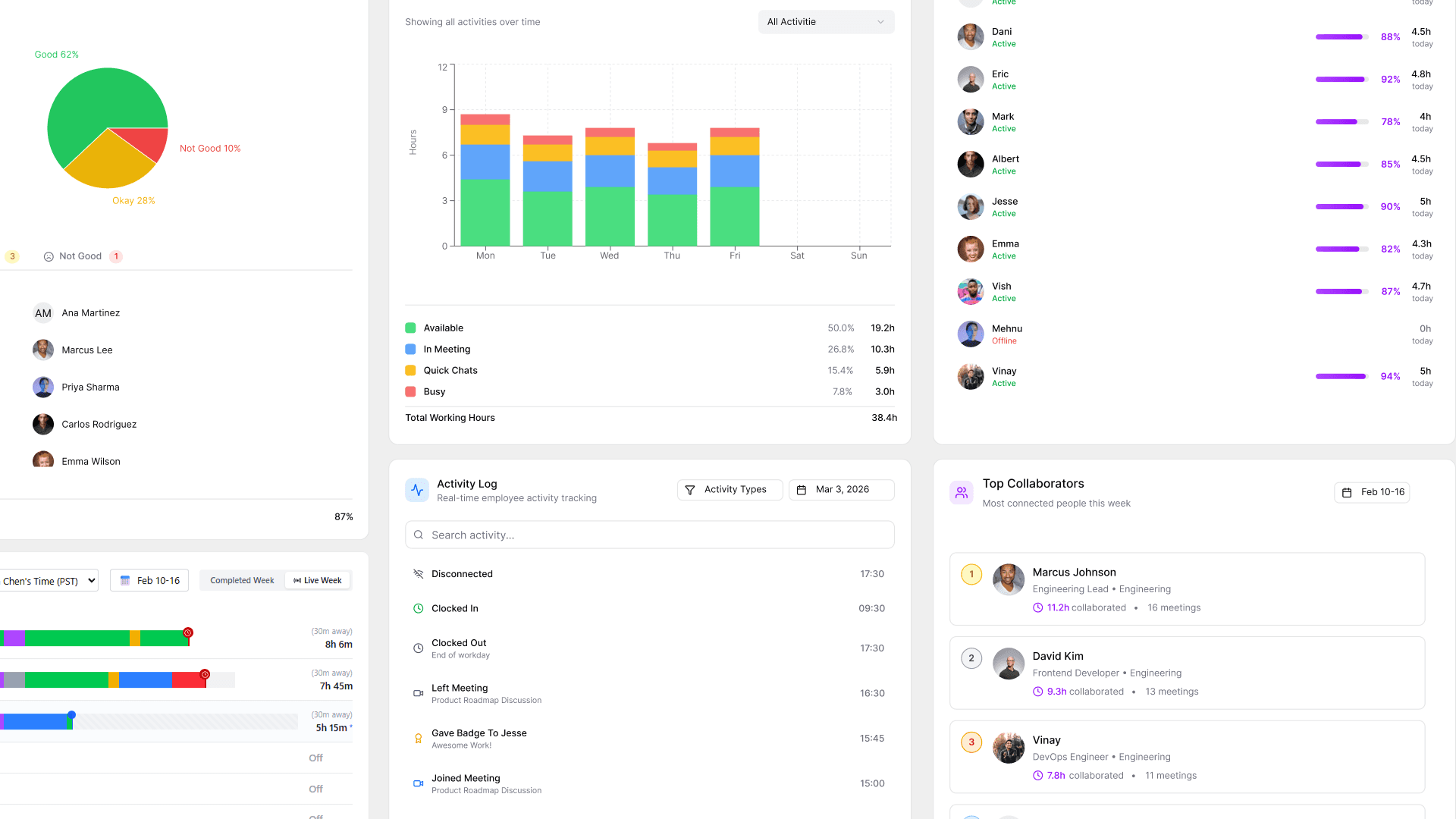
Análise de Equipes Remotas: O Guia Completo para Gestão do Trabalho Remoto Baseada em Dados em 2026
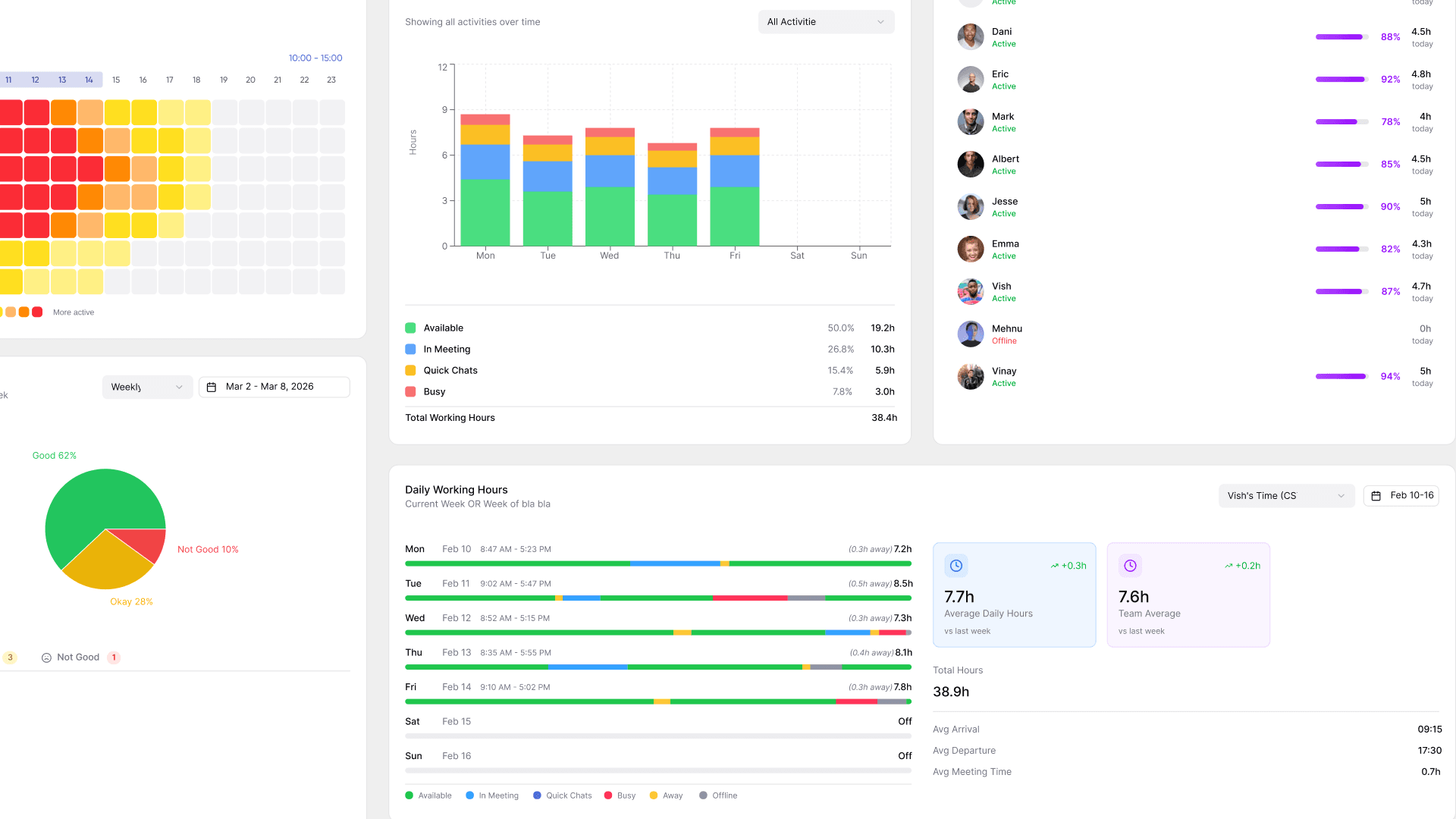
Guia Completo para Obter Visibilidade sobre o Desempenho e a Colaboração de Equipes Remotas