Connect Claude to Team Meetings via MCP (2026)
Vishal Punwani

Published:
Updated on:
The fastest way to connect Claude to your team's meetings and context is SoWork's MCP/API, because one connector gives Claude presence, AI meeting summaries, and team decisions from the same virtual office. Add the remote MCP server URL in Claude's Connectors settings, sign in with OAuth, then ask Claude who's around or what a meeting decided.
What is the Model Context Protocol (MCP), and how does it let Claude access external tools and data?
MCP is an open standard Anthropic introduced in November 2024 that gives AI apps one consistent way to connect to external tools and data [1]. Claude is the client. Each service runs an MCP server that exposes tools Claude can call.
Think of it as one plug that fits many sockets. A vendor builds a single MCP server, and any compliant client can use it without a custom integration. Adoption has moved fast: by Q1 2026, MCP recorded 97 million monthly SDK downloads and more than 17,000 public servers [2]. For your team, the upshot is simple. If your workspace exposes an MCP server, Claude can query it in plain language mid-conversation, and nobody has to copy and paste anything.
Why would a team want Claude to have access to its meetings, decisions, and presence?
Claude only knows what you paste into it. Give it live access to meetings, decisions, and presence, and it starts working like a teammate who was actually in the room.
Distributed teams already pay for scattered context. Microsoft's Work Trend Index found 48% of employees and 52% of leaders say their work feels chaotic and fragmented [3]. Meetings starting after 8 pm are up 16% year over year as more work crosses time zones [3]. If Claude can pull the summary of a call you missed, you don't need a catch-up meeting. If it knows who's free, it can tell you who to ping right now instead of who to schedule.
What kinds of team context can Claude retrieve through an MCP server?
That depends on what the server exposes. A team-context server usually returns three things: presence (who's online, focused, or in a meeting), meeting summaries, and decisions.
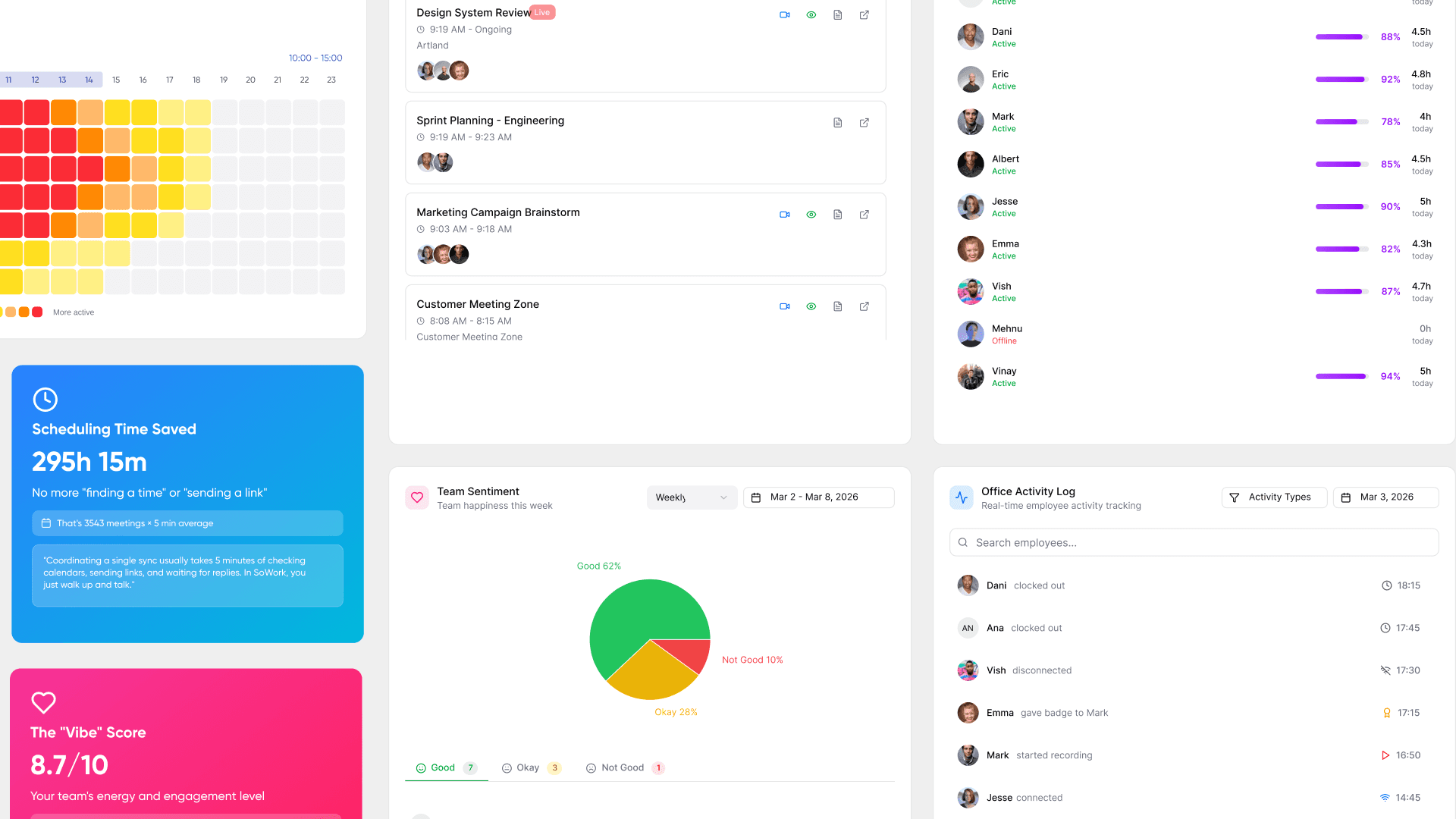
With SoWork's MCP/API, Claude can ask who's around, what happened in a meeting, or what the team decided [8].
Context type | Example question | Where it comes from in SoWork |
|---|---|---|
Presence | Who's free right now? | Presence Awareness plus calendar-synced status |
Meeting content | What happened in Tuesday's design review? | AI Meeting Memory summaries |
Decisions | What did we decide on Q3 pricing? | Meeting summaries and action items |
Tool-specific connectors (calendar, chat) only cover one slice each. A shared workspace server covers all three from one source of truth.
What do you need before connecting Claude to a team workspace via MCP?
You need a Claude plan that supports custom connectors, the workspace's remote MCP server URL, a workspace account, and, on Claude Team or Enterprise, an Owner to add the connector.
Requirement | Detail |
|---|---|
Claude plan | Custom connectors work on Free, Pro, Max, Team, and Enterprise. Free is limited to one [4] |
Client app | Claude web or Desktop. Mobile can use servers already added on claude.ai but can't add new ones [6] |
Admin access | On Team and Enterprise, an org Owner adds the connector before members can sign in [7] |
Network | The server must be reachable over the public internet [5] |
API keys | Usually none. OAuth-based servers use sign-in instead [6] |
How do you add a remote MCP server in Claude Desktop or Claude.ai, step by step?
Open Customize > Connectors, add a custom web connector, paste the remote MCP server URL, and click Connect to sign in [4]. Desktop and web use the same flow.
Go to Customize > Connectors and click Add [4].
Hover over Custom, then select Web [4].
Name the connector and paste the remote MCP server URL [4].
Review the authentication settings Claude detected [4].
Click Add, then Connect to authenticate.
On Team or Enterprise, the Owner does steps 1 to 4 under Organization settings > Connectors. Members then click Connect on the connector marked Custom [7]. One gotcha: Claude Desktop won't connect to remote servers configured directly in claude_desktop_config.json [6].
How do you authenticate and authorize Claude to access your team's workspace data?
Claude supports both authless and OAuth-based remote servers [6]. For team data, use OAuth so each person signs in with their own workspace account.
Here's how it works. You click Connect, a browser window opens on the workspace's login page, you approve access, and the token returns to Claude through its OAuth callback at claude.ai/api/mcp/auth_callback [6]. Because each member authorizes individually, Claude acts as that person and inherits their permissions. Remote connections come from Anthropic's cloud, not your laptop [5]. So if your workspace uses IP allowlists, you'll need to add Anthropic's ranges.
How do you connect Claude to a virtual office platform like SoWork?
Add SoWork's MCP server as a custom connector in Claude and sign in with your SoWork account. Claude can then ask who's around, what happened in a meeting, or what the team decided [8].
Create your SoWork office and invite your team. No download required.
Get SoWork's MCP server URL from your workspace.
Add it in Claude as a custom web connector.
Click Connect and sign in to SoWork.
Turn the connector on in a chat and ask a question.
One detail: AI meeting summaries come with SoWork Premium [9]. Without Premium, Claude has no meeting memory to read. Your AI agents can also sit in the office as characters next to your people.
How do you verify the MCP connection works and see which tools Claude can call?
Open the connector in Settings, check that its tools are listed and switched on [7], then ask Claude something only that server could answer.
In Connectors, open the connector and confirm each tool is enabled [7].
Start a fresh chat and make sure the connector is toggled on.
Ask: "Which SoWork tools do you have access to?"
Run a known-answer test, like a meeting you attended yesterday.
Watch for the tool-call block in Claude's reply, which shows the tool it called and what came back.
If Claude answers from general knowledge without calling a tool, the connection isn't working yet.
What prompts can you use to ask Claude about meetings, decisions, and who's around?
Ask specific questions that name the meeting, time window, or person. Specific prompts get precise tool calls. Vague ones get vague answers.
"What happened in today's product standup? List decisions and owners."
"What did the team decide about the onboarding redesign this week?"
"Who's online and not in a meeting right now?"
"Is Priya focused or free? If free, draft a quick message."
"Summarize every meeting I missed since Monday in five bullets."
"Which action items from Thursday's planning call are still open?"
When it matters, ask Claude to quote the meeting summary it used. That way you can check the source.
How can Claude use team context to draft follow-ups, catch people up, and cut meetings?
Claude turns meeting memory into written output: follow-up emails, catch-up briefs, and status updates that would otherwise need another meeting.
Use case | Prompt | Result |
|---|---|---|
Follow-ups | "Draft a follow-up from the client call with owners and dates" | Ready-to-send recap |
Absent teammates | "Brief Sam on what he missed this week" | Personal catch-up doc |
Status meetings | "Write Friday's update from this week's meetings" | Async update replaces a sync |
Quick questions | "Who's free to review this PR?" | One-click chat instead of a calendar invite |
Every recurring status sync you replace with an async update gives your team that time back.
How does a meeting-context MCP server compare with connecting individual tools?
A workspace-level server answers cross-cutting questions in one call. Individual connectors each see one slice, so Claude has to stitch the answers together.
Factor | Workspace server (e.g., SoWork) | Individual connectors |
|---|---|---|
Presence | Live status, including calendar-synced | Calendar shows busy, not focused |
Meetings | Summaries from the same platform | Separate transcription app needed |
Decisions | Linked to the meeting they came from | Scattered across chat threads |
Setup | One connector, one sign-in | Several connectors, several sign-ins |
Free-plan fit | Works within Claude Free's one-connector limit [4] | Needs a paid plan for multiple connectors |
Individual connectors still make sense for deep tool work, like editing docs.
What alternatives exist for giving AI agents team context?
The main alternatives are Microsoft Copilot Studio, Salesforce Agentforce, and custom RAG pipelines. Each manages agents or data, but not the people working alongside them.
Option | Best for | Trade-off |
|---|---|---|
Microsoft Copilot Studio | Teams standardized on Microsoft 365 | Tied to the Microsoft stack |
Salesforce Agentforce | CRM and customer-facing agents | Centered on Salesforce data |
Custom RAG pipeline | Teams with engineers to build and maintain it | You own the indexing, permissions, and upkeep |
SoWork MCP/API | Distributed teams of 5 to 200 | Covers team context, not CRM or document search |
If your problem is "what did the team say and who's around," a workspace server is the shortest path.
What are the security and privacy risks of exposing meeting data to Claude, and how do you reduce them?
The main risks are prompt injection hidden in tool results, poisoned tool descriptions, and over-broad tokens. You reduce them with trusted servers, least-privilege access, and human approval for sensitive actions.
OWASP's MCP guidance says to require human approval for sensitive or destructive tool calls and never share OAuth tokens across MCP servers [11]. In practice:
Connect only servers from vendors you've vetted.
Use per-user OAuth, not a shared admin key.
Set write-capable tools to ask before running.
Tell your team which meetings get recorded and summarized.
On the vendor side, SoWork is SOC 2 certified, and its Enterprise tier adds SSO and SCIM [9].
How do you control which meetings, channels, and people's data Claude can see?
Control access in three places: the workspace permissions of whoever signs in, the tools enabled on the connector, and which connectors your Claude org allows.
Workspace permissions. With OAuth, Claude only sees what the signed-in user can see. Lock down private rooms and channels in the workspace itself.
Tool toggles. Switch individual connector tools on or off [7].
Connector review. For each service, you can disconnect it or review its permissions and access levels [4].
Org policy. On Team and Enterprise, only Owners add connectors [7].
Recording norms. Don't record what shouldn't be summarized.
How do you monitor what Claude is doing and accessing inside a shared workspace?
Start with what you can already see: Claude shows every tool call in the conversation. Back that up with server-side logs, because OWASP lists missing audit and telemetry as a top MCP risk [12].
Practical steps:
Have your workspace vendor log every MCP request by user and tool.
Set sensitive tools to ask before running so each call needs approval.
Review connector permissions once a quarter.
In SoWork, AI agents sit in the office as characters, so your team can see them next to everyone else. Agent desks are coming soon. They'll show what each agent is working on and what it actually did. They aren't available yet, so rely on logs for now.
What does it cost to connect Claude to team context via MCP?
Connecting is free on any Claude plan, since custom connectors work even on Claude Free, with a one-connector limit [4]. What you actually pay is the Claude seats plus your workspace platform.
Item | Price |
|---|---|
Claude Pro | $20/month [10] |
Claude Team, standard seat | $25/seat/month, or $20 billed annually [10] |
SoWork Free | Up to 10 users [9] |
SoWork Basic | $6/user/month [9] |
SoWork Premium (includes AI summaries) | $15/user/month [9] |
Example: 10 people on Claude Team (annual) plus SoWork Premium comes to about $350/month. Need meeting memory? Budget for Premium.
How do you troubleshoot auth failures, missing tools, or timeouts?
Most failures come down to OAuth configuration, server reachability, or tools not showing up in chat. Work through them in that order.
Symptom | Likely fix |
|---|---|
Auth failed | Check the OAuth Client ID and Secret in Advanced settings, and make sure Claude's callback URL is allowed [6] |
Connected, but no tools in chat | A known issue in some cases [13]. Start a new chat, re-toggle, or remove and re-add |
Timeout or unreachable | Server must be public and reachable from Anthropic's IP ranges [5] |
Old SSE server | Move to Streamable HTTP. SSE support may be deprecated [6] |
Member can't find it | An Owner must add it first [7] |
Bottom line: how should you connect Claude to your team's context?
Connect Claude to one workspace-level MCP server instead of a pile of single-purpose connectors, because team questions cut across presence, meetings, and decisions.
For distributed teams, SoWork's MCP/API is the most direct route: one custom connector, one OAuth sign-in, and Claude can answer who's around, what happened, and what was decided. Start on the free tiers, use per-user OAuth and approval prompts, and move to SoWork Premium once you want meeting memory flowing into Claude.
Key Takeaways
MCP is Anthropic's open standard (November 2024) that lets Claude call external tools and data through a remote server.
Add a server in Claude under Customize > Connectors as a custom web connector. On Team or Enterprise, an Owner adds it first.
Custom connectors work on every Claude plan, but Claude Free allows only one, so a single workspace-level server is the efficient choice.
SoWork's MCP/API lets Claude ask who's around, what happened in a meeting, or what the team decided, all from one connector.
Use per-user OAuth, least-privilege tool toggles, and human approval for sensitive calls to limit prompt-injection and token risks.
Verify the setup with a known-answer question and watch for the tool-call block in Claude's reply.
Budget for Claude seats plus SoWork Premium ($15/user/month) if you want AI meeting summaries available to Claude.
Related reading
What Is Model Context Protocol (MCP), and How Can Teams Use It in 2026?
Best Virtual Office for Remote Teams in 2026: The Complete Buyer's Guide
Sources
FAQ
How do you connect Claude to your team's meetings and context with MCP?
Do I need a paid Claude plan to add a custom MCP connector?
Who can add a custom connector on a Claude Team plan?
Why does my custom connector show as connected but Claude can't see any tools?
What's the difference between a local and a remote MCP server in Claude?
Can I use MCP connectors in the Claude mobile app?
Is it safe to give Claude access to meeting transcripts and summaries?
Does Claude remember my team's meetings after I connect an MCP server?
Blogs
Read Similar Articles
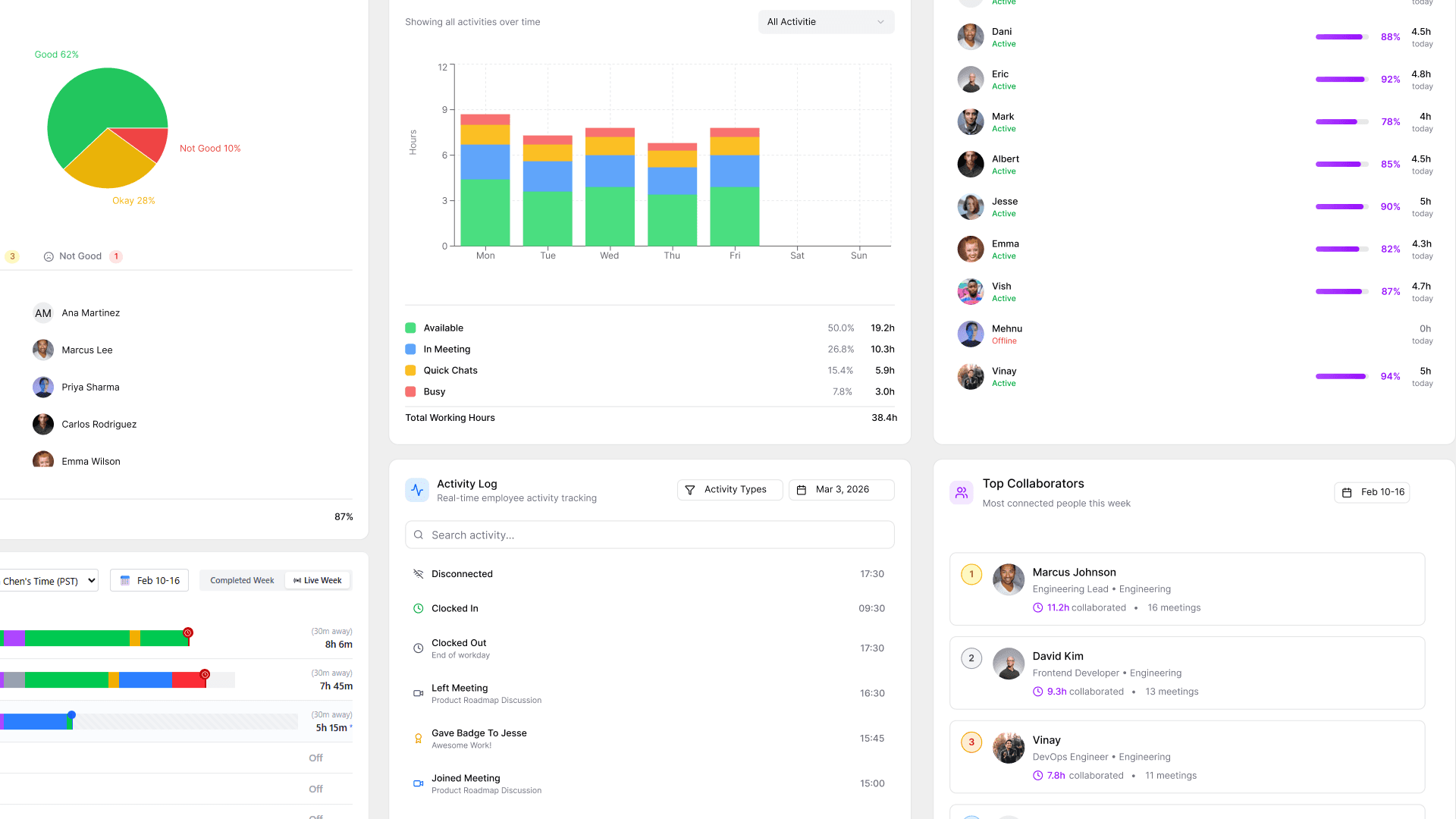
Remote Team Analytics: Complete Guide to Data-Driven Remote Work Management in 2026
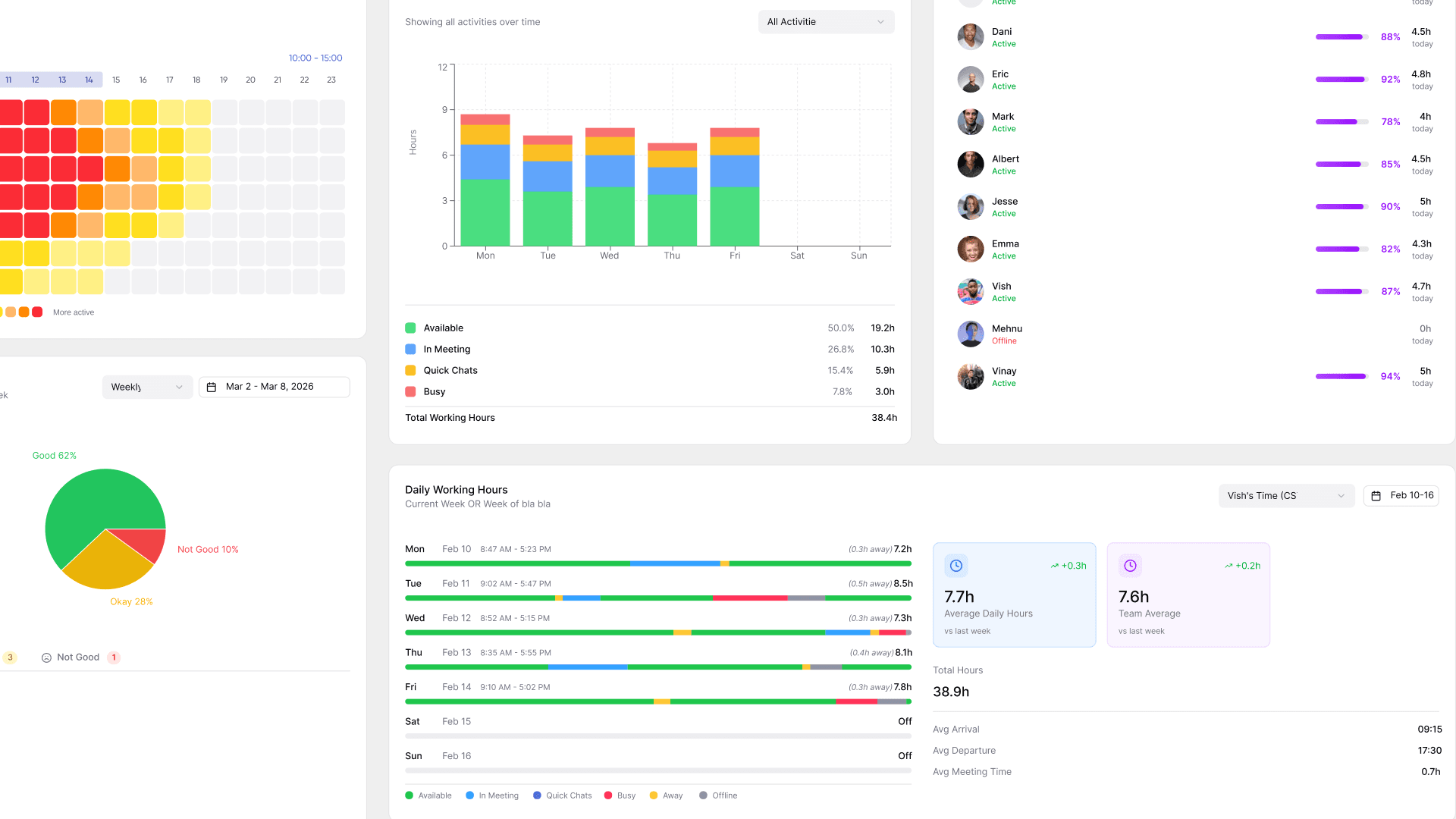
Complete Guide to Gaining Visibility Into Remote Team Performance and Collaboration