Melhores alternativas ao Sococo em 2026
Vishal Punwani

Publicado em:
Atualizado em:
A melhor alternativa ao Sococo para conscientização de presença de equipes remotas é o SoWork, porque combina indicadores visuais de presença em tempo real, sincronização automática de calendário, Memória de Reunião por IA e reuniões instantâneas com um clique em uma única plataforma, sem limites de minutos de voz, sem necessidade de download para desktop e com um plano gratuito para equipes de até 10 pessoas.
O que é o Sococo e o que ele realmente oferece?
O Sococo é uma plataforma de escritório virtual baseada em nuvem que permite que equipes distribuídas se vejam em um mapa de planta compartilhada e se comuniquem como se estivessem no mesmo edifício. Seu recurso principal de presença mostra quem está online, em reunião ou ausente, por meio de indicadores de status baseados em avatar.
Os recursos principais incluem um mapa de escritório com vista aérea, áudio ao vivo e videoconferência em HD, compartilhamento de tela, chat no aplicativo e notificações em tempo real. O Sococo também oferece suporte a salas virtuais personalizáveis para diferentes equipes ou departamentos, além de se integrar ao Slack, Zoom, Google Meet e Webex. O plano padrão custa US$ 14,99 por licença ao mês (ou US$ 13,99 faturado anualmente) e inclui 500 minutos de voz por licença. O plano Unlimited custa US$ 24,99 por licença ao mês para minutos ilimitados. [1]
Quais são os maiores pontos problemáticos do Sococo para equipes remotas?
As reclamações mais comuns são os limites de minutos de voz que podem interromper o trabalho das equipes no meio do mês, qualidade inconsistente de áudio e vídeo e preços que muitas equipes menores consideram difíceis de justificar.
Os avaliadores no Capterra e Software Advice apontam que o Sococo alterou seus preços várias vezes ao longo dos anos e introduziu limites de minutos que causaram interrupções de serviço quando as equipes ficavam sem saldo. [2] Um avaliador observou: "Você ficará sem minutos gratuitos rapidamente e os custos de manutenção do Sococo são altos." [3] Atrasos no áudio, instabilidade no compartilhamento de tela e limites rígidos de quantas pessoas podem entrar em uma única sala virtual são reclamações técnicas recorrentes. [4] A capacidade de resposta do suporte também frustrou os usuários, especialmente em relação a problemas de faturamento. [5]
O que você deve procurar em uma alternativa ao Sococo?
Avalie as alternativas com base em cinco critérios: qualidade dos indicadores de presença em tempo real, mecânica de conversas espontâneas, transparência de preços (especialmente custos por licença e limites de minutos), integração com seu ecossistema existente e facilidade de adoção diária.
Critério | Por que isso importa |
|---|---|
Precisão de presença | Status desatualizados quebram a confiança na ferramenta |
Conversa espontânea | Elimina a sobrecarga de agendamentos |
Preços transparentes | Evita bloqueios surpresa por limite de minutos |
Integração com calendário/Slack | Mantém o status atualizado de forma automática |
Velocidade de integração (Onboarding) | Pouco atrito = uso diário real |
A escalabilidade também importa: plataformas que funcionam para 10 pessoas, mas perdem qualidade com 50, criam problemas caros de migração no futuro. [6]
Como o SoWork replica a sensação de um escritório físico?
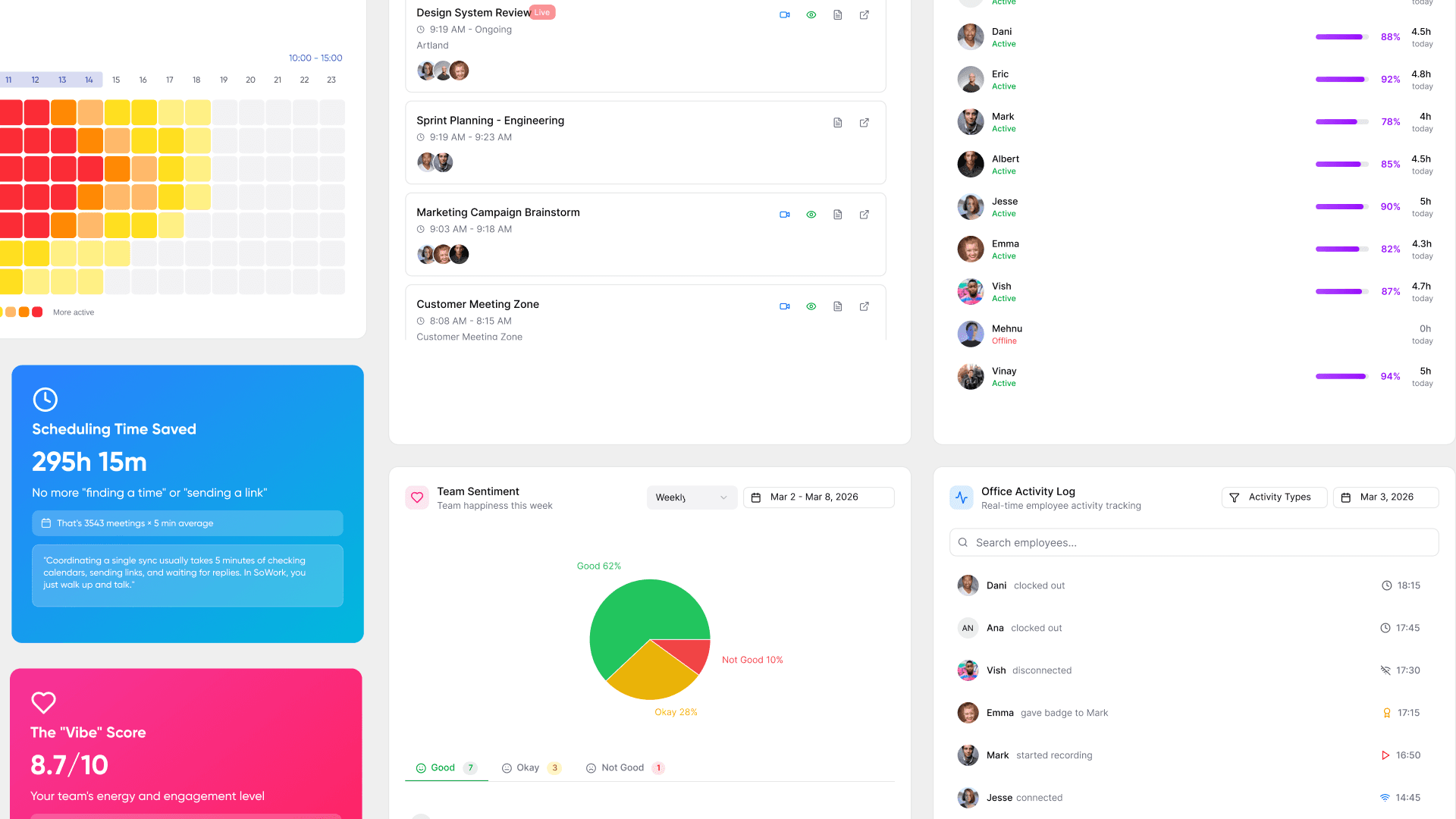
O SoWork usa um escritório virtual permanente em 2.5D onde o avatar de cada membro da equipe mostra a disponibilidade em tempo real — livre, focado ou em reunião —, permitindo que você olhe para o escritório e saiba quem está acessível, exatamente como olhar através de um ambiente integrado.
A sincronização automática com o calendário atualiza seu status assim que um evento começa, garantindo que a disponibilidade esteja sempre correta, sem que ninguém precise alterar as configurações. As reuniões instantâneas permitem clicar no avatar de um colega e começar a conversar com um clique: sem link, sem convite, sem sala de espera. Os Modos de Foco (Modo Simples e Mini Modo) permitem sinalizar trabalho focado, mantendo o usuário visível de forma discreta para a equipe. A Memória de Reunião por IA grava, transcreve e resume cada conversa automaticamente, garantindo que nada se perca quando alguém não puder participar de um papo espontâneo. As equipes também podem personalizar o espaço do escritório e os avatares para refletir a cultura da empresa.
Como o SoWork se compara ao Sococo em termos de presença e visibilidade?
O SoWork oferece uma percepção de presença mais automatizada e precisa do que o Sococo, principalmente porque a sincronização do calendário atualiza os status sem intervenção manual, e os Modos de Foco oferecem às pessoas uma forma de sinalizar trabalho focado que o Sococo não possui.
Recurso | SoWork | Sococo |
|---|---|---|
Sincronização automática com calendário | Sim | Não |
Resumos de reuniões por IA | Sim | Não |
Modo de foco / trabalho focado | Sim (Modo Simples + Mini) | Não |
Limites de minutos de voz | Nenhum | 500 min/licença (plano padrão) [1] |
Baseado em navegador (sem download) | Sim | Requer aplicativo para desktop |
Plano gratuito | Até 10 usuários | Apenas avaliação [7] |
A camada de presença do Sococo é baseada em avatares e funcional, mas os status dependem de atualizações manuais. A sincronização automática do SoWork significa que o mapa do escritório permanece preciso durante todo o dia.
Como o Gather.town se compara ao Sococo?
O Gather.town se destaca mais em engajamento e interação espontânea do que o Sococo, com áudio baseado em proximidade que inicia conversas à medida que os avatares se aproximam, mas agora está mais caro, custando US$ 12 por usuário ao mês e sem plano gratuito.
O Gather usa um mapa 2D em pixel art onde a proximidade impulsiona a conversa: ao aproximar seu avatar de um colega, uma chamada de vídeo se inicia automaticamente. Ele adicionou notas de reunião por IA, sincronização de calendário e indicadores de presença no Gather 2.0. [8] No G2, o Gather pontua 4,8/5 em comparação aos 4,3/5 do Sococo, com os avaliadores elogiando especificamente o seu engajamento interativo. [9] O ponto negativo: o Gather encerrou seu plano gratuito em setembro de 2025, passando a oferecer acesso apenas pago por US$ 12 por usuário ao mês. [10] Para equipes que desejam um ambiente social, parecido com um jogo, e não precisam de ferramentas de produtividade com IA, o Gather é uma excelente escolha.
Como o Teamflow se compara ao Sococo?
O Teamflow oferece um espaço de trabalho espacial baseado em bolhas com presença em tempo real, áudio espacial e colaboração com aplicativos integrados, além de possuir um plano gratuito para até 10 usuários, tornando-o mais acessível que o Sococo para equipes pequenas.
O Teamflow representa os perfis dos membros como bolhas; ao entrar na área da bolha de outra pessoa, o áudio se inicia naturalmente. Ele inclui quadros brancos, compartilhamento de tela, cronômetros e exibições de vídeo compartilhadas. [11] Os planos pagos começam em US$ 15 por usuário ao mês (Seed) e chegam a US$ 25 por usuário ao mês (Business), ambos faturados anualmente. [12] O Teamflow se integra ao Slack e ao Zoom. [13] Onde ele fica atrás do SoWork: sem memória de reunião por IA, sem sincronização automática de calendário para presença e um ecossistema de integrações mais simples. É uma opção sólida para equipes que priorizam simplicidade e áudio espacial em vez de ferramentas de produtividade avançadas.
Quais outras alternativas ao Sococo vale a pena conhecer?
Além de SoWork, Gather e Teamflow, as principais alternativas incluem Kumospace, Spot, Remo e WorkAdventure, cada uma com uma abordagem distinta sobre presença e colaboração.
Plataforma | Ideal Para |
|---|---|
Kumospace | Eventos sociais e encontros de equipes híbridas |
Spot | Presença leve sem a necessidade de um escritório virtual completo |
Remo | Grandes eventos virtuais e networking |
WorkAdventure | Escritórios virtuais de código aberto e auto-hospedados |
O WorkAdventure oferece planos pagos de €5 a €10 por usuário ao mês e um plano gratuito para até 10 usuários simultâneos, uma opção econômica para equipes que estão migrando do Gather ou Sococo. [14] Tanto o Kumospace quanto o Spot focam em tornar a cultura remota mais humana sem exigir uma integração complexa.
Quando uma alternativa ao Sococo realmente supera o Sococo?
As alternativas ao Sococo superam a plataforma de forma mais clara quando as equipes atingem os limites de minutos de voz, precisam de documentação de reuniões baseada em IA, querem acesso apenas pelo navegador sem instalação no desktop ou estão crescendo além de 50 pessoas e precisam de preços previsíveis por licença.
Os profissionais em regime remoto já participam de 80% mais reuniões por semana do que os trabalhadores presenciais (25,6 vs 14,2 por semana), e 47% dos profissionais dizem que as reuniões são o que mais faz perder tempo no trabalho. [15] Qualquer ferramenta que adicione atrito, como limites de minutos ou atualizações manuais de status, agrava esse problema. O SoWork atende a equipes que desejam reduzir reuniões agendadas, permitindo conversas espontâneas com um único clique. O Gather atende a equipes criativas ou focadas no aspecto social. O Teamflow serve para equipes que querem áudio espacial sem complexidade. O Sococo ainda faz sentido para empresas que já utilizam Webex ou Zoom e desejam uma camada visual de presença integrada à sua estrutura atual.
Como essas plataformas lidam com conversas espontâneas?
As melhores alternativas ao Sococo substituem reuniões agendadas por gatilhos de proximidade ou de um clique, para que as conversas comecem da mesma forma que em um escritório físico, sem a necessidade de convites de calendário.
As Reuniões Instantâneas do SoWork permitem que você clique no avatar de um colega e comece a falar imediatamente. O Gather usa áudio baseado em proximidade: aproxime seu avatar o suficiente e a chamada começa sozinha. O Teamflow usa áreas de bolhas com a mesma lógica de proximidade. Isso importa porque 55% dos trabalhadores remotos dizem que muitas de suas reuniões poderiam ser substituídas por uma comunicação mais rápida e ad-hoc. [16] O Sococo permite conversas espontâneas ao entrar em uma sala, mas a necessidade de um aplicativo para desktop e as atualizações manuais de status criam um atrito que as alternativas baseadas em navegador evitam.
Como os custos de preços se comparam entre as principais alternativas?
O SoWork é a opção com mais recursos e melhor custo-benefício para equipes com menos de 100 pessoas, oferecendo um plano gratuito para até 10 usuários e planos pagos que começam bem abaixo do custo por licença do Sococo, sem limites de minutos de voz.
Plataforma | Preço Inicial | Plano Gratuito | Limites de Minutos |
|---|---|---|---|
Sococo | US$ 14,99/licença/mês [1] | Não | 500 min/licença (padrão) |
SoWork | Gratuito para até 10 usuários | Sim | Nenhum |
Gather | US$ 12/usuário/mês [17] | Não | Nenhum |
Teamflow | Gratuito para até 10 usuários | Sim | Nenhum no pago |
WorkAdventure | € 5/usuário/mês | Sim (10 usuários) | Nenhum |
O plano Unlimited do Sococo a US$ 24,99 por licença exige um mínimo de 100 licenças para contratação, tornando-o inacessível para a maioria das equipes de pequeno e médio porte. [18]
Quais riscos envolvem a migração para fora do Sococo?
Os maiores riscos de migração são a queda na adoção durante a transição, a perda de hábitos corporativos criados em torno da planta do Sococo e falhas de integração se a sua equipe depende da sobreposição do Sococo com o Webex ou Zoom.
Plataformas que forçam uma substituição completa de ferramentas enfrentam resistência na adoção, mesmo quando são tecnicamente superiores. [19] Realize um piloto paralelo de duas semanas com uma subequipe voluntária antes de fazer a transição definitiva. Mapeie quais integrações do Sococo sua equipe realmente usa diariamente, e não apenas o que consta nas configurações. Confirme se as integrações de calendário e chat da nova plataforma cobrem as suas ferramentas. Escolha uma plataforma de rápida integração (o SoWork não requer download de software) para minimizar o intervalo em que as pessoas acabam voltando ao Slack e ao Zoom por hábito.
Como essas plataformas apoiam a construção da cultura, e não apenas a presença?
As melhores alternativas vão além de mostrar quem está online; elas criam espaços compartilhados, pontos de encontro casuais e rituais de equipe que tornam o trabalho remoto menos transacional.
O SoWork permite que as equipes personalizem e projetem o espaço de seu escritório e seus avatares, de forma semelhante à construção no The Sims, para que o espaço de trabalho reflita a personalidade da empresa. Os mapas em pixel art do Gather suportam eventos sociais virtuais, happy hours e salas de jogos. O Teamflow inclui exibições de vídeo compartilhadas e espaços de convivência ao lado das salas de trabalho. Um quarto dos funcionários totalmente remotos relata solidão significativa, e a resposta corporativa padrão de agendar mais reuniões só piora a situação. [20] Recursos de construção de cultura, espaços compartilhados, pontos de encontro informais e personalização de avatares ajudam a combater esse isolamento sem adicionar reuniões agendadas.
Quais integrações as principais alternativas oferecem?
O SoWork se integra ao Google Workspace e ao Microsoft 365 para sincronização de calendário e acesso a documentos. O Gather adicionou integrações com o GitHub e Spotify no lançamento da versão 2.0. O Teamflow se conecta ao Slack e ao Zoom.
Plataforma | Principais Integrações |
|---|---|
SoWork | Google Workspace, Microsoft 365, Slack, sincronização de calendário |
Gather | Slack, Google Calendar, GitHub, Spotify [21] |
Teamflow | Slack, Zoom [22] |
Sococo | Slack, Zoom, Google Meet, Webex [23] |
A sincronização automática de calendário do SoWork é a integração mais útil operacionalmente para a precisão da presença; ela atualiza seu status no momento em que um evento começa, sem qualquer ação manual. A alternância de contexto entre aplicativos desconectados custa produtividade mensurável às equipes remotas diariamente, portanto, quanto menos etapas forem necessárias, melhor. [24]
O que as equipes dizem após migrarem do Sococo?
As equipes que deixam o Sococo citam mais frequentemente o alívio da ansiedade com os limites de minutos de voz, melhor mecânica para conversas espontâneas e custos mais baixos por licença como as vitórias imediatas após a mudança.
No Capterra e no Software Advice, ex-usuários do Sococo mencionam especificamente que o modelo de limite de minutos tornava a ferramenta pouco confiável; um CEO observou que é "difícil confiar no Sococo" após ter o serviço interrompido no meio do mês. [25] As equipes que migram para o SoWork relatam que a sincronização automática de calendário elimina a necessidade de atualizações manuais de status que precisavam fazer no Sococo. Os usuários que migraram do Sococo para o Gather costumam destacar a maior pontuação de satisfação no G2 (4,8 vs 4,3) e a sensação de um espaço de trabalho mais envolvente e interativo. [26] O ponto em comum: as equipes querem uma ferramenta que seus membros abram todas as manhãs sem precisarem ser cobrados para isso.
Como você deve estruturar a migração do Sococo na prática?
Execute uma migração estruturada em três fases: faça um piloto com uma equipe pequena, configure as integrações antes do lançamento completo e faça a transição definitiva com um plano de comunicação claro para que ninguém volte a usar o Slack e o Zoom por hábito.
Faça uma auditoria no uso do Sococo, identificando quais salas, integrações e recursos de status sua equipe realmente usa diariamente (e não apenas o que está configurado).
Realize um piloto de duas semanas com 5 a 10 pessoas de uma única equipe, configure a nova plataforma e meça a frequência de conversas espontâneas em comparação com reuniões agendadas.
Configure as integrações primeiro, conectando a sincronização de calendário, Slack e Google Workspace antes de convidar o restante da equipe, para que os status estejam corretos desde o primeiro dia.
Comunique a mudança de forma clara, explicando por que estão mudando e quais serão os impactos. Equipes resistem a ferramentas que surgem do nada.
Desative o Sococo em uma data fixa; uma transição definitiva e programada funciona melhor do que uma desativação lenta que deixa as pessoas divididas entre duas plataformas.
Principais Conclusões
O SoWork é a principal alternativa ao Sococo para percepção de presença, contando com sincronização automática de calendário, resumos de reuniões por IA e reuniões instantâneas com um clique, sem limites de minutos e sem necessidade de download.
O plano padrão do Sococo limita a voz a 500 minutos por licença ao mês, e o plano Unlimited exige um mínimo de 100 licenças, o que gera problemas reais para equipes de pequeno e médio porte.
O Gather.town possui nota 4,8/5 no G2 contra 4,3/5 do Sococo, mas encerrou seu plano gratuito em setembro de 2025 e agora custa a partir de US$ 12 por usuário ao mês.
O Teamflow oferece um plano gratuito para até 10 usuários com áudio espacial e conversas em bolhas, sendo uma alternativa leve ao Sococo para equipes que buscam simplicidade em vez de recursos de IA.
Trabalhadores remotos participam de 80% mais reuniões por semana do que trabalhadores de escritório presencial; escritórios virtuais que permitem conversas instantâneas com um clique reduzem diretamente essa sobrecarga.
O risco de migração é maior durante a fase de transição; execute um piloto paralelo de duas semanas e configure as integrações antes do lançamento total para evitar que as equipes voltem a usar o Slack e o Zoom.
Recursos de integração cultural (personalização de avatar, espaços de convivência, encontros casuais) importam tanto quanto indicadores de presença, já que um quarto dos funcionários remotos relata solidão crônica.
Fontes
Perguntas Frequentes
Quais são as melhores alternativas ao Sococo para a percepção de presença de equipes remotas?
Por que as equipes deixam o Sococo?
O SoWork é melhor do que o Sococo?
O Gather.town ainda tem um plano gratuito?
Como funciona realmente a percepção de presença no escritório virtual?
Um escritório virtual pode substituir completamente o Zoom e o Slack?
Qual é a alternativa mais barata ao Sococo para uma equipe remota pequena?
Quanto tempo leva para migrar do Sococo para uma nova plataforma de escritório virtual?
Blogs
Leia artigos semelhantes
Análise de Equipes Remotas: O Guia Completo para Gestão do Trabalho Remoto Baseada em Dados em 2026
Guia Completo para Obter Visibilidade sobre o Desempenho e a Colaboração de Equipes Remotas