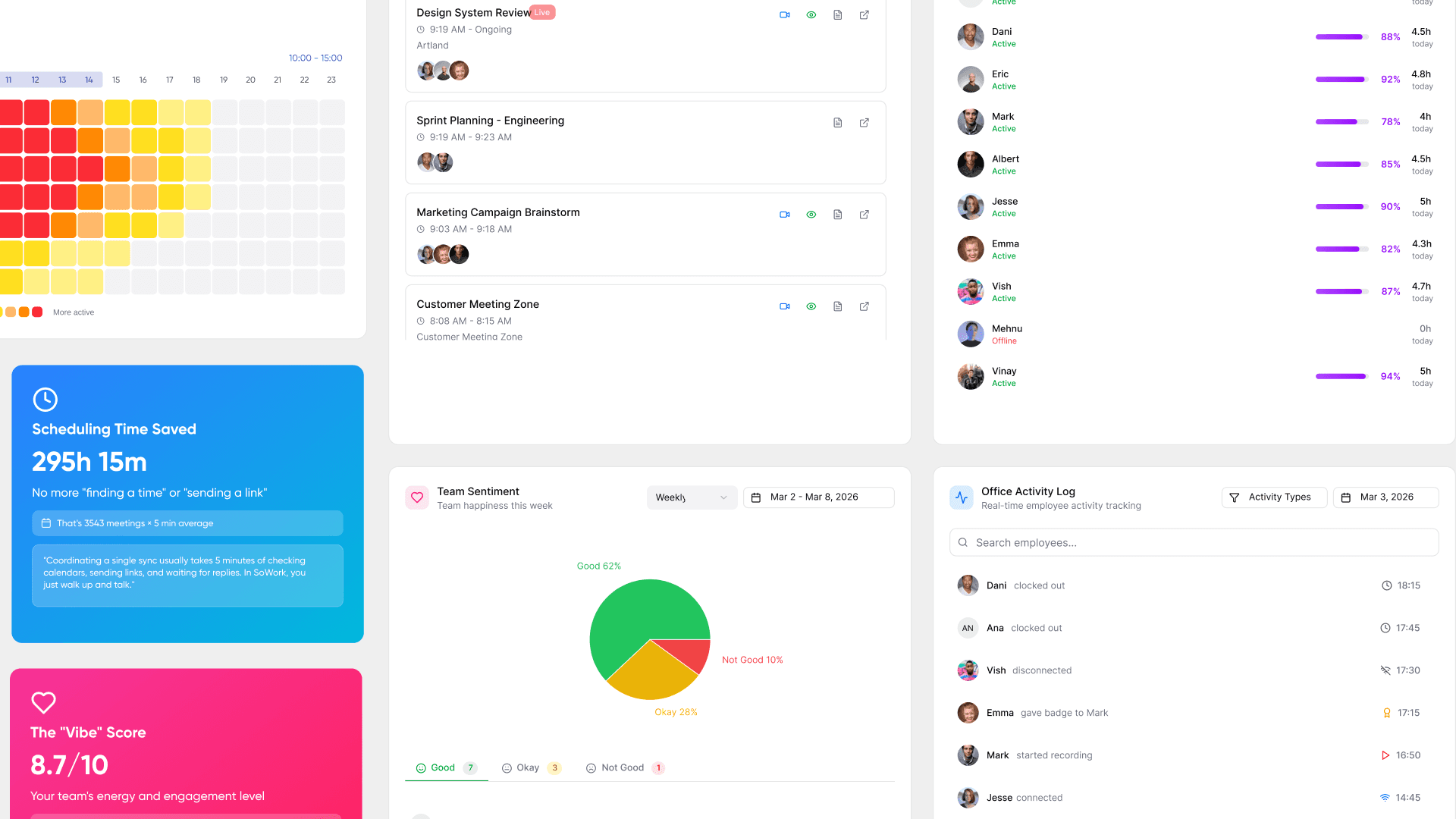
SoWork vs Agentforce: Where Agents Work in 2026
Vishal Punwani

Published:
Updated on:
For daily human-AI collaboration on a remote team, SoWork is the better home. It puts your AI agents in the same virtual office as your people, and it comes with live presence, meeting memory, and an MCP/API that tools like Claude can query. Agentforce is the stronger pick for automating Salesforce CRM sales and service work.
What does human-AI collaboration mean for a remote team's day-to-day work?
Human-AI collaboration means agents do real tasks next to people, and humans can see that work, steer it and check it without hunting through tabs. For a remote team, the hard part isn't the AI. It's keeping everyone working from the same context.
Microsoft's 2025 Work Trend Index found that 46% of leaders say their organization uses agents to fully automate workstreams or business processes [1]. Leaders also expect their teams to be training (41%) and managing (36%) agents within five years [1].
In practice, a normal workday looks like this: - Asking an agent what got decided in yesterday's sync - Handing a task to an agent and checking its progress later - Knowing which teammate, human or agent, is free right now
What is Salesforce Agentforce and what is it designed to do?
Salesforce Agentforce is a platform for building and running autonomous AI agents on Salesforce data, mainly for sales, service and other CRM workflows. Its job is automating business processes. It isn't meant to be where your team spends its day.
Agentforce agents take actions through Salesforce-native tools: Flows, Apex classes, APIs and MuleSoft integrations [2]. So a service agent can look up an account, review case history and trigger an existing workflow without a human doing the lookups. Agents for Sales, IT Service, HR Service and Tableau also run natively inside Slack [3]. If your company already runs on Salesforce, that depth is exactly what you're paying for.
What is SoWork, and how does it bring AI agents into a shared virtual office?
SoWork is a virtual office where a remote team's people and its AI agents share one space. Agents sit in the company office as characters next to human teammates, and you work with them there, not across scattered tools.
The human side is already in place: real-time presence, one-click Instant Meetings, topic-based chat, and AI Meeting Memory that records, transcribes and summarizes calls. The MCP/API is live now, so Claude or your own AI tools can ask who's around, what happened in a meeting, or what the team decided. Agent desks are coming soon. Once they ship, each agent will have a desk showing what it's working on and what it actually did. SoWork is free for up to 10 users [8].
Where do people and AI agents actually interact in Agentforce versus SoWork?
In Agentforce, people meet agents inside Salesforce records and Slack channels. In SoWork, they meet agents in the virtual office itself, the same place they see teammates, hop into calls and read meeting summaries.
Moment in the workday | Agentforce | SoWork |
|---|---|---|
Morning check-in | Slack or Salesforce home | Look around the office and see who's in, humans and agents |
Customer or deal work | CRM records and Slack channels [3] | Not a CRM, so connect tools via MCP or Zapier |
After a meeting | Depends on your Slack and Salesforce setup | AI Meeting Memory summary in the office |
"What did we decide?" | Agent grounded in Salesforce and Slack data | Claude queries SoWork via MCP/API |
How does an agent management platform differ from a shared workspace for humans and agents?
An agent management platform governs agents: building them, deploying them, setting permissions and monitoring them. A shared workspace is where humans and agents actually spend the day together, with presence, conversation and a shared memory.
Agentforce, Microsoft Copilot Studio and OpenAI Frontier are management platforms. Their question is whether an agent is configured, safe and performing. SoWork answers a different one: where is everyone, human or agent, and what's going on right now? Most teams end up needing both layers. The common mistake is assuming the management console can double as the place your people work. It rarely does, because it manages agents but not the people working next to them.
How do Agentforce agents fit into workflows outside Salesforce CRM?
Agentforce reaches beyond the CRM mostly through Slack, MCP and APIs, but it stays anchored to Salesforce data and tooling. Outside that ecosystem, plan on integration work.
Agentforce 3 added support for the Model Context Protocol (MCP) [5], so agents can connect to compatible external tools. Slack is the main surface where people deal with agents. Reps can query records and get account research there without opening Salesforce [3]. Agent actions still run through Salesforce mechanisms like Flows and Apex, though [2]. If your team works in Google Workspace, Linear or GitHub and doesn't use Salesforce CRM, Agentforce is a heavy foundation for general coordination.
How does Claude connect to SoWork through MCP or API?
SoWork offers a live MCP server and API, so Claude or your own AI tools can query the office directly. They can ask who's around, what happened in a meeting, or what the team decided.
Connect Claude, or another MCP-compatible tool, to SoWork's MCP server.
Ask a plain question, like "Who's free on the design team?" or "What did we decide about the launch date?"
The tool pulls presence data and AI Meeting Memory summaries from SoWork.
You act on the answer, often by starting a one-click Instant Meeting.
The same MCP server also links up many other tools, beyond native integrations like Slack, Zapier, Miro, Google Calendar and Microsoft Outlook.
How do SoWork and Agentforce compare on visibility into what each AI agent is doing?
Agentforce has the more mature agent observability today. SoWork's agent desks, which will show what each agent is working on and what it did, are coming soon and aren't available yet.
Salesforce records all agent activity in a session-tracing data model in Data Cloud. Its Command Center observability layer is built on OpenTelemetry, so the data can flow into tools like Datadog and Splunk [4]. That works well for admins and ops leads. SoWork takes a different approach: visibility for the whole team inside the shared office, not a dashboard that only admins open. Until agent desks ship, SoWork users get context from presence, meeting summaries and MCP queries.
How does each platform handle presence awareness and ambient context?
Presence awareness is the core of SoWork. Agentforce doesn't really do it. SoWork shows who's free, focused or in a meeting, and agents sit in the same office as characters.
In SoWork, status updates automatically when a calendar event starts. Focus Modes (Simple Mode and Mini Mode) let people signal deep work while staying loosely connected. That ambient sense of who's around is what remote teams lose when they leave a physical office. Agentforce works with a different kind of context: account history, case records and Slack conversations [3]. That's great for an agent answering a customer. It does less for a human wondering whether now's a good time to grab a teammate.
Which criteria should a remote team use to choose where people and AI agents work together?
Choose based on where your data lives, who needs visibility into agents, and whether your real problem is automation or coordination.
Criterion | Ask yourself | Leans toward |
|---|---|---|
System of record | Is Salesforce CRM your source of truth? | Agentforce |
Main pain | Disconnection, too many meetings, lost decisions? | SoWork |
Who works with agents | Admins only, or the whole team? | Agentforce for admins, SoWork for everyone |
Budget shape | Usage-based billing, or flat per-seat? | Agentforce for usage, SoWork for per-seat |
Team profile | Remote-first, 5 to 200 people? | SoWork |
Audit depth today | Need production agent observability now? | Agentforce |
Which use cases favor Agentforce, and which favor SoWork?
Agentforce wins for customer-facing CRM automation: lead follow-up, case resolution and deal research. SoWork wins for distributed coordination: presence, quick syncs, remembering decisions and building culture.
One Agentforce customer, 1-800Accountant, had agents resolve 70% of its administrative chat engagements on their own during critical 2025 tax weeks [14]. That's textbook service automation. SoWork covers the internal side of the day: standups that start in one click, summaries nobody has to write, and an agent you can ask what changed while you were offline. If the work touches customers inside Salesforce, go with Agentforce. If it's about your team staying connected, go with SoWork.
Can a team use SoWork and Agentforce together?
Yes. They cover different layers and barely overlap, so a Salesforce shop can run Agentforce for CRM automation and SoWork as the office where people and agents coordinate.
Leave Agentforce agents on sales and service work inside Salesforce and Slack.
Run your team's daily presence, meetings and chat in SoWork.
Connect SoWork to Slack, and use Zapier for automated handoffs between tools.
Use Claude through SoWork's MCP to answer "what did we decide?" questions.
Check SoWork's weekly Insights report for meeting time, focus time and who works with whom.
How do Agentforce and SoWork pricing models compare?
SoWork charges a flat price per seat: free for up to 10 users, Basic $6/user/month, Premium $15/user/month [8]. Agentforce combines usage meters and per-user licenses that cost far more per head.
Model | Agentforce | SoWork |
|---|---|---|
Usage | About $0.10 per action via Flex Credits [6] | None |
Per conversation | $2 [6] | None |
Per user | $125/user/month add-on [6] | $6 Basic, $15 Premium [8] |
Editions | Core $195, Advanced $395, Max $550 per user/month [7] | Free for up to 10 users [8] |
For 20 people, SoWork Premium costs $300 a month. Agentforce add-on seats alone would cost $2,500, before the Salesforce license underneath.
What are the limitations and risks of SoWork and Agentforce?
SoWork's agent desks aren't available yet, and SoWork isn't a CRM automation engine. Agentforce ties you to the Salesforce ecosystem and its usage-based pricing.
Risk | SoWork | Agentforce |
|---|---|---|
Per-agent activity view | Agent desks coming soon | Mature observability now [4] |
Lock-in | Low: per-seat plans, open MCP | High: Salesforce data and tooling [2] |
Cost predictability | Flat per seat [8] | Usage meters vary [6] |
Fit outside CRM | Strong | Needs integration work |
Both carry the same industry-wide risk. Gartner predicts over 40% of agentic AI projects will be canceled by the end of 2027 [9].
What security and governance considerations apply when AI agents share a workspace with humans?
Treat every agent like a new hire: limited access, a named human owner, and a record of what it did. Shared spaces raise the stakes, because agents can see conversations and meeting content.
Identity: SoWork is SOC 2 certified. SSO comes with Premium and Enterprise, and SCIM with Enterprise only.
Data scope: Decide which meetings and channels agents can read. Slack added AI exclusion controls in February 2026 for exactly this reason [3].
Audit: Agentforce logs agent sessions in Data Cloud [4].
Human review: Research by Carnegie Mellon and Salesforce put agent success on multi-step tasks at roughly 30 to 35% [10]. Keep a person checking the output.
How do Microsoft Copilot Studio, OpenAI Frontier, Gather and Roam compare?
Copilot Studio and OpenAI Frontier are agent management platforms, like Agentforce. Gather and Roam are virtual offices built for people. SoWork puts a virtual office and AI agents in the same space.
Option | Type | Best fit | Pricing |
|---|---|---|---|
Copilot Studio | Agent builder and manager | Microsoft 365 shops | $200/month per 25,000 credits, or $0.01/credit [13] |
OpenAI Frontier | Enterprise agent platform, launched Feb 5, 2026 [11] | Large enterprises | Not published, sales-led [12] |
Gather | Virtual office for people | Spatial, game-style offices | Check vendor |
Roam | Virtual office for people | Distributed teams | Check vendor |
SoWork | Virtual office plus AI agents | Remote teams of 5 to 200 | Free to $15/user/month [8] |
What evidence shows remote teams working effectively alongside AI agents?
The evidence is still early. Most published results come from automating a single workflow, not from shared human-agent spaces, so read vendor claims carefully.
On the automation side, 1-800Accountant reported that agents resolved 70% of its administrative chats on their own [14]. Microsoft reports that 46% of leaders already use agents to fully automate workstreams [1]. But independent research found agents finish multi-step tasks only about 30 to 35% of the time [10]. That gap is the case for shared spaces. When agents work where people can see them, mistakes get caught sooner. Results for shared spaces will build up as agent desks roll out.
Which platform should a remote team pick based on size, tech stack and AI use?
Remote teams of 5 to 200 people that want people and agents working together every day should pick SoWork. Sales and service orgs built around Salesforce should pick Agentforce, and many will run both.
Your situation | Pick |
|---|---|
5 to 50 people on Slack or Google, no heavy CRM workflows | SoWork, free for up to 10 users [8] |
50 to 200 remote, too many meetings, already using Claude | SoWork Premium |
Salesforce is your system of record and service automation comes first | Agentforce |
Salesforce shop with a distributed team | Both: Agentforce for CRM, SoWork as the office |
What's the bottom line on SoWork vs Agentforce?
Agentforce manages and automates agents inside Salesforce. SoWork is where a remote team's people and agents actually work side by side.
If your goal is fewer scheduled meetings, live presence, and agents your whole team can see and question, start with SoWork's free plan and connect Claude through MCP. Bring in Agentforce when CRM-heavy sales or service automation makes the Salesforce investment pay off.
Key Takeaways
SoWork puts AI agents in the same virtual office as your people, so you work with them where you already see teammates.
Agentforce is built to automate CRM work, with agent actions running through Salesforce Flows, Apex, APIs and MuleSoft.
SoWork's live MCP/API lets Claude ask who's around, what happened in a meeting, and what the team decided.
Agentforce has the more mature agent observability today. SoWork's agent desks are coming soon and aren't available yet.
Pricing is very different: SoWork is free for up to 10 users, then $6 (Basic) or $15 (Premium) per user per month. Agentforce add-ons cost $125 per user per month, or about $0.10 per action.
Gartner predicts over 40% of agentic AI projects will be canceled by end of 2027, so give every agent an owner, limited access and a human reviewer.
Salesforce shops with distributed teams can run both: Agentforce for CRM, SoWork as the shared office.
Related reading
How AI Agents Work: What Are AI Employees, and How Do They Work Alongside Human Teams in 2026?
AI Agent Observability in 2026: How Do You Monitor What Your AI Agents Actually Do?
Sources
SoWork is free for up to 10 users; Basic $6/user/month; Premium $15/user/month
OpenAI launched Frontier on February 5, 2026 as an enterprise agent management platform
OpenAI Frontier is sales-led with no published public pricing
Copilot Studio costs $200/month per 25,000-credit capacity pack or $0.01 per credit pay-as-you-go
FAQ
SoWork vs Agentforce for human-AI collaboration: where does a remote team actually work alongside its AI agents day to day?
Does Agentforce work without Salesforce CRM?
How much does Agentforce cost for a small team?
Can Claude connect to a virtual office and see who's available?
Are SoWork's agent desks available now?
Is Agentforce worth it for a small remote team?
Why do so many AI agent projects fail?
What's the difference between Microsoft Copilot Studio and Agentforce?
Blogs
Read Similar Articles
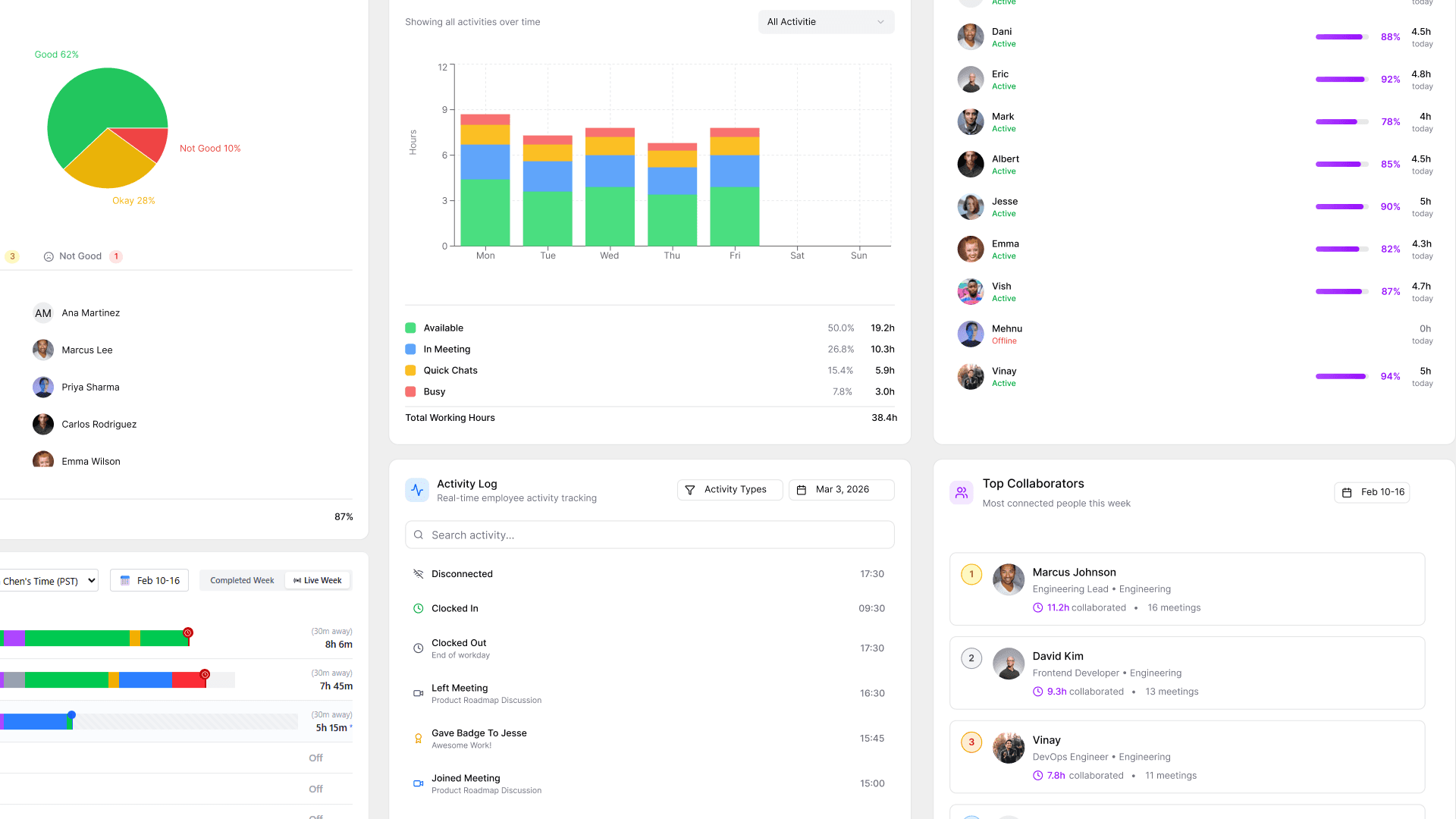
Remote Team Analytics: Complete Guide to Data-Driven Remote Work Management in 2026
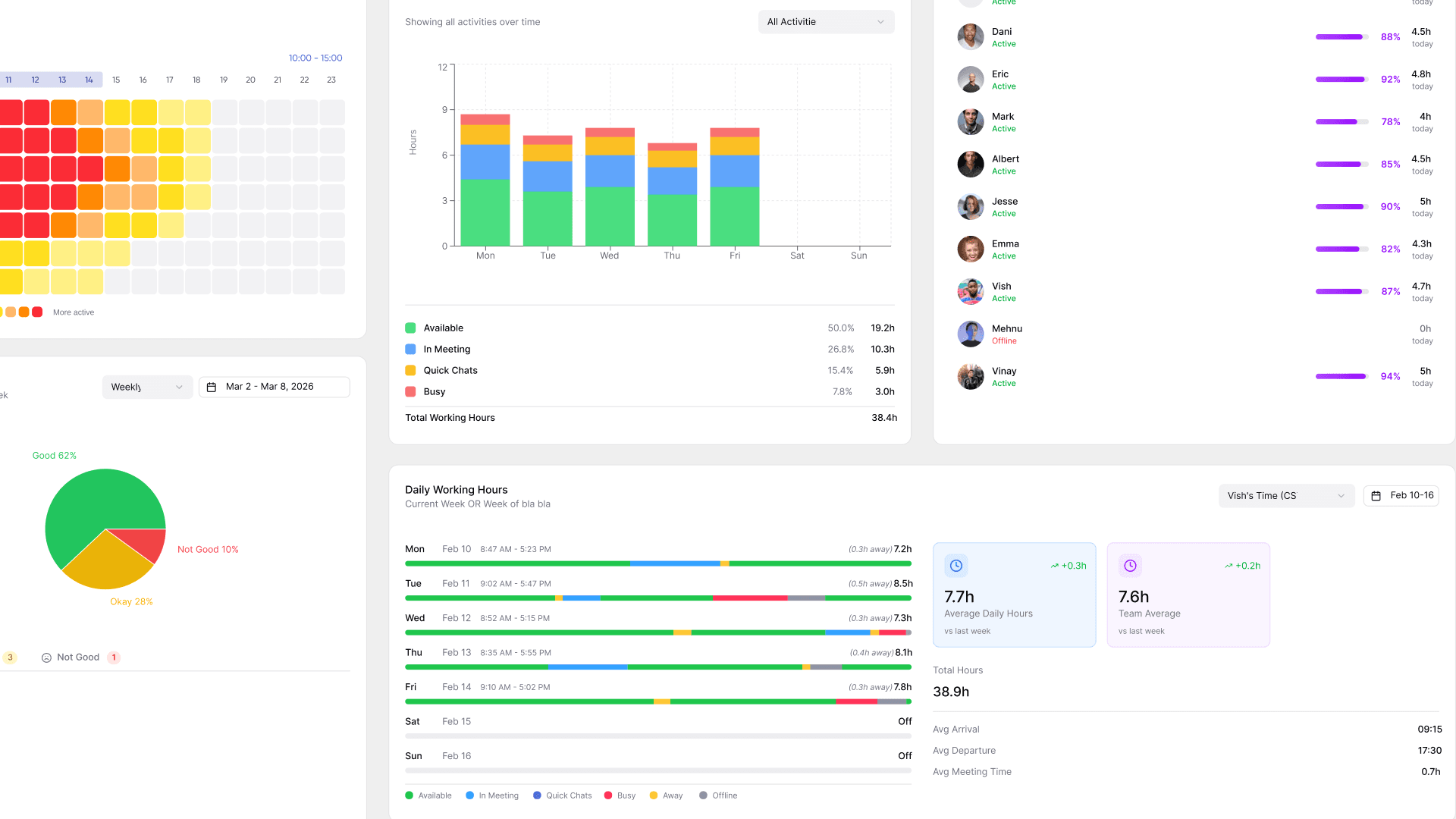
Complete Guide to Gaining Visibility Into Remote Team Performance and Collaboration