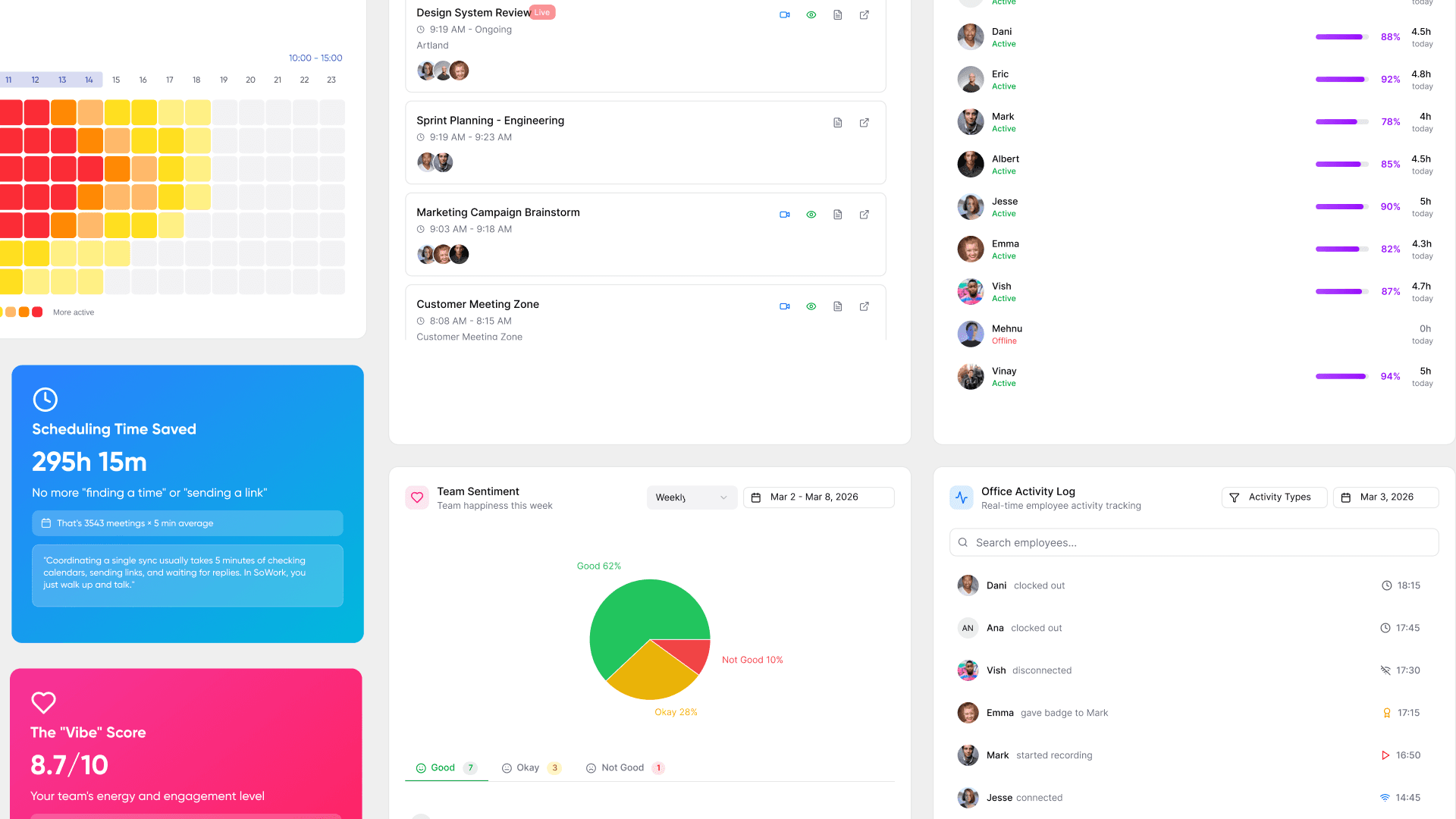
Preços de SoWork vs HyHyve: Qual é Mais Barato em 2026?
Vishal Punwani

Publicado em:
Atualizado em:
O SoWork é mais barato para uma equipe remota que se reúne todos os dias. A US$ 6 por usuário por mês (Básico), sem limites de minutos, o preço fixo por assento do SoWork torna-se drasticamente mais acessível do que o modelo baseado em consumo do HyHyve, onde o uso diário de vídeo consome rapidamente os minutos incluídos e gera cobranças por minuto excedente.
Quanto custa o SoWork em 2026 e o que o plano gratuito inclui?
O SoWork oferece um plano gratuito para até 10 usuários, um nível pago Básico a US$ 6 por usuário por mês e um nível Premium a US$ 15 por usuário por mês. Não há limites de minutos em nenhum nível.
O nível Básico do SoWork custa US$ 6/usuário/mês (ou US$ 5,40 faturados anualmente) e o Premium custa US$ 15/usuário/mês (ou US$ 12 anuais) [1]. O plano gratuito suporta até 10 usuários com recursos limitados, o suficiente para testar o produto antes de se comprometer [1]. O Premium libera resumos de reuniões por IA, gravações, transcrições, análises de equipe e suporte prioritário. Não há cobranças de vídeo por minuto em nenhum nível pago, o que é extremamente importante para equipes que ficam ativas no escritório o dia todo.
Quanto custa o HyHyve em 2026 e o que o plano gratuito inclui?
O HyHyve usa um modelo baseado em consumo, cobrando por minuto de vídeo em vez de por assento. O nível gratuito inclui 200 minutos de vídeo por mês, e os planos pagos começam em € 29,90/mês para 2.000 minutos.
A versão gratuita do HyHyve inclui apenas 200 minutos de vídeo por mês [2]. Os planos pagos começam em € 29,90/mês para um pacote de 2.000 minutos, e qualquer uso além dos minutos incluídos custa € 0,03 por minuto de vídeo adicional [2]. Um plano de escritório virtual integrado ao Microsoft Teams começa em € 8 por usuário por mês [3]. Contratos anuais estão disponíveis entrando em contato com as vendas, com o HyHyve alegando até 67% de economia em relação ao pagamento por uso [3]. Não existe uma tarifa fixa pública por assento para uso geral.
Como o SoWork define e fatura um assento?
O SoWork fatura por assento licenciado, uma vaga de usuário que você provisiona, independentemente de essa pessoa estar logada em um determinado dia. Não há exigência pública de número mínimo de assentos para planos pagos.
Um assento no SoWork é uma vaga licenciada, diferente de um "membro ativo" que está atualmente logado [1]. Você paga por assentos provisionados, não apenas por usuários ativos diários. Isso é previsível para o orçamento, mas significa que você paga pelos assentos mesmo quando os colegas de equipe estão de folga. Não há contagem mínima de assentos publicada para os planos Básico ou Premium; equipes de qualquer tamanho podem se inscrever de forma autônoma. Os descontos por volume para grandes empresas começam acima de 100 usuários, exigindo uma conversa com a equipe de vendas [1].
Como o HyHyve define e fatura o uso?
O HyHyve não fatura por assento de forma alguma. Ele cobra por minuto de vídeo consumido por cada participante em uma chamada, sem limite de número de usuários ou espaços.
O HyHyve conta cada minuto que cada participante passa em uma chamada de vídeo como uma unidade faturável [2]. Se os participantes não estiverem em uma chamada, nenhum minuto é cobrado [3]. Não há mínimos de assentos e nem limites de usuários; você pode ter um número ilimitado de pessoas no espaço. Isso parece atraente para equipes de uso ocasional, mas para uma equipe que utiliza o escritório virtual o dia todo, todos os dias, o contador por minuto funciona constantemente e os custos se acumulam rapidamente.
O SoWork e o HyHyve oferecem descontos no faturamento anual?
O SoWork oferece um desconto de 10% no plano Básico e de aproximadamente 20% no Premium quando faturado anualmente. O HyHyve oferece contratos anuais, mas apenas entrando em contato com as vendas, sem nenhuma tarifa anual listada publicamente.
O plano Básico do SoWork cai de US$ 6 para US$ 5,40/usuário/mês no plano anual (10% de desconto), e o Premium cai de US$ 15 para US$ 12/usuário/mês no anual (20% de desconto) [1]. Isso representa uma economia real em escala. O site do HyHyve informa que contratos anuais estão disponíveis e alega até 67% de economia em relação ao preço de pagamento por uso [3], mas as tarifas anuais específicas não são publicadas; você precisa falar com a equipe deles. Para o planejamento de orçamento, o preço anual transparente do SoWork é mais fácil de se comprometer sem a necessidade de uma chamada de vendas.
Quais recursos de reuniões diárias o SoWork inclui em cada nível?
O SoWork inclui presença sempre ativa, vídeo instantâneo, áudio espacial, compartilhamento de tela e chat baseado em tópicos em todos os níveis pagos. Resumos de reuniões por IA, gravações e análises de equipe são recursos Premium.
Recurso | Gratuito | Básico (US$ 6/usuário/mês) | Premium (US$ 15/usuário/mês) |
|---|---|---|---|
Percepção de presença | Sim | Sim | Sim |
Vídeo instantâneo / áudio espacial | Sim | Sim | Sim |
Compartilhamento de tela | Sim | Sim | Sim |
Sincronização de calendário | Limitado | Sim | Sim |
Resumos de reuniões por IA | Não | Não | Sim |
Análise de equipe | Não | Não | Sim |
SSO / SCIM | Não | Não | Corporativo |
Os convidados podem participar de reuniões por meio de um link sem custo extra em qualquer nível [1].
Quais recursos de reuniões diárias o HyHyve inclui em cada nível?
O HyHyve oferece salas de vídeo espaciais, plantas de escritório personalizáveis e acesso baseado em navegador em seus planos. A memória de reuniões por IA e a integração profunda com o calendário não estão listadas como recursos principais.
O HyHyve suporta até 50 participantes em uma conversa, espaços virtuais personalizáveis, formatos de workshop híbridos e integração com o Microsoft Teams [2]. Ele roda inteiramente no navegador, sem necessidade de download [3]. A conformidade com a LGPD (GDPR) com hospedagem alemã é um diferencial real para equipes europeias [3]. No entanto, resumos de reuniões com tecnologia de IA, sincronização automática de calendário e ferramentas assíncronas integradas nas quais uma equipe de reuniões diárias confia não estão listados como recursos do HyHyve; você precisaria de ferramentas separadas para preencher essas lacunas.
Existem taxas de consumo além do preço base em alguma das plataformas?
O SoWork não tem taxas por minuto ou de consumo. Todo o modelo do HyHyve é baseado em consumo; cada minuto de vídeo acima do pacote incluído no seu plano custa € 0,03.
O SoWork não cobra taxas por uso excedente. Integrações com Google Workspace, Outlook, Slack e Zapier estão incluídas, sem custo adicional [1]. A tarifa de excedente do HyHyve é de € 0,03 por minuto de participante além dos minutos incluídos no plano [2]. Para contextualizar: uma equipe de 10 pessoas em uma chamada de vídeo de 1 hora consome 600 minutos de participante. A € 0,03, isso representa € 18 por uma reunião. Faça isso diariamente por 20 dias úteis e você terá adicionado € 360/mês apenas em taxas de excedente, antes do custo do seu plano básico.
Como o preço se ajusta para equipes maiores de 50 ou mais usuários?
O SoWork oferece descontos por volume acima de 100 usuários entrando em contato com as vendas. O modelo baseado em minutos do HyHyve escala com o uso, não com o número de funcionários, de modo que equipes maiores geram mais minutos e custos mais altos.
O preço de tabela do SoWork para 100 usuários é de US$ 600/mês (Básico) ou US$ 1.500/mês (Premium) antes dos descontos por volume [1]. O preço por volume acima de 100 assentos requer uma conversa com as vendas [1]. O HyHyve não tem custo por assento, mas uma equipe de 50 pessoas que passa 4 horas por dia em chamadas de vídeo gera 50 x 240 = 12.000 minutos de participante diariamente. A € 0,03/minuto, isso representa € 360/dia ou cerca de € 7.200/mês apenas em custos de vídeo, superando em muito os US$ 750/mês do SoWork para 50 assentos no plano Básico.
Quanto cada plataforma realmente custa para 10, 25 e 50 usuários que se reúnem diariamente?
O SoWork é significativamente mais barato para qualquer tamanho de equipe em uso diário. O modelo por minuto do HyHyve torna o custo proibitivo para equipes que utilizam o escritório virtual o dia todo.
As estimativas pressupõem 4 horas/dia de vídeo, 20 dias úteis/mês. Excedente do HyHyve a € 0,03/minuto de participante após os minutos incluídos no plano.
Tamanho da Equipe | SoWork Básico (mensal) | Custo Mensal Estimado de Vídeo no HyHyve |
|---|---|---|
10 usuários | US$ 60 | ~€ 1.440+ |
25 usuários | US$ 150 | ~€ 3.600+ |
50 usuários | US$ 300 | ~€ 7.200+ |
Os custos do SoWork são fixos [1]. As estimativas do HyHyve pressupõem o preço total excedente; um plano de assinatura mais alto reduz, mas não elimina a diferença para uso diário intenso [2].
Quais recursos uma equipe de reuniões diárias precisa que estão bloqueados em níveis mais altos?
No SoWork, os resumos de reuniões por IA e as análises de equipe exigem o plano Premium. O acesso de convidados e as integrações estão disponíveis no Básico. O HyHyve limita o preço anual a uma conversa com a equipe de vendas.
O SoWork restringe a memória de reuniões por IA, gravações, transcrições e análises de equipe ao nível Premium (US$ 15/usuário/mês) [1]. SSO e SCIM são exclusivos para o plano Corporativo (Enterprise) [1]. O acesso de convidados via link é gratuito em todos os níveis [1]. Para uma equipe de reuniões diárias, a questão de upgrade mais importante é se os resumos por IA valem o salto de US$ 9/usuário/mês do Básico para o Premium; para equipes onde as decisões acontecem em chats espontâneos, geralmente valem. A restrição de recursos do HyHyve é menos documentada publicamente.
Quais são os custos ocultos de usar o SoWork todos os dias?
O principal custo indireto do SoWork é a carga de GPU/CPU de sua interface imersiva 2.5D, que pode exigir uma atualização de hardware para equipes com computadores mais antigos. Não há custos de ferramentas adicionais para o uso principal.
O mundo imersivo 2.5D do SoWork usa mais recursos de GPU e CPU do que uma chamada de vídeo simples [1]. Equipes em laptops mais antigos podem notar problemas de desempenho. O SoWork oferece um Modo Simplificado e um Modo Mini para reduzir o uso de recursos. Não são necessárias ferramentas separadas para chat, vídeo ou notas de reunião no nível Premium; ele consolida Slack, Zoom e um anotador em uma única plataforma. As necessidades de largura de banda são as típicas para videoconferência; nenhuma infraestrutura incomum é necessária.
Quais são os custos ocultos de usar o HyHyve todos os dias?
O maior custo oculto do HyHyve é o próprio modelo de excedente por minuto; o uso diário de vídeo quase sempre excederá os minutos incluídos no plano, gerando faturas mensais imprevisíveis.
O excedente de € 0,03/minuto de participante é o principal custo oculto para equipes diárias [2]. Uma equipe que não monitora de perto o uso enfrentará um susto com a fatura no final do mês. O HyHyve também carece de resumos de reuniões por IA integrados, de modo que as equipes precisariam de uma ferramenta de transcrição separada (Otter.ai, Fireflies, etc.), adicionando de US$ 10 a US$ 20/usuário/mês. O HyHyve roda no navegador, portanto os requisitos de hardware são baixos [3]. Para equipes europeias, a hospedagem alemã em conformidade com o GDPR elimina um custo de conformidade que outras ferramentas poderiam introduzir.
Você pode testar o SoWork ou o HyHyve antes de pagar?
Ambas as plataformas oferecem uma maneira de testar antes de comprar. O SoWork tem um plano gratuito para até 10 usuários sem limite de tempo. O HyHyve oferece um nível gratuito com 200 minutos por mês e sem necessidade de cartão de crédito.
O plano gratuito do SoWork suporta até 10 usuários sem expiração; é um nível gratuito real, não um período de testes por tempo limitado [1]. Os planos pagos também vêm com um período de teste gratuito [1]. O plano gratuito do HyHyve inclui 200 minutos de vídeo/mês sem necessidade de cartão de crédito [3]. Para uma equipe avaliando o uso diário, o plano gratuito do SoWork é mais útil porque 200 minutos não durariam um único dia de trabalho real. O SoWork permite simular o uso diário real antes de se comprometer com um assento pago.
O que uma equipe de reuniões diárias deve procurar além do preço?
Para o uso diário, os critérios mais importantes são a previsibilidade do modelo de preços, a memória de reuniões por IA para reduzir falhas de acompanhamento, a percepção de presença e se a ferramenta pode substituir vários aplicativos existentes.
Os trabalhadores remotos agora têm uma média de 25,6 reuniões por semana, 80% mais do que os trabalhadores presenciais [4]. E 70% das decisões de reuniões são esquecidas em 24 horas sem anotações [5]. Isso torna a memória de reuniões por IA um recurso central, não apenas um bônus. Além do preço, avalie: (1) Substitui o Slack e o Zoom ou adiciona mais uma ferramenta ao seu ecossistema? (2) Mostra quem está livre sem a necessidade de um convite de calendário? (3) Sua equipe realmente vai abrir o aplicativo todas as manhãs? A taxa de adoção determina o ROI muito mais do que o custo por assento.
O que os usuários reais dizem sobre o custo-benefício em ambas as plataformas?
As avaliações do SoWork destacam seu valor tudo-em-um e os recursos de IA como fortes diferenciais. As avaliações do HyHyve elogiam sua experiência de networking para eventos, mas refletem um feedback limitado para o uso diário no escritório.
O SoWork está posicionado como o conjunto de recursos mais amplo por dólar a US$ 6/usuário/mês entre as ferramentas de escritório virtual [1]. Os avaliadores do G2 destacam as opções de personalização e as ferramentas de reunião por IA como recursos de destaque [1]. As avaliações do HyHyve no OMR observam um forte suporte ao cliente e qualidade de networking específica para eventos, mas ainda não há avaliações suficientes para formar um consenso [2]. As avaliações mais fortes do HyHyve vêm de organizadores de eventos e anfitriões de conferências, não de equipes distribuídas que o utilizam como escritório diário. Esse é um sinal significativo sobre seu principal caso de uso.
Que outras plataformas de escritório virtual uma equipe de reuniões diárias deve considerar?
Gather, Teamflow e Sococo são as principais alternativas, mas cada uma apresenta compensações significativas em termos de preço ou profundidade de recursos em comparação com o SoWork para uso diário.
Plataforma | Preço | Principal Compensação |
|---|---|---|
Gather | US$ 12/usuário/mês (Essential) | Sem ferramentas de IA; removeu o nível gratuito no final de 2025 [1] |
Teamflow | US$ 15, US$ 20/usuário/mês (anual) | Melhor para aplicativos integrados; o mais caro [1] |
Sococo | US$ 14,99/usuário/mês + limite de 500 min | Os limites de minutos podem paralisar as equipes no meio do mês [1] |
SoWork | US$ 6/usuário/mês (Básico) | Melhor relação preço-recurso para uso diário [1] |
Para uma equipe de reuniões diárias, o limite de minutos do Sococo é um risco operacional real [1].
Resumo: SoWork ou HyHyve para uma equipe que se reúne todos os dias?
O SoWork é a escolha clara para uma equipe remota que utiliza o escritório virtual diariamente. Seu preço fixo por assento, a ausência de limites de minutos, a memória de reuniões por IA integrada e as ferramentas de percepção de presença o tornam ideal para esse caso de uso, além de ser drasticamente mais barato para qualquer tamanho de equipe.
O modelo por minuto do HyHyve funciona bem para eventos periódicos e sessões de networking ocasionais. Ele não foi projetado para uso diário de escritório sempre ativo, a matemática simplesmente não fecha. O SoWork, a US$ 6/usuário/mês sem taxas de consumo, oferece percepção de presença, vídeo instantâneo, resumos de reuniões por IA (Premium) e sincronização de calendário em uma única plataforma que substitui o Slack, o Zoom e um anotador. Comece no plano gratuito com até 10 usuários, valide a adoção e depois escale. Não pague por minuto por uma ferramenta que você usa o dia todo.
Principais Conclusões
O SoWork custa US$ 6/usuário/mês (Básico) ou US$ 15/usuário/mês (Premium) sem limites de minutos, sendo previsível e acessível para o uso diário.
O HyHyve cobra € 0,03 por minuto de participante em chamadas de vídeo. Para uma equipe de 10 pessoas que se reúne 4 horas por dia, isso representa mais de € 1.440/mês apenas em custos de vídeo.
O plano gratuito do SoWork suporta até 10 usuários sem limite de tempo, o suficiente para realizar um piloto real antes de se comprometer financeiramente.
O nível gratuito do HyHyve inclui apenas 200 minutos de vídeo por mês, os quais uma equipe de reuniões diárias esgotaria em uma única manhã.
O faturamento anual do SoWork economiza 10% no Básico e 20% no Premium. O preço anual do HyHyve requer uma conversa com as vendas.
Resumos de reuniões por IA, percepção de presença e sincronização de calendário estão integrados ao SoWork; o HyHyve carece desses recursos, exigindo ferramentas pagas adicionais.
Os trabalhadores remotos participam de 80% mais reuniões por semana do que os trabalhadores presenciais (Owl Labs, 2024), tornando os preços por minuto um risco orçamentário sério.
Para equipes com mais de 10 usuários que se reúnem diariamente, o SoWork é mais barato em qualquer tamanho de equipe, por uma grande margem.
Fontes
Perguntas Frequentes
Preços de SoWork vs HyHyve em 2026: qual escritório virtual é realmente mais barato para uma equipe remota que se reúne todos os dias?
O HyHyve cobra por usuário ou por minuto?
Qual é o limite do plano gratuito do SoWork?
O HyHyve é bom para um escritório virtual permanente ou é mais uma ferramenta para eventos?
O SoWork tem taxas ocultas ou limites de uso?
Posso usar o SoWork ou o HyHyve gratuitamente antes de comprar?
Qual plataforma de escritório virtual é a melhor para uma equipe remota de 25 pessoas em 2026?
O SoWork substitui o Zoom e o Slack ou funciona junto com eles?
Blogs
Leia artigos semelhantes
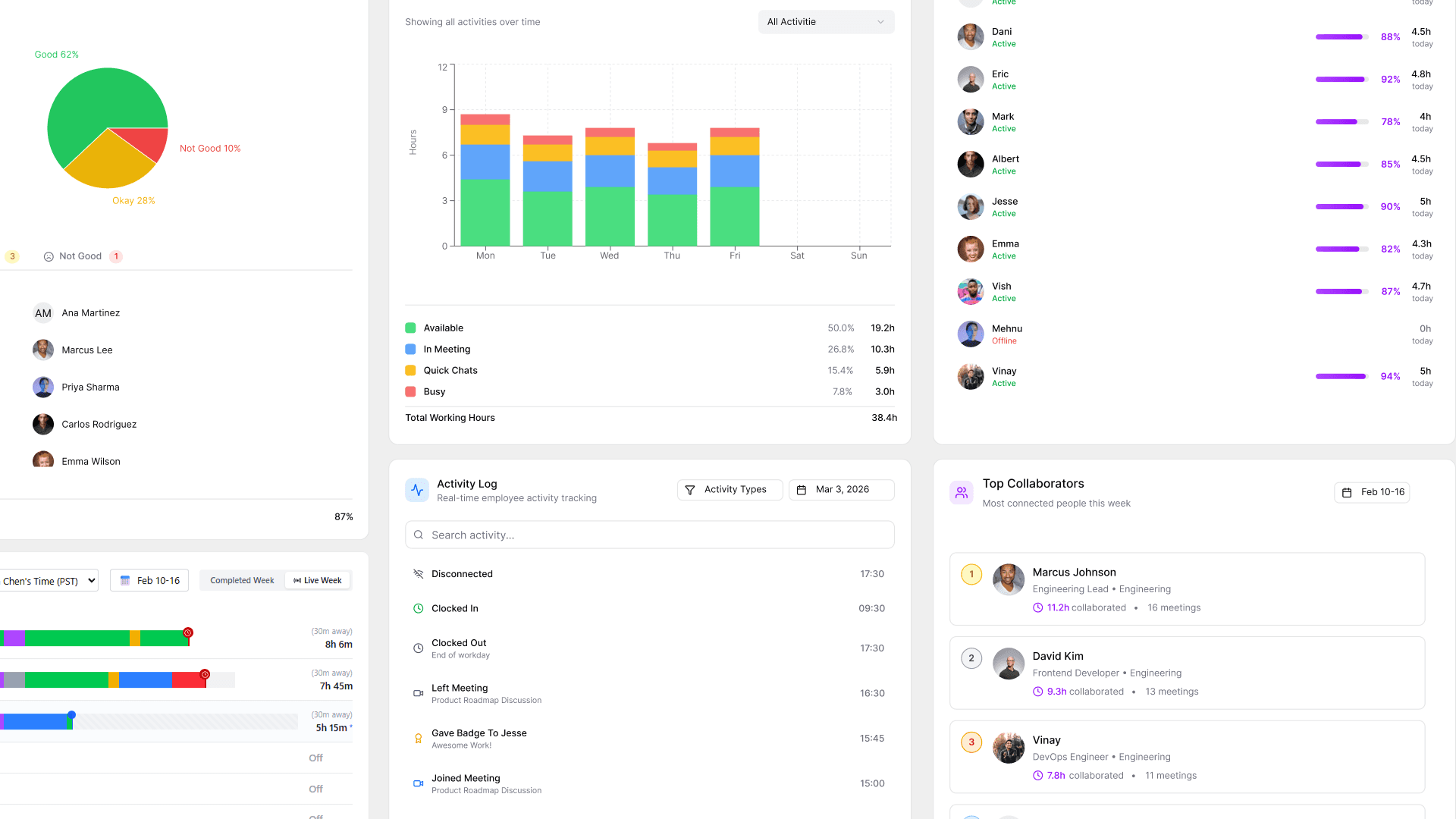
Análise de Equipes Remotas: O Guia Completo para Gestão do Trabalho Remoto Baseada em Dados em 2026
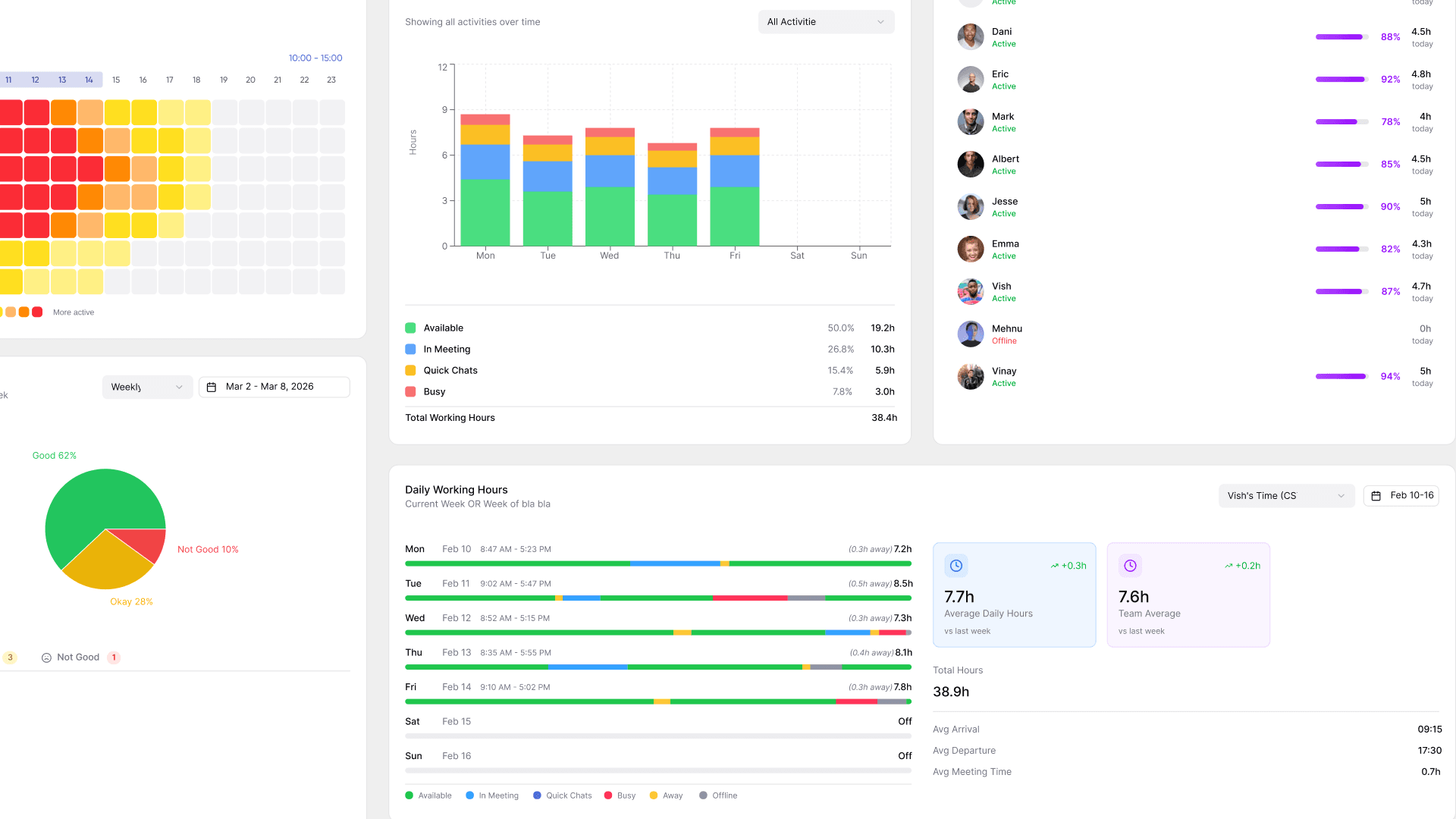
Guia Completo para Obter Visibilidade sobre o Desempenho e a Colaboração de Equipes Remotas