Identifique Colaboradores Remotos Desengajados Cedo (2026)
Vishal Punwani

Publicado em:
Atualizado em:
Gerentes remotos podem identificar funcionários em processo de desengajamento ao observar mudanças comportamentais: menor participação em interações informais, tempos de resposta mais lentos, respostas mais curtas e afastamento de atividades opcionais. Esses sinais costumam aparecer de 6 a 12 meses antes do pedido de demissão. A combinação de ferramentas de percepção de presença, reuniões individuais (one-on-ones) estruturadas e pesquisas de pulso oferece aos gerentes a janela de alerta mais precoce possível.
Como realmente se parece o desengajamento em uma equipe remota?
O desengajamento remoto é mais silencioso do que o presencial; ele se manifesta como menor participação, respostas mais lentas e um afastamento gradual da vida da equipe, em vez de mudanças comportamentais óbvias.
Os sinais mais claros incluem funcionários que costumavam contribuir ativamente silenciando em reuniões, queda na qualidade do trabalho ou prazos perdidos, e membros da equipe que não se voluntariam mais para projetos [1]. Logins atrasados em chamadas, ausências não planejadas e o desaparecimento de conversas sem explicação também são padrões comuns [1]. Fundamentalmente, alguns funcionários mantêm um forte desempenho mesmo quando já se desligaram mentalmente, de modo que a produtividade por si só não identificará todos. Ambientes remotos podem criar o que os pesquisadores chamam de distanciamento psicológico — uma sensação de que a organização é abstrata e distante —, e funcionários que vivenciam isso muitas vezes se desengajam não porque não se importam, mas porque perderam a sensação de que o que fazem está conectado a algo relevante.
Por que o desengajamento remoto é muito mais difícil de detectar?
No escritório, o desengajamento transparece na linguagem corporal, na energia dos corredores e na observação do ambiente. O trabalho remoto elimina tudo isso, deixando os gerentes apenas com dados digitais para interpretar.
No escritório, se alguém está passando por um momento difícil, os colegas costumam perceber e oferecer apoio informal. No ambiente remoto, esse sistema de apoio ambiental não existe. Um funcionário pode estar enfrentando grandes dificuldades sem que ninguém saiba, pois o único sinal disponível é a qualidade e a pontualidade de suas entregas, que podem não mudar até que o problema esteja consolidado. Os canais em que a maioria das organizações confia para avaliar o clima — pesquisas, avaliações formais e conversas com gerentes — não foram feitos para captar um desengajamento silencioso e gradual. As pesquisas ocorrem trimestralmente. As avaliações ocorrem anualmente. Ambas exigem que o funcionário seja honesto dentro de um sistema no qual ele pode não confiar totalmente.
Quais são os primeiros sinais comportamentais de alerta a se observar?
Os primeiros sinais são a queda nas contribuições voluntárias, deixar de propor ideias, faltar a atividades opcionais ou interromper aquele esforço extra que costumava ser automático.
Profissionais de alto desempenho não se demitem do dia para a noite. Eles se desengajam gradualmente, muitas vezes ao longo de vários meses, deixando rastros comportamentais que a maioria dos gerentes ignora. O indicador precoce mais confiável é a queda nas contribuições voluntárias. Pesquisas identificam padrões comportamentais que antecedem a rotatividade voluntária: menor participação em reuniões, redução na interação informal com colegas, declínio no envolvimento voluntário em projetos e aumento de consultas a políticas formais, como verificar direitos ou questionar procedimentos. Fique atento ao funcionário que para de orientar colegas, recusa tarefas de desenvolvimento ou começa a perguntar sobre saldo de folgas mais do que o habitual. Esses são os sinais precoces, não os tardios.
Como o afastamento de interações informais sinaliza o desengajamento?
A interação informal é onde o sentimento de pertencimento à equipe realmente reside. Quando alguém deixa de comparecer a encontros opcionais, silencia nos canais de bate-papo casual ou pula a conversa inicial antes das reuniões, esse afastamento é um sinal real.
Pesquisas demonstram que o afastamento das redes sociais frequentemente antecede a demissão. Sabendo que não estamos nos encontrando por acaso na cozinha ou entrando nas salas uns dos outros sem avisar, as equipes remotas precisam ser intencionais sobre como e quando se comunicam. O problema é que interações opcionais são fáceis de ignorar sem que ninguém perceba. Metade dos profissionais que deixaram seus empregos atribuiu a demissão à falta de um sentimento de pertencimento, de acordo com a pesquisa Great Attrition, Great Attraction de 2022 da McKinsey. Quando alguém para de buscar esses pequenos momentos de conexão, muitas vezes já está mentalmente a caminho da saída.
Quais mudanças nos padrões de comunicação indicam um funcionário desengajado?
Tempos de resposta mais longos, respostas mais curtas e transacionais e uma redução no entusiasmo ou na iniciativa das mensagens são indicadores precoces confiáveis de desengajamento.
Menor visibilidade e participação — funcionários se afastando de reuniões, discussões em grupo ou trabalho colaborativo — é um sinal fundamental. O declínio no esforço discricionário se manifesta em menos ideias compartilhadas e problemas que deixam de ser levantados. Disponibilidade limitada significa que os funcionários se tornam mais difíceis de contatar e menos responsivos. Na prática, isso se parece com respostas de uma única palavra no Slack onde antes havia parágrafos, ou mensagens que levam horas para ser respondidas quando antes eram retornadas em minutos. Eles podem comparecer a reuniões, mas não participar ativamente, falando apenas quando solicitados, com respostas mínimas e superficiais. A mudança no tom da comunicação costuma ser a primeira coisa que um gerente atento percebe.
Como os dados de presença em escritório virtual podem revelar o desengajamento precocemente?
Os dados de presença oferecem aos gerentes um sinal passivo e contínuo, sem a necessidade de uma verificação formal, ao mostrar quando os padrões de disponibilidade e participação de alguém começam a mudar.
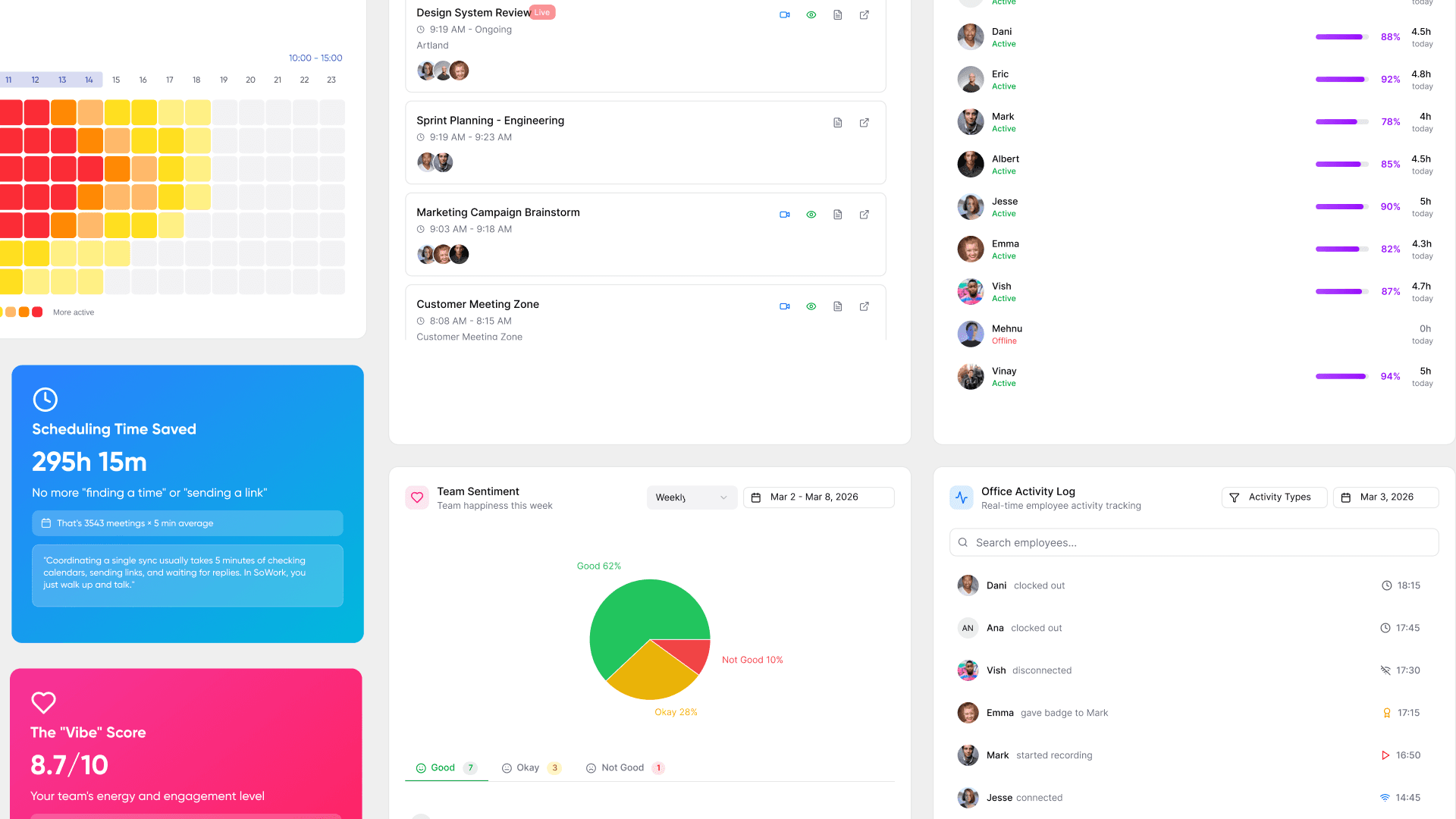
Uma plataforma de escritório virtual como o SoWork torna isso visível em tempo real. Quando um membro da equipe que costumava frequentar os espaços compartilhados ao longo do dia começa a fazer login apenas para chamadas agendadas, essa mudança de padrão é um dado. Não é preciso uma pesquisa ou uma conversa para perceber. A análise de engajamento envolve monitorar indicadores antecedentes de desengajamento, especificamente padrões comportamentais entre os membros da equipe. Sinais de presença — quem está online, quando e por quanto tempo — dão aos gerentes uma base de referência. Desvios dessa base merecem uma conversa. Essa é uma visibilidade de baixo atrito que substitui o que o escritório físico oferecia automaticamente.
Qual é o papel da percepção de presença ambiental para detectar o afastamento?
A percepção de presença ambiental replica o que um escritório físico faz naturalmente: permite que gerentes e colegas percebam, sem vigilância, quando o ritmo de alguém muda.
O sistema de presença do SoWork mostra rapidamente quem está livre, focado ou em reunião, da mesma forma que você notaria a mesa vazia ou a porta fechada da sala de um colega. Essa percepção ambiental cria uma maneira de baixo impacto para identificar mudanças. Se alguém que costumava manter seu status aberto começa a ficar offline por longos períodos, ou para de aparecer nos espaços compartilhados, os colegas percebem organicamente. Outro risco específico do ambiente remoto é o isolamento em períodos difíceis. Em um escritório, se alguém está passando por um momento difícil, os colegas costumam perceber e oferecer apoio informal. No ambiente remoto, esse sistema de apoio ambiental não existe. Ferramentas de presença ambiental reduzem essa lacuna sem invadir a privacidade com vigilância.
Como os gerentes devem estruturar as reuniões individuais (one-on-ones) para identificar o desengajamento precocemente?
One-on-ones eficazes para detectar o desengajamento são frequentes, curtos e estruturados em torno da experiência do funcionário, não apenas do status do projeto.
A frequência semanal ou quinzenal supera a mensal. Mantenha os encontros em 30 minutos. Comece com uma pergunta sincera sobre bem-estar antes de qualquer assunto de trabalho. 51% dos funcionários demissionários afirmam que, em seus últimos três meses, nenhum gerente ou líder conversou com eles sobre sua satisfação no trabalho ou futuro na organização (Gallup). Isso representa uma falha na qualidade da conversa, não na frequência. A estrutura importa: comece com como eles estão se sentindo, depois o que está no caminho deles e, em seguida, o que os deixa entusiasmados. Pesquisas de pulso regulares, discussões individuais e o acompanhamento de tendências oferecem uma visibilidade mais precoce do declínio da motivação do que as avaliações anuais de desempenho jamais oferecerão. O recurso de reuniões instantâneas do SoWork significa que você não precisa agendá-las; pode iniciar uma com um clique ao notar uma mudança na presença.
Quais perguntas ajudam a distinguir o esgotamento (burnout) de um desengajamento mais profundo?
A distinção principal é se o funcionário ainda enxerga um futuro na empresa. O burnout é uma exaustão temporária; o desengajamento é uma perda de conexão com o propósito e o pertencimento.
Faça estas perguntas diretamente:
Pergunta | O que ela revela |
|---|---|
"O que pareceu mais desgastante este mês?" | Sinais de burnout vs. desconexão sistêmica |
"O que faria seu trabalho parecer mais significativo?" | Se o propósito ainda está presente |
"Onde você se vê aqui daqui a 6 meses?" | Intenção de permanecer vs. planejamento de saída silenciosa |
"Há algo que eu poderia fazer de diferente como seu gerente?" | Confiança e segurança psicológica |
"Qual é a única coisa que você mudaria em como trabalhamos juntos?" | Frustração latente |
Quando os funcionários operam no modo de sobrevivência por longos períodos, isso leva ao estresse crônico, à exaustão emocional e, por fim, ao burnout, um dos mais fortes precursores da rotatividade voluntária. Se as respostas forem vagas ou evasivas, isso por si só já é um sinal.
Como um escritório virtual pode replicar os momentos de conversa espontânea que revelam o estado de espírito?
Escritórios virtuais como o SoWork recriam as condições para interações espontâneas — aquelas que, em um escritório físico, revelam naturalmente como alguém realmente está.
Em um escritório físico, você notaria a energia de um colega antes de qualquer conversa formal. O recurso de reuniões instantâneas do SoWork permite que você clique no avatar de um colega e inicie uma conversa imediatamente, sem agendamento, sem convite de calendário, sem atrito. Isso é o equivalente digital a passar na mesa de alguém. Espaços virtuais compartilhados incentivam o mesmo tipo de socialização ambiental que revela o estado de espírito. Reconhecendo que não estamos nos encontrando por acaso na cozinha ou entrando nas salas uns dos outros sem avisar, as equipes remotas precisam ser intencionais sobre como e quando se comunicam. O SoWork faz com que essa intencionalidade pareça natural em vez de forçada, que é o que faz com que as pessoas realmente o utilizem.
Quais práticas de cultura evitam que o desengajamento se instale?
Prevenir é melhor do que detectar. As práticas que mantêm os funcionários remotos engajados são o reconhecimento regular, planos de carreira visíveis e conexão informal consistente, não mais reuniões.
Trabalhadores totalmente remotos têm 30% menos probabilidade de concordar totalmente que conversaram com seu gerente sobre os passos para atingir seus objetivos nos últimos seis meses, em comparação com funcionários que passam pelo menos algum tempo no escritório. As oportunidades de crescimento na carreira são o motivo número um para os funcionários deixarem suas empresas, independentemente do regime de trabalho. Construa uma cultura onde as conversas sobre crescimento aconteçam em cada one-on-one, não apenas durante as avaliações anuais. Combine isso com encontros virtuais informais, rituais de reconhecimento e um espaço compartilhado onde a equipe se reúne diariamente, não apenas para trabalhar, mas para a conexão ambiental que faz uma equipe parecer real.
Como as pesquisas de pulso complementam os sinais de presença em tempo real?
Os dados de presença mostram o que está acontecendo no comportamento; as pesquisas de pulso revelam o porquê. Juntos, eles oferecem um panorama completo que nenhuma ferramenta fornece sozinha.
A maioria das empresas descobre o desengajamento quando alguém pede demissão. As pesquisas de pulso o detectam 90 dias antes. Sinais de alerta precoce de pesquisas de pulso permitem que os gerentes intervenham antes que o desengajamento se transforme em uma intenção real de demissão. Pesquisas curtas e frequentes — de 5 a 10 perguntas, realizadas semanalmente ou mensalmente — revelam mudanças de sentimento que os dados de presença não conseguem explicar. Se os padrões de presença de alguém parecem normais, mas suas pontuações de pulso estão caindo, você tem um problema que precisa ser tratado em uma conversa. As pesquisas de pulso revelam sinais de alerta — uma queda nas pontuações de relacionamento com o gerente ou um aumento nas preocupações com remuneração — enquanto ainda há tempo para agir. Use ambos os sinais juntos.
Quais são os riscos de monitorar excessivamente os funcionários remotos?
O monitoramento invasivo gera o efeito oposto: corrói a confiança, aumenta a rotatividade e pode acelerar o desengajamento que pretendia evitar.
49% das empresas que já implementaram o monitoramento de dispositivos, e 51% das empresas em processo de implementação, estão observando um aumento drástico ou moderado na rotatividade de funcionários. Pesquisas mostram consistentemente que o monitoramento invasivo destrói a confiança, eleva o estresse, reduz o engajamento e, em muitos casos, diminui a própria produtividade que deveria proteger. Uma pesquisa revelou que 43% dos funcionários sentem que o monitoramento viola sua confiança, em vez de melhorar seu desempenho. A alternativa é a percepção de presença ambiental: ferramentas que mostram padrões de disponibilidade e atividade sem registrar teclas digitadas ou gravar telas. Pesquisas indicam que os funcionários são mais propensos a aceitar o monitoramento quando o empregador é transparente sobre isso e eles podem acessar seus próprios dados.
Com que antecedência o desengajamento precede uma demissão?
Pesquisas mostram consistentemente que o desengajamento comportamental começa de 6 a 12 meses antes de um funcionário realmente pedir demissão, oferecendo aos gerentes uma janela real para agir.
De acordo com estudos resumidos pela SHRM, os funcionários que reduzem o esforço discricionário costumam fazê-lo de 6 a 12 meses antes de se demitirem. A maioria dos funcionários não acorda um dia e decide ir embora. Em vez disso, eles se desengajam gradualmente, perdem a motivação, desconectam-se do trabalho e começam a explorar alternativas muito antes de alguém perceber. No momento em que uma carta de demissão chega à mesa do gerente, a decisão muitas vezes já foi tomada semanas ou até meses antes. A pesquisa de ambiente de trabalho de 2026 da Gallup revelou que o engajamento dos funcionários caiu para 31%, seu ponto mais baixo em 11 anos, mas a maioria dos empregadores não detecta essa desconexão até que ela termine em demissão. É nessa lacuna que os gerentes precisam atuar.
Como um gerente deve responder ao identificar um funcionário potencialmente desengajado?
Aja rápido, mas com cuidado. O objetivo é uma conversa genuína, não uma avaliação de desempenho, e o primeiro passo é a curiosidade, não a correção.
Comece com uma conversa privada e informal. Não comece dizendo "percebi que seu engajamento caiu". Comece perguntando "como você realmente está?". Depois, escute. O Relatório de Retenção de 2025 do Work Institute revelou que 75% dos desligamentos eram evitáveis, e a Gallup relata que 52% dos funcionários demissionários afirmam que sua organização poderia ter feito algo para mantê-los. As lacunas mais comuns são a falta de desenvolvimento de carreira, conexão fraca com o gerente e ausência de conversas sobre o futuro do funcionário. Depois de compreender a causa raiz, responda especificamente a ela, e não com um programa genérico de reengajamento. Às vezes, um ajuste de função, um novo projeto ou simplesmente ser ouvido é suficiente para reverter a situação.
Quais ferramentas além dos escritórios virtuais ajudam os gerentes a monitorar e melhorar o engajamento?
Um conjunto de ferramentas integradas funciona melhor: um escritório virtual para presença ambiental, uma ferramenta de pesquisa de pulso para o sentimento e uma plataforma de one-on-one para conversas estruturadas.
Para pesquisas de pulso e monitoramento de sentimento, plataformas como 15Five, Lattice, Culture Amp e WorkTango revelam sinais de desengajamento por meio de pesquisas curtas recorrentes. As principais ferramentas para detectar o desengajamento de funcionários usam pesquisas de pulso, análise de sentimento e painéis em tempo real, ajudando a identificar sinais de alerta precoce e a melhorar a retenção por meio de feedback contínuo e insights gerenciais. Para one-on-ones estruturadas, ferramentas como Fellow ou modelos do Notion mantêm as conversas consistentes. O SoWork atua na camada de presença — o sinal ambiental, sempre ativo, que as outras ferramentas não conseguem fornecer. Cada camada responde a uma pergunta diferente: qual é o clima, qual é o comportamento e qual conversa precisa acontecer.
Como o custo da rotatividade se compara ao investimento proativo em engajamento?
Substituir um funcionário custa de 50% a 200% do seu salário anual. Ferramentas proativas de engajamento custam uma fração disso, tornando a detecção precoce um dos investimentos com maior retorno (ROI) que uma equipe remota pode fazer.
A Gallup estima que os desligamentos voluntários custam às empresas dos EUA cerca de US$ 1 trilhão por ano, com o custo de substituição variando de 0,5 a 2 vezes o salário anual do funcionário que sai. Substituir líderes e gerentes pode custar cerca de 200% de seu salário, enquanto cargos técnicos custam em média 80% e funcionários da linha de frente 40%, segundo a Gallup. De acordo com o Relatório de Retenção de 2025 do Work Institute, 75% das saídas voluntárias são evitáveis. Uma assinatura de escritório virtual, uma ferramenta de pesquisa de pulso e o investimento em treinamento de gerentes custam juntos uma pequena fração de uma única nova contratação de substituição. A conta é simples. Recuperar um engenheiro desengajado antes que ele peça demissão paga anos de ferramentas de engajamento.
Resumo: O desengajamento remoto segue um padrão previsível, o afastamento comportamental começa de 6 a 12 meses antes da demissão e os sinais são perceptíveis se você souber onde olhar. Combine a percepção de presença ambiental (para notar mudanças de padrão sem vigilância), reuniões individuais estruturadas (para criar espaço para conversas honestas) e pesquisas de pulso (para captar quedas de humor entre as conversas). Essa abordagem em três camadas oferece a janela mais precoce possível para agir e evita que seus melhores profissionais saiam silenciosamente.
Principais Conclusões
O desengajamento comportamental geralmente começa de 6 a 12 meses antes de um funcionário pedir demissão, oferecendo aos gerentes uma janela real de intervenção se estiverem atentos.
Os primeiros sinais são quedas nas contribuições voluntárias: menos ideias, ausência em atividades opcionais e comunicação mais curta e transacional.
O desengajamento remoto é mais difícil de detectar porque as pistas sociais ambientais de um escritório físico — linguagem corporal, energia dos corredores, presença na mesa — não existem remotamente.
Ferramentas de percepção de presença ambiental (como o SoWork) oferecem aos gerentes um sinal passivo e contínuo sem recorrer à vigilância invasiva.
O monitoramento excessivo gera o efeito oposto: 49% das empresas que implementam vigilância de dispositivos relatam aumento na rotatividade, e pesquisas mostram que isso corrói a confiança que deveria proteger.
As pesquisas de pulso detectam o desengajamento cerca de 90 dias antes do que a maioria das empresas descobre, e complementam os dados de presença explicando o "porquê" por trás das mudanças comportamentais.
Substituir um funcionário custa de 50% a 200% de seu salário anual (Gallup); ferramentas proativas de engajamento custam uma fração disso e tornam o retorno sobre o investimento (ROI) evidente.
A falha mais comum é simples: a Gallup descobriu que 51% dos funcionários demissionários afirmam que nenhum gerente conversou com eles sobre satisfação no trabalho nos últimos três meses.
Fontes
Perguntas Frequentes
Como os gestores remotos podem identificar funcionários desengajados antes que eles se demitam?
O trabalho remoto por si só está causando o desengajamento dos funcionários?
Qual é a diferença entre o esgotamento profissional (burnout) e o descomprometimento do funcionário?
Com que frequência os gestores remotos devem realizar reuniões individuais de acompanhamento?
O monitoramento de funcionários remotos ajuda ou prejudica o engajamento?
Quanto custa realmente substituir um funcionário desengajado que pede demissão?
Quais perguntas devo fazer em uma conversa individual para detectar desengajamento?
As pesquisas de pulso podem substituir as reuniões individuais com gestores para detectar o desengajamento?
Blogs
Leia artigos semelhantes
Análise de Equipes Remotas: O Guia Completo para Gestão do Trabalho Remoto Baseada em Dados em 2026
Guia Completo para Obter Visibilidade sobre o Desempenho e a Colaboração de Equipes Remotas